In a nutshell
- 🔬 The reaction between baking soda and vinegar creates CO2 fizz that scrubs inside thermos flasks, reaching seams, threads, and base curves that brushes miss.
- 🧪 Step-by-step: 1 tbsp soda + warm water (45–50°C), add 80–120 ml vinegar slowly, swirl, wait 10–20 minutes, and rinse hot; keep the lid vented during active bubbling.
- 📏 Use precise ratios, timing, and temperatures for routine cleans, heavy stains, and odour removal, scaling amounts for flask size while leaving generous headspace.
- 🧼 Tackle stains and smells by loosening tannins and oils, soaking caps and gaskets, adding a pinch of fine salt if needed, and avoiding bleach or harsh abrasives on stainless steel.
- ✅ Benefits: gentle, low-cost, and effective; finish with a hot rinse, air-dry with the cap off, and use a teaspoon of baking soda overnight for stubborn odours.
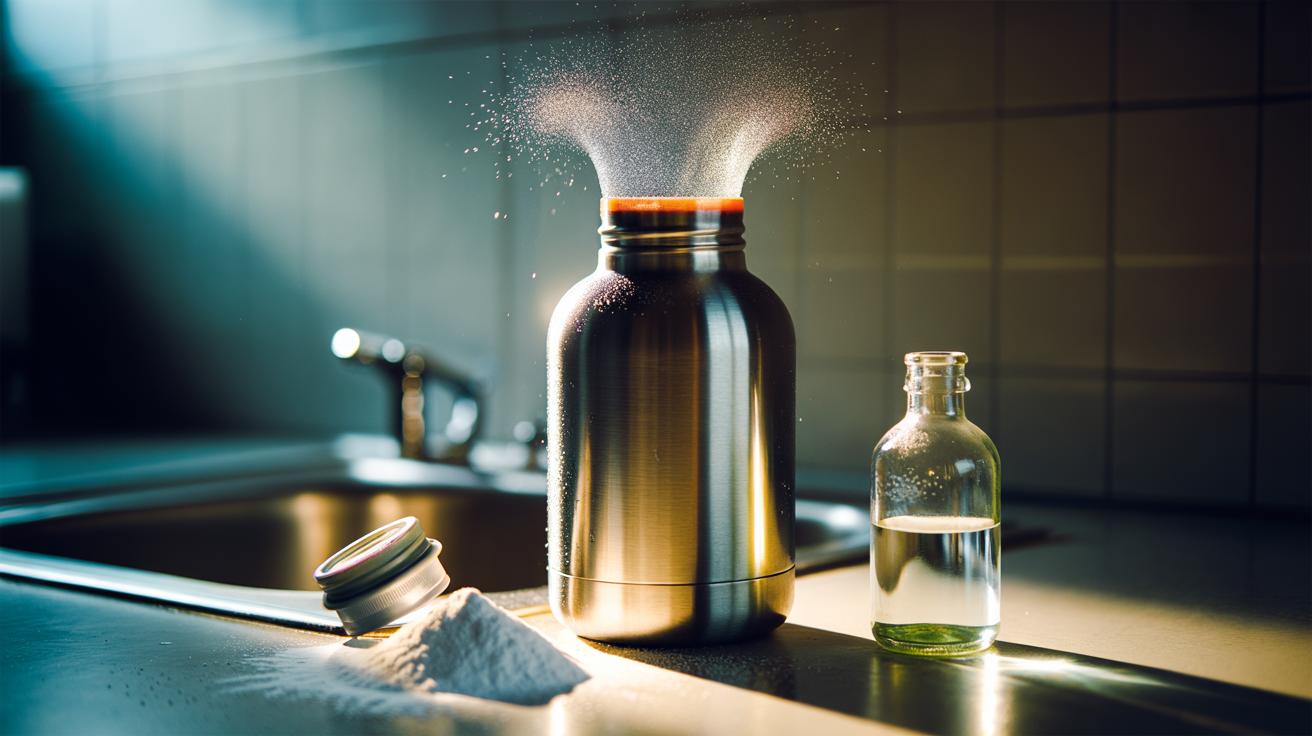
Here’s a low-cost trick that behaves like a tiny pressure washer inside your bottle: combine baking soda and vinegar and let the fizz scour the hidden corners of your thermos flask. The reaction releases a cloud of bubbles that dislodge coffee oils, tea tannins, and sour milk residues clinging to threads and seams. Because the gas forms everywhere at once, it pushes into spaces even a brush can’t reach. With a few precautions, measured ratios, and the right temperature, the method is quick, repeatable, and kind to stainless steel. Below, we break down the chemistry, a step-by-step routine, and a handy reference table so your flask comes out clean, odour-free, and ready for the next brew.
Why Fizz Works Inside Narrow Thermos Flasks
The secret lies in the chemistry: acetic acid in vinegar meets sodium bicarbonate in baking soda to release carbon dioxide (CO2), water, and sodium acetate. As CO2 forms, countless bubbles nucleate on residues and microscopic pits, turning the liquid into a dynamic scrubber. This effervescent action reduces the boundary layer, letting fresh solution touch and lift grime in tight spots. In long-necked flasks, that means the fizz reaches the shoulder, cap threads, and gasket grooves without mechanical force.
Temperature helps. Warm water (not boiling) increases reaction speed and lowers viscosity, so bubbles slide into narrow gaps and detach biofilm. The fizz gently agitates the surface, while the mild alkalinity of bicarbonate loosens oils and the weak acid in vinegar tackles mineral films. Because the solution is low-abrasion, it’s kinder to stainless steel than scouring powders. Add a small drop of unscented washing-up liquid if oils are stubborn, then rinse thoroughly to remove surfactants.
The ‘Bubbling Bottle’ Method, Step by Step
Start with an empty flask. Add 1 heaped tablespoon (about 15 g) of baking soda and 150–200 ml of warm water (around 45–50°C). Swirl to disperse the powder. Now pour in 80–120 ml of vinegar slowly; the mixture will foam. Never seal the flask tightly during active fizzing—vent the cap or leave it ajar to avoid pressure build-up. Rest the flask upright on a sink surface and let the bubbles work for 10–20 minutes, swirling gently every few minutes to move fresh solution into the threads and under the lip.
For heavy staining, close the cap loosely and invert the flask for 10–15 seconds, then set it upright again. After the fizz subsides, use a soft bottle brush to lift anything remaining, focusing on the base edge and the mouth. Remove the gasket from the lid and soak it in the same solution. Rinse everything with hot water until the scent is gone. If odour lingers, repeat with a teaspoon of bicarbonate in hot water, then air-dry with the cap off.
Ratios, Timing, and Temperatures at a Glance
Getting the balance right maximises effervescence without wasted ingredients. Use warm—not boiling—water to boost the reaction safely. Here’s a simple guide for common flask sizes and cleaning aims.
| Goal | Baking Soda | Vinegar | Water Temp | Wait Time | Technique Note |
|---|---|---|---|---|---|
| Routine clean (350–500 ml flask) | 1 tbsp (≈15 g) | 100 ml | 45–50°C | 10–15 min | Swirl lightly every 3–4 min |
| Heavy coffee/tea stains | 1.5 tbsp | 120 ml | 50–55°C | 15–20 min | Brief inversion with cap vented |
| Odour removal (milk/soup) | 1 tbsp | 100 ml | 45–50°C | 15 min | Follow with hot water + 1 tsp soda rinse |
| Cap and gasket soak | 0.5 tbsp | 60 ml | Warm | 10 min | Remove gasket, agitate by hand |
Do not close the lid tightly while the reaction is vigorous. For larger flasks, scale ingredients proportionally but keep the headspace generous to prevent overflow. If foam rises too quickly, cool the solution with a splash of cold water and pause the vinegar addition. Finish with a thorough hot rinse to remove any lingering sodium acetate taste.
Tackling Stains, Smells, and Stubborn Biofilm
Tea and coffee stains come from tannins that cling to steel. The bicarbonate–vinegar duo loosens these, but persistent rings may need a second pass or a teaspoon of fine salt swirled as a gentle mechanical aid. Avoid harsh scouring powders that can scratch and harbour future grime. Milk residues smell because proteins and fats oxidise; a warm soda rinse after the fizz neutralises acids and odours. For limescale halos (hard water), extend the vinegar contact time and brush lightly.
Always disassemble the lid. Gaskets trap biofilm, and a quick soak restores seal freshness. If you want extra hygiene, finish with near-boiling water (compatible with your flask’s rating) and air-dry fully. Never use chlorine bleach on stainless steel; it pits the surface and sets up rust. If smells persist, leave a teaspoon of dry baking soda inside overnight, then tap it out. Keep the cap off between uses to discourage moisture and microbial growth.
The humble fizzing combo of baking soda and vinegar acts like a micro-scrubbing gas lift inside your flask, reaching seams, threads, and the base curve that brushes miss. With measured ratios and vented lids, the method is safe, fast, and repeatable. It cuts through oils, softens mineral films, and banishes odours without harsh chemicals or scratches. Keep a small jar of soda by the sink, decant vinegar into a squeezy bottle, and you’ve got a ready kit for spotless gear. What stubborn stain or awkward corner in your everyday bottles do you want this fizzing “bubbling bottle” trick to conquer next?
Did you like it?4.6/5 (20)