In a nutshell
- 🌬️ Uses bamboo charcoal and porous carbon to neutralise odours and buffer humidity via true adsorption, keeping wardrobes fresh without masking scents.
- 🔬 Tri-scale pore system—micropores, mesopores, and macropores—captures VOCs and moisture (capillary condensation), with reversible physisorption enabling simple regeneration.
- 🧭 Practical use: position bags near shoes and knitwear, size to the space, and reactivate monthly in sunlight or gentle warmth; do not wash the charcoal—dry heat resets it.
- 📊 Performance tips: follow size-to-coverage guidance, watch for returning mustiness as a cue to refresh, expect a lifespan of 18–24 months, and recycle spent charcoal as a soil conditioner.
- 🌱 Safety and buying: choose activated bamboo charcoal in tight-weave fabric, avoid perfumes, keep from pets/children, and compare with silica gel and dehumidifiers—often a combined approach works best.
In a country where damp seasons can outlast fashion trends, a simple fabric satchel filled with bamboo charcoal has quietly become a wardrobe essential. These small bags use porous carbon to capture moisture and neutralise odours, keeping woollens crisp and shoes from smelling lived-in. Unlike perfumed sprays, they work without fragrances, batteries, or noise. The science is disarmingly elegant: billions of microscopic pores act like parking bays for water vapour and volatile molecules released by fabrics, dyes, and footwear. Because they reduce humidity peaks and bind stink-causing compounds, they help prevent that musty note which creeps into closed spaces. Here is how they work, why they’re effective, and how to use them well.
What Makes Bamboo Charcoal a Natural Air Purifier
At the heart of a charcoal bag is carbonised, highly heated bamboo—often activated at 800–1,000°C—to create an expansive network of pores. This structure can deliver a surface area of hundreds, sometimes over a thousand, square metres per gram. The effect is profound: adsorption (molecules adhering to a surface) rather than absorption (soaking in). Odours from sweat by-products, dry-cleaning residues, or tobacco fumes cling to those surfaces via weak forces and are held in place. It does not mask odours; it removes them, leaving the air neutral rather than perfumed. For wardrobes, that neutrality matters: it protects the character of natural fibres such as wool, cashmere, and linen.
Because bamboo grows rapidly and its carbon matrix is rich in micro- and mesopores, its charcoal is especially adept at capturing a broad range of airborne molecules. The material is also inert and fragrance-free, so it won’t imprint a competing scent on garments. In everyday use, the bags also buffer humidity, soaking up short spikes of damp that can trigger mould spores. Fragrance-free purification makes them an appealing option for households sensitive to synthetic scents, while the reusable design suits those seeking low-waste solutions.
How Porous Carbon Traps Moisture and Odours
The pores in activated bamboo charcoal span three useful scales: micropores (<2 nm), mesopores (2–50 nm), and macropores (>50 nm). Micropores provide sheer surface area for van der Waals attraction, ideal for many volatile organic compounds (VOCs) such as acetic acid or aldehydes released by textiles and adhesives. Mesopores help with diffusion and, at higher relative humidity (RH), enable capillary condensation—a process where water vapour condenses inside tiny channels, reducing airborne moisture. This is physisorption: reversible, low-energy bonding that makes regeneration practical. As humidity drops or the bag is warmed in sunlight, captured molecules are released and the carbon resets.
Because adsorption capacity roughly follows isotherms (often Type I/IV in porous carbons), performance changes with temperature and humidity. In a closed wardrobe, the bag dampens humidity swings, keeping RH nearer the 50–60% comfort zone that discourages mildew and preserves leather suppleness. Simultaneously, the charcoal’s neutral surfaces attract odour molecules like trimethylamine and short-chain fatty acids found in shoe and gym-wear odours. By stabilising humidity and suppressing VOCs, a modest bag can protect fabrics, reduce must, and extend the interval between deep airing sessions.
Using and Maintaining Bags in a Wardrobe
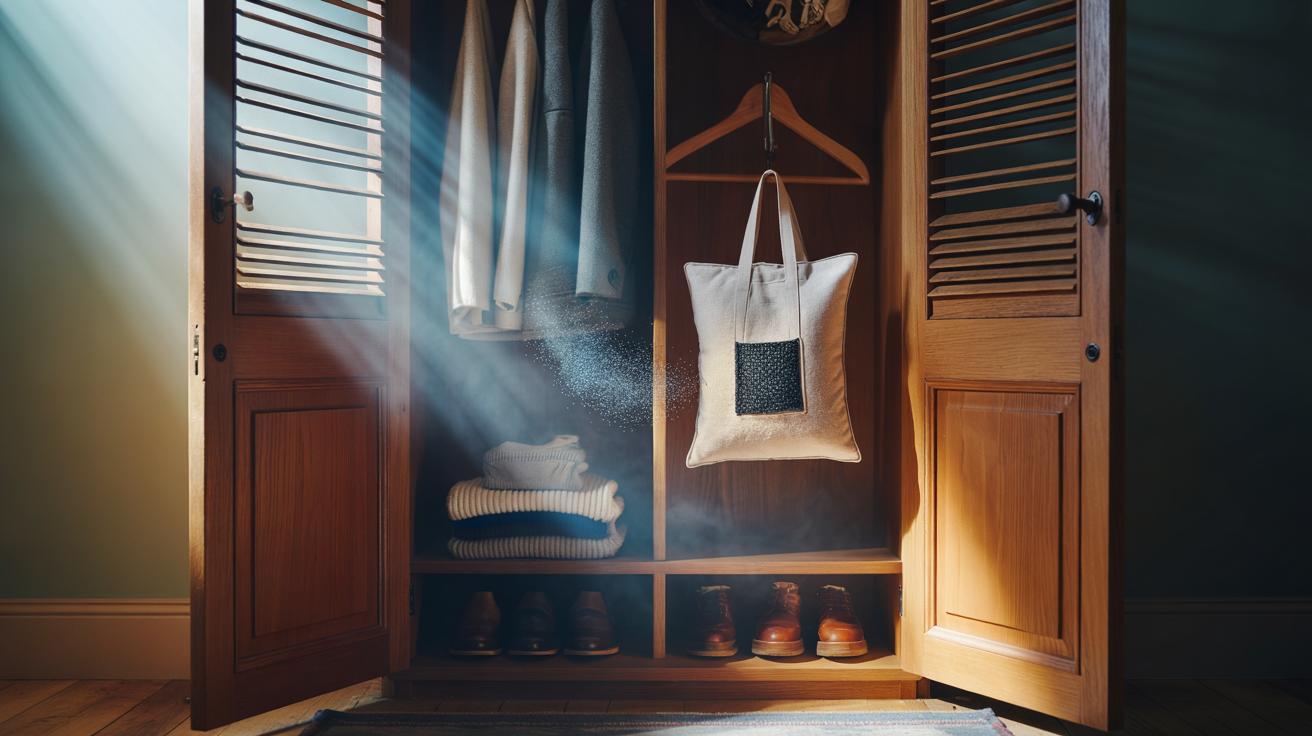
Placement matters. Pop one bag near shoes, another on an upper shelf among knitwear, and one by the back panel where air is still. Aim for 1–2 bags in a single-door wardrobe; double that for a larger space or if you keep damp outerwear inside. To maintain capacity, reactivate the charcoal by placing the bags in direct light or a bright windowsill for 2–3 hours every month; gentle warmth helps drive off adsorbed water and VOCs. Do not wash the charcoal; drying heat, not water, is the reset button. In low-sun UK winters, a conservatory, airing cupboard, or radiator-adjacent ledge can assist.
| Bag Size | Suggested Coverage | Reactivation Guide | Why It Matters |
|---|---|---|---|
| 75–100 g | Drawers, small shoe boxes | 1–2 hours in bright light, monthly | Targets micro-spaces where odours concentrate |
| 200–250 g | Single-door wardrobe or boot rack | 2–3 hours in sunlight, monthly | Balances humidity and odour in typical closets |
| 500 g | Walk-in cupboard or utility cupboard | 3–4 hours in sunlight, monthly | Higher capacity for damp-prone spaces |
Track performance by scent and feel: if mustiness returns faster than usual, it’s time to reactivate—more frequently in wet spells. After 18–24 months, capacity wanes. Many brands suggest cutting the bag open and mixing the charcoal into soil as a conditioner. Regular reactivation preserves efficiency without chemicals or electricity, making the routine as simple as setting a reminder on laundry day.
Safety, Sustainability, and Buying Tips
Look for clear labelling of activated bamboo charcoal rather than generic “carbon.” Stitching and fabric matter: a tight-weave linen or non-shedding cotton outer prevents dust. Choose odour-neutral packaging and avoid added perfumes that defeat the point. If you share a home with pets or young children, secure the bags out of reach; while the contents are typically non-toxic, charcoal is messy if spilled. For damp-prone homes, pair bags with good ventilation and avoid sealing wet coats inside a cupboard—charcoal is a buffer, not a substitute for drying.
From a sustainability perspective, bamboo’s fast growth makes it a strong feedstock, and the product’s reusability reduces waste. Cost-wise, compare capacity and lifespan with alternatives: silica gel excels at moisture but not odours, while plug-in dehumidifiers remove litres of water yet add energy use and noise. A mix often works best: a small dehumidifier in the room, charcoal in the wardrobe. When selecting, favour brands disclosing surface area, pore structure, and regeneration guidance; transparency signals quality.
For many British homes, a charcoal bag is a quiet fix for wardrobes that can’t be plumbed for dehumidifiers or sprayed daily. The bags tame humidity spikes, pull down stubborn smells, and do it without masking scents or adding clutter. By understanding porous carbon and sticking to simple maintenance, you can keep garments fresher for longer and postpone the next trip to the dry-cleaner. Could a small, renewable bag of charcoal become your wardrobe’s most effective invisible upgrade—and what other musty corners of your home might benefit from the same science?
Did you like it?4.6/5 (28)