In a nutshell
- 🧪 Borax’s mild alkalinity (around pH 9–9.5) loosens oily films via light saponification, reduces surface tension to wet textures, and provides a gentle chelating lift for hard-water spots.
- 🧼 Practical method: Sprinkle–Mist–Dwell–Agitate–Rinse—dust on borax, mist to a thin film, rest 5–7 minutes, brush softly, then rinse and dry to prevent spotting.
- 🪑 Best surfaces: resin/plastic, powder-coated aluminium/steel, tempered glass, synthetic rattan, and cautious use on hardwoods; avoid unsealed stone, bare steel, delicate fibres, fresh paint, or waxed finishes.
- ⚠️ Safety: avoid inhaling dust, wear gloves, and store dry; in the UK/EU, real borax is restricted—many consumers use a borax substitute (sodium sesquicarbonate) with similar cleaning action.
- 🌿 Eco/smart use: apply the minimum effective dose, rinse runoff onto soil (not ponds), don’t mix with acids, and rely on warm water plus soft brushes to reduce chemical load and repeat cleaning.
Weekend weather is kinder, the patio beckons, and the furniture that waited out winter now sports a film of grime. The fix needn’t be corrosive bleach or endless elbow grease. A light sprinkle of borax followed by a brief dwell and a brisk rinse can revive surfaces with surprising ease. Thanks to its mild alkalinity, it loosens greasy residues, scuffs, and outdoor pollution without stripping finishes. This method gives you a practical middle ground: effective cleaning with fewer harsh odours and less scrubbing. Here’s how the chemistry works, what to avoid, and the straightforward routine that makes plastic, metal, and weathered wood look presentable again.
Why Mild Alkalinity Dislodges Outdoor Grime
Patio furniture collects a cocktail of airborne oils, barbecue smoke, sunscreen, pollen, and soil minerals. A borax solution typically sits around pH 9–9.5, just alkaline enough to nudge those oily residues into water without biting into most coatings. It gently promotes the saponification of fatty grime, making it easier to rinse away, and it reduces water’s surface tension so the solution creeps into textured plastics and woven slings. Unlike caustic cleaners, it acts as a buffer, keeping the solution steady and predictable while you work.
Borax also brings a subtle chelating effect, tying up the calcium and magnesium ions that hard water leaves behind as chalky deposit. That helps lift old water spots and stops new ones from forming as you rinse. It can disrupt the thin biofilm that protects dirt, mould stains, and algae from ordinary washing, improving the result on weathered pieces. Always test on an inconspicuous patch first, especially with delicate finishes or newly painted frames, and keep expectations sensible: it’s a cleaner, not a disinfectant.
How to Use the Borax Sprinkle on Patio Furniture
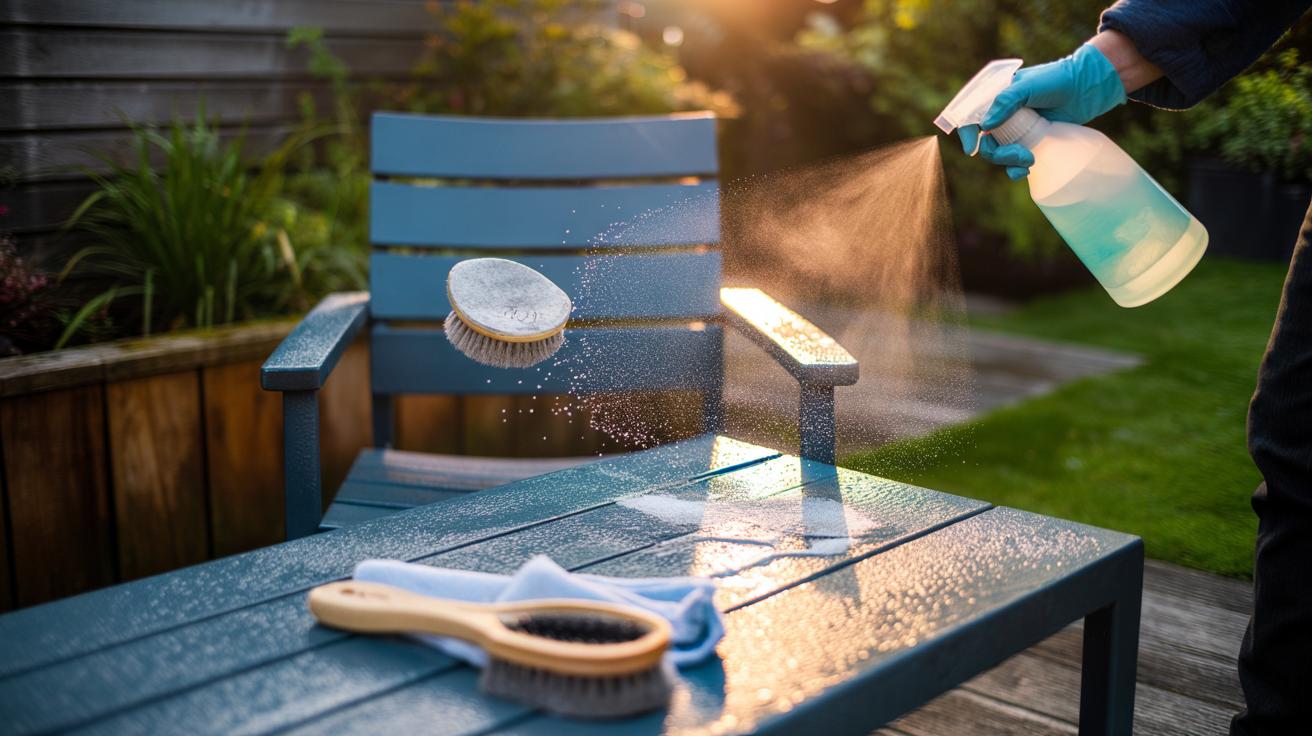
Knock off loose debris with a soft brush. While the surface is still damp, sprinkle a light dusting of borax over traffic-marked armrests, tabletops, and slings. Mist with warm water from a spray bottle until the powder turns into a thin film; you’re aiming for a slippery sheen, not puddles. Leave for 5–7 minutes. Agitate with a soft nylon brush or a non-scratch pad, moving with the grain on timber or along extrusion lines on aluminium. Rinse thoroughly with a hose, then towel or air-dry to avoid spotting.
For general washing, pre-mix a solution and decant to a trigger spray so you’re not chasing powder in a breeze. Add a drop of mild washing-up liquid if furniture is especially greasy. Do not mix with acids or specialised coatings cleaners, and avoid hot surfaces in direct sun, which can flash-dry residues. The quick guide below helps you match dose to material and dirt level.
| Surface | Sprinkle/Ratio | Contact Time | Notes |
|---|---|---|---|
| Resin/plastic | Light dusting or 1 tbsp per 1 L water | 5–7 minutes | Soft brush; rinse well to prevent residue. |
| Aluminium/steel (painted) | 1 tbsp per 1 L water | 5 minutes | Test first; avoid scrubbing glossy powder coat. |
| Hardwoods (teak, iroko) | 1 tsp per 1 L water | 3–4 minutes | Follow the grain; rinse and dry promptly. |
| Fabric slings | 1 tbsp per 1 L water | 7–10 minutes | Blot, don’t grind; repeat for sunscreen marks. |
Materials It Suits—and When to Avoid It
Plastic resin chairs, painted or powder-coated aluminium, and coated steel frames take well to a mild alkaline wash. So do tempered glass tabletops and woven synthetic rattan, which often hang onto oily films. On hardwoods, borax can lift grey grime without bleaching the natural tone; use a lower concentration and rinse quickly to preserve the timber’s oil content. Fabric slings, parasol canopies, and polyester cushions benefit from a gentle spray-and-blot approach that loosens body oils and pollen.
Skip borax on unsealed stone like limestone or marble, where alkalinity can dull the surface. Be cautious with bare mild steel, polished copper/brass, or surfaces with hairline coating failures; water and alkalinity may encourage flash rusting. Avoid wool, silk, or natural-dye textiles, and don’t use on specialty sealants, fresh paint, or waxed finishes. If in doubt, a patch test and a lighter dilution protect both appearance and warranty. For porous outdoor cushions, focus on covers you can remove and rinse thoroughly.
Safety, Environmental Footprint, and Storage
Borax (sodium tetraborate) is effective at low doses but deserves respect. Avoid inhaling dust, wear gloves if you have sensitive skin, and keep it away from children and pets. In the UK and EU, true borax has tighter consumer restrictions due to its classification; many shops sell a “borax substitute” (sodium sesquicarbonate), which delivers similar cleaning thanks to mild alkalinity. Whichever you use, label the container clearly and store it dry, sealed, and off the floor of damp sheds.
Use only as much as needed and rinse waste water onto soil or gravel, not into ponds or water features, since alkalinity can disturb aquatic life. Never mix with acidic descalers or proprietary coating restorers; chemical cross-reactions and finish damage aren’t worth the risk. For a greener routine, pair borax or its substitute with warm water, soft brushes, and prompt drying. That trio reduces the need for repeat applications and keeps runoff low.
The humble borax sprinkle turns a drab spring clean into a brisk, satisfying reset for tired garden sets. Its mild alkalinity unlocks greasy films, tames water marks, and freshens fabrics without the drama of harsh chemicals. Respect the patch test, match dilution to the surface, and give finishes a good rinse; the payoff is a brighter patio and kit that lasts longer between deep cleans. With a measured approach, you get professional-looking results from a pantry staple. Which piece of your outdoor setup would benefit most from a gentle alkaline lift—and what surface are you keen to test first?
Did you like it?4.5/5 (30)