In a nutshell
- 🛋️ Leather cracks when collagen fibres lose natural fats to dry air, heat, and harsh cleaners; light, breathable natural moisturisers replace lipids, reduce friction, and help prevent cracking.
- 🌿 A sparing olive oil wipe softens the fibre matrix via oleic acid and forms a thin occlusive barrier to slow moisture loss—patch-test first and remember: less is more.
- 🧴 Method: clean and dust, prep a barely oiled microfibre cloth (about 1 tsp per two-seat), wipe in small circles, then buff after 20–30 minutes; use pH-neutral cleaners and never treat suede/nubuck.
- 📊 Alternatives: Jojoba (stable, matte) and lanolin (deep, rich) suit different finishes—aniline, semi-aniline, or pigmented—and lighting/usage conditions.
- ⚠️ Avoid flooding, additives, and heat; watch for halos or tackiness and call a leather specialist if needed; prevent issues with rotation, sun shading, and humidity at 40–50%.
Leather’s beauty is its paradox: it is both tough and tender. In British homes where the heating runs for long months, air dries out leather sofas, leading to tightness, dulled colour and, eventually, cracks. The fix is not always a costly cream. A simple olive oil wipe—a lightly oiled cloth drawn over the grain—can act as a natural moisturiser, restoring suppleness without smothering the material. Done correctly, it replenishes surface lipids and buffers against everyday abrasion. Always patch-test in a hidden spot before treating an entire sofa. With care, this quiet ritual becomes routine maintenance, turning brittle leather into a seat that feels nourished, not greasy, and keeping your living room’s centrepiece resilient for years.
Why Leather Cracks and How Natural Oils Help
Leather is a web of collagen fibres held together by natural fats and tannins. When indoor air is low in humidity and sunlight warms a sofa’s armrest, those fats oxidise and evaporate. The fibres dry, shrink and rub against one another, causing micro-fractures that evolve into visible cracking. Cleaning with harsh detergents accelerates this because it strips protective lipids. The aim of maintenance is to replace what time and heat remove—without clogging the leather’s breathability.
A light olive oil application can work because its oleic acid content softens the fibre matrix and restores slide between strands. It forms a thin occlusive barrier that slows water loss, so the hide stays pliant through daily temperature swings. Less is more: over-saturation risks blotches and a tacky feel. Think of it as topping up the skin’s natural mantle, not glazing it. When used sparingly, oils defend against abrasion and keep the surface from stiffening into a crack-prone shell.
How to Make and Use an Olive Oil Wipe
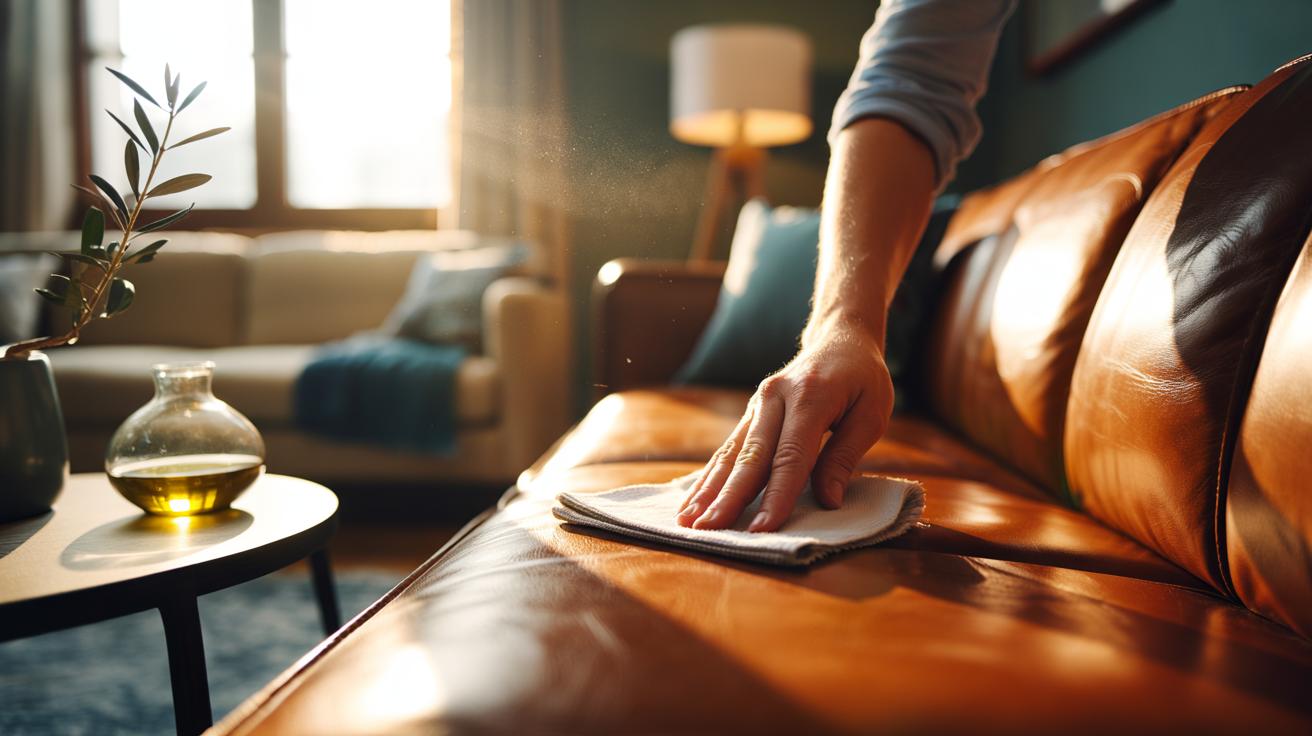
Start with a clean, dry sofa. Vacuum seams and dust the grain with a soft brush. Lightly dampen a lint-free, microfibre cloth with distilled water, then add a teaspoon of extra-virgin olive oil for a two-seat area. Work the cloth in your hands to distribute the oil until the fabric looks barely glossy. The cloth should feel conditioned, not wet. Test on a hidden panel; if colour deepens unevenly, stop and consult a professional.
Wipe in small, overlapping circles, following the grain. Avoid puddling at seams and stitching. Leave for 20–30 minutes, then buff gently with a clean cloth to remove any residue. This creates a soft sheen and helps the oil settle uniformly. For high-traffic arms and cushions, repeat monthly in winter and every 6–8 weeks in summer. Never use olive oil on suede or nubuck. For pigmented leathers, ensure your cleaner is pH-neutral and always keep application thin to prevent shadowing or oil rings.
Comparing Natural Moisturisers: Olive, Jojoba, and Lanolin
Not all oils behave the same on leather. Olive oil is accessible and softens quickly, but it can oxidise if overused, inviting odour and dust. Jojoba is technically a wax ester, close to human sebum; it resists rancidity and suits frequent light maintenance, especially in bright rooms. Lanolin, derived from wool, excels at deep conditioning and water resistance, though it can darken pale leathers if applied too generously. The right choice depends on your sofa’s finish—aniline, semi-aniline, or pigmented—and the room’s conditions. If your leather is unprotected aniline, always proceed conservatively and test. Many households blend a routine: an olive oil wipe for quick revival, jojoba for ongoing balance, and an occasional lanolin treatment before winter’s heating cycle.
| Moisturiser | Oxidation Risk | Penetration | Finish | Best For |
|---|---|---|---|---|
| Olive oil | Medium | Fast, shallow–medium | Soft sheen | Routine top-ups; dry rooms |
| Jojoba | Low | Even, controlled | Natural matte | Frequent light care; sunny spaces |
| Lanolin | Low–medium | Deep | Rich, can darken | Seasonal conditioning; older hides |
Care Mistakes to Avoid and When to Seek Expert Help
The temptation with household oils is to fix everything in one pass. That’s when problems begin. Do not flood the leather; pooling oil wicks into foam, causing odour and spongy cushions. Skip kitchen sprays and scented blends—additives can stain or disrupt dyes. Keep wipes away from perforations and tight seams where build-up collects. Avoid heat guns or hairdryers to “set” the finish; accelerated oxidation promotes tackiness and dulling. If you notice persistent dark halos, a sticky feel after buffing, or colour transfer to clothing, stop and book a leather specialist for solvent cleaning and reconditioning.
Prevention is cheaper than repair. Rotate cushions, draw blinds during peak sun, and use a humidifier in winter to maintain 40–50% relative humidity. A quarterly clean with a pH-balanced leather cleaner, followed by a thin natural oil wipe, preserves flexibility without suffocating the grain. The rule: light, regular care beats heavy, infrequent treatments.
Handled thoughtfully, an olive oil wipe is more than a homespun trick; it’s a practical, sustainable habit that respects how leather ages. By replenishing essential lipids and moderating moisture loss, you slow the march from stiffness to cracking, keeping the grain supple and the colour lively. Pair the wipe with good housekeeping—shade from harsh sun, steady humidity, gentle cleaning—and your sofa will wear in, not wear out. If you were to tailor a maintenance rhythm to your own living space, how often would you oil, what conditions would you monitor, and which natural moisturiser would you reach for first?
Did you like it?4.5/5 (20)