In a nutshell
- 🧂 The salt-scrub works through abrasion and mild hygroscopic action, scouring stains, drawing out moisture, and disrupting odor-trapping biofilm; lemon’s citric acid helps loosen tannins and pigments.
- 🧽 Method: sprinkle coarse salt, scrub 60–90 seconds (lemon half on wood, damp cloth on plastic), let sit 3–5 minutes, scrape, rinse warm, and dry upright; finish wood with food-grade mineral oil and never soak.
- 🧪 Choose your grit: coarse salt for scouring, fine salt for quick deodorising, bicarbonate of soda for gentle odour control, lemon for stain lifting, and 3% hydrogen peroxide to sanitise plastic; avoid prolonged acids on wood.
- 🛡️ Hygiene: follow UK guidance—dedicate a plastic board to raw proteins and a wooden board to ready-to-eat foods; prioritise thorough drying, skip bleach on wood, and replace deeply gouged plastic boards.
- 🌿 Benefits: a fast, low-cost, food-safe routine that banishes odours and stains, preserves board integrity, and extends lifespan with simple maintenance between meals.
Garlic, onion and beetroot have a way of clinging to chopping boards long after dinner is done, turning a kitchen staple into a lingering reminder. The quiet fix is hiding in your cupboard: a salt-scrub. Coarse crystals act as a gentle but effective abrasive, lifting pigments and smells without harsh chemicals or soak times that can warp timber. Paired with a slice of lemon or a splash of water, salt cuts through surface grime and draws out residues lodged in the grain. The trick lies in physics as much as cleaning—a blend of friction, absorption and brief chemistry that restores wood and plastic boards to a neutral, kitchen-ready state.
Why Salt Works on Stains and Smells
Salt’s power is twofold: mechanical abrasion and moisture management. Coarse crystals scour micro-grooves where pigments from turmeric, berries or meat juices settle. At the same time, salt’s mildly hygroscopic nature pulls liquid residues from pores, reducing the environment that feeds odours. Add lemon and the citric acid helps chelate metal ions and loosen tannins, which are notorious for clinging to wood fibres. It’s the controlled scratching of the surface—not bleach—that frees embedded stains, letting you rinse them away rather than covering the smell.
On microbial grime, salt disrupts the slimy matrix of biofilm that makes smells stubborn. It won’t sterilise a board, but it does knock back the debris that traps odours. On wood, abrasion refreshes the topmost fibres, reopening the grain so the board dries faster after washing. Faster drying means fewer stale smells. Think of salt as a tiny sandpaper you can safely eat—effective, food-safe and hard to overdo when used correctly.
Step-by-Step: The Salt-Scrub Method
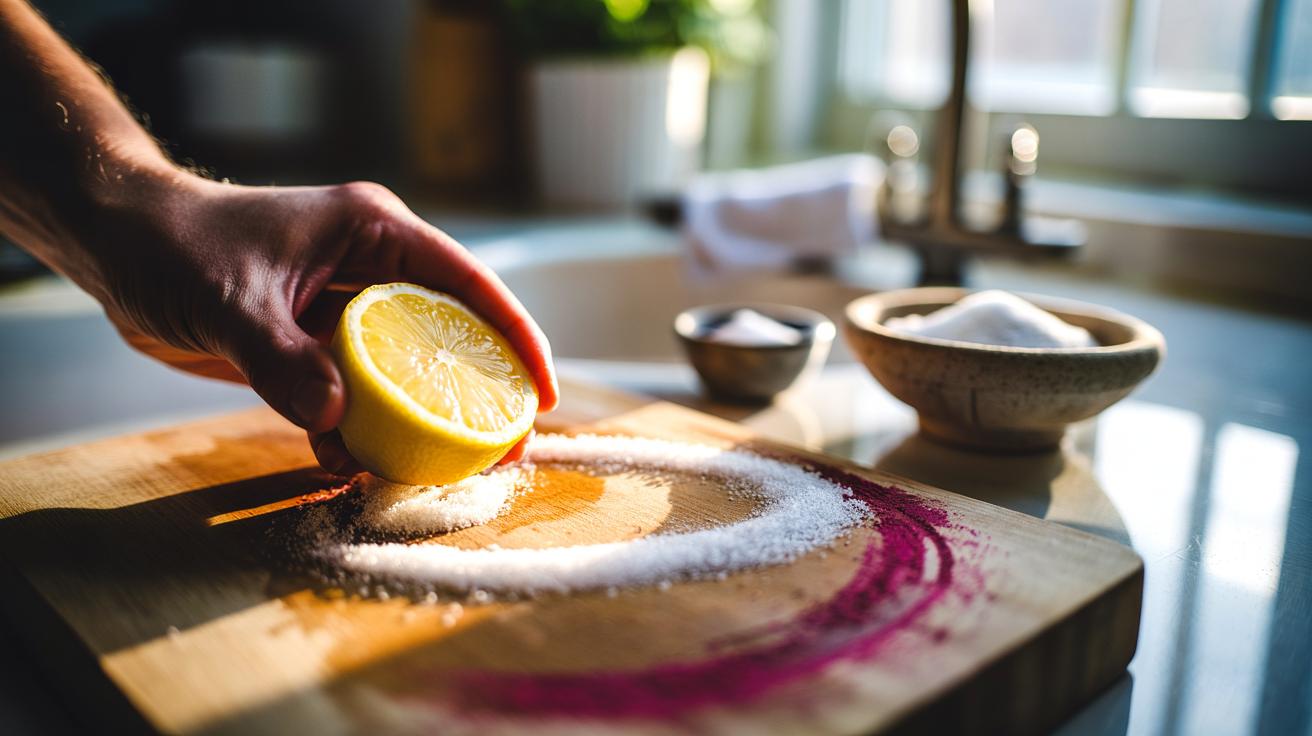
Start with a clean, damp board. Sprinkle a tablespoon or two of coarse sea salt evenly across the surface. For wood, halve a lemon and use the cut face as your “sponge,” pressing and scrubbing in tight circles for 60–90 seconds. Plastic boards benefit from the same motion with a damp cloth. Let the salty slurry sit for 3–5 minutes to draw out stains. Don’t exceed 10 minutes on wood to avoid over-wetting. Scrape off the paste with a bench scraper or the dull edge of a knife, rinse with warm water, and dry immediately.
Stand the board upright to allow airflow through the board grain. For deep stains, repeat once more or spot-treat with a pinch of salt and a few drops of lemon. Stubborn garlic odours often yield after a second pass. Never soak a wooden board; excess water raises the grain and invites warping. Finish wood with a thin coat of food-grade mineral oil once dry to seal pores and slow future staining.
Choosing the Right Abrasive and Add-Ons
Different jobs call for different grits. Coarse salt (like kosher or sea salt) excels at scouring fibres and dislodging pigments. Fine table salt spreads more evenly for deodorising but offers less bite. Bicarbonate of soda (baking soda) brings alkaline deodorising power and a gentle scrub, handy for plastic boards or delicate end-grain wood. Lemon boosts stain lifting; a splash of 3% hydrogen peroxide can sanitise plastic after scrubbing. Avoid vinegar on natural stone counters and keep acids brief on wood, as prolonged exposure can dull finishes.
| Abrasive/Add-On | Best For | How to Use | Caution |
|---|---|---|---|
| Coarse salt | Wood stains, onion/garlic odours | Scrub 1–2 min, rest 3–5 min, rinse | Do not soak wood |
| Fine salt | Quick deodorising | Light scrub, brief rest, rinse | Less abrasive on heavy stains |
| Bicarbonate of soda | Plastic boards, smell removal | Make paste, scrub, rinse well | Can leave residue if not rinsed |
| Lemon (citric acid) | Tannin and turmeric stains | Rub with salt, short dwell | Limit dwell on wood |
Match the grit to the job: coarse for scouring, fine for finishing. A two-step—coarse salt then bicarbonate—often clears both stain and smell in one session.
Hygiene, Safety, and Longevity for Boards
Salt-scrubbing is a maintenance tool, not a medical-grade clean. After handling raw meat, use hot soapy water first. For plastic, a brief post-scrub wipe with 3% hydrogen peroxide helps sanitise. For wood, rely on thorough drying and occasional oiling rather than harsh chemicals. Drying is the single best defence against lingering odours. Store boards upright, not flat, to keep air moving across both faces. Rotate surfaces to prevent cupping.
The UK Food Standards Agency advises separate boards for raw and ready-to-eat foods. Adopt a simple code—one plastic board for raw proteins, one wooden board for bread and produce. Monthly, deep-clean with a salt-scrub, then oil wood lightly to seal open pores. Skip bleach on wood; it degrades fibres and can leave a taste. Replace deeply gouged plastic boards that trap residue beyond a scrub’s reach. Good habits, not harsher chemicals, preserve both hygiene and the material.
Salt-scrubbing is fast, cheap and quietly effective, blending abrasion with light chemistry to restore boards without fuss. It respects the material, keeps smells at bay, and helps a favourite slab of beech or a hard-working plastic worktop live longer. The method shines when paired with smart drying and occasional oiling, forming a simple routine you can do between meals. Clean doesn’t have to mean caustic; it can be tactile, precise and sustainable. Which abrasive-and-add-on pairing will you try first to reclaim your board’s clean slate?
Did you like it?4.6/5 (22)