In a nutshell
- 🧪 The trap works by using bubbles and surfactants to collapse surface tension, wetting flies so wings can’t lift; capillary forces and Marangoni flow pin them down.
- 🛠️ Effective setup: a shallow, wide bowl with light foam; mix water with 2–3 ml washing-up liquid per litre and optional attractants like cider vinegar, sugar, or yeast; refresh daily.
- 📍 Smart placement and timing: position by compost caddies, fruit bowls, bins, or windowsills; add a small lamp at dusk; choose still-air corners and elevate to avoid draughts.
- 🛡️ Prioritise safety: keep out of reach of pets and children, use mesh in greenhouses to protect pollinators, and dispose via drains—never into ponds.
- 🔄 Pair traps with hygiene—sealed food, rinsed recycling, clean drains—and monitor with sticky cards for humane, low-cost, targeted control.
Across Britain’s kitchens and patios, a humble bowl of soapy water has become an unexpectedly effective way to cut down on buzzing nuisances. It’s cheap, discreet, and relies on basic physics rather than harsh chemicals. What makes it work is not the soap alone but the way froth and bubbles distort a fly’s judgement, turning a safe-looking landing into a sticky, sinking trap. Because the solution thins the water’s surface tension, any insect that touches down is swiftly wetted and unable to take off again. Here’s how the method functions, how to set it up properly, and where to place it for reliable, humane results.
Why Bubbles Lure and Trap Flies
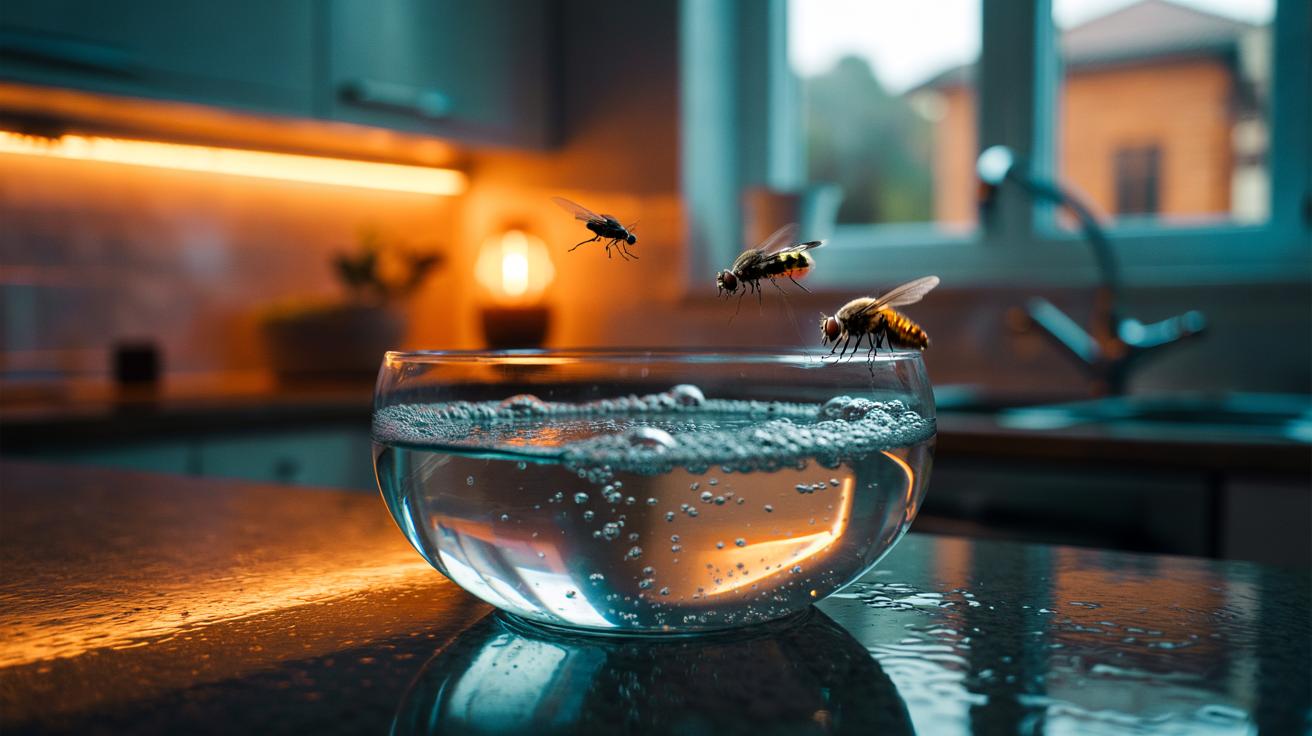
Flies navigate with visual and chemical cues. A bowl dotted with bubbles reflects light like dew or fermenting liquids, and the faint scent of soap or added attractants mimics volatile cues from food and compost. Bubbles act as false landing pads, and once the insect touches the liquid, the surfactants in washing-up liquid collapse the water’s surface tension. That instant shift defeats the fly’s hydrophobic leg hairs, drenching the body and clogging spiracles, the tiny openings they use to breathe.
Physics does the rest. The film’s rapid thinning, aided by Marangoni flow, pulls droplets across the insect’s cuticle, while capillary forces pin the legs. Even strong fliers struggle because their wings must be perfectly dry to generate lift. Once wetted, a fly cannot regain lift and quickly succumbs. The trap doesn’t rely on poison; it exploits fluid dynamics and the fly’s evolved preference for glossy surfaces and ferment-like aromas.
Setting Up an Effective Soapy Water Bowl
Select a low, wide dish to maximise surface area and gentle sloping sides so flies don’t gain purchase. Fill with cool or lukewarm water and add a small dose of washing-up liquid to create surfactant-rich conditions without excessive foam. A light head of bubbles is ideal: it mimics natural scum, enticing landings while ensuring instant wetting. For fruit flies, a teaspoon of cider vinegar or a pinch of sugar can boost attraction; for houseflies near bins, a drop of fish sauce or yeast works surprisingly well. Refresh the mixture daily in hot weather and position a small LED lamp nearby to increase visual draw at dusk.
| Ingredient | Purpose | Suggested Ratio |
|---|---|---|
| Water | Medium for trapping | 1 litre |
| Washing-up liquid | Surfactant to break surface tension | 2–3 ml |
| Cider vinegar or sugar | Optional lure for fruit flies | 1–2 tsp |
| Yeast (pinch) | CO₂ and aroma boost | Optional |
Keep bowls shallow and out of children’s and pets’ reach. Ceramic or glass resists tipping; avoid strong perfumes that may repel some species. Replace when the surface is cluttered, as corpses reduce contact between newcomers and the liquid.
Where and When to Deploy the Trap
Put traps where flies already patrol: beside kitchen compost caddies, under fruit bowls, near recycling, and on windowsills where insects follow light. In bathrooms, a bowl by the shower drain can interrupt drain-fly cycles; in gardens, place it near but not inside the path of bin odours. Positioning matters more than quantity—one well-placed bowl outperforms several scattered at random. Elevating the dish to counter skirting-board draughts also helps, as does ensuring a clear approach path without fluttering curtains.
Time your deployment to behaviour. Flies are most active in warmer afternoons and early evenings; a subtle desk lamp or window light above the bowl amplifies reflections, guiding them down. For overnight fruit fly control, set a bowl on the counter and cover perishables. During heatwaves, refresh the mix more often to maintain bubble quality and scent. If you rely on natural ventilation, place bowls where air slows—corners, alcoves, and the lee side of open windows.
Safety, Ethics, and Environmental Considerations
Washing-up liquid is widely considered low-toxicity, but any open liquid can be risky for small pets and wildlife. Always site bowls where pets, toddlers, and beneficial insects cannot reach. Indoors, that’s simple; outdoors, it’s prudent. Avoid placing traps near pollinator-rich planters or flowering herbs to prevent accidental captures of bees or hoverflies. For greenhouses, use fine mesh over half the bowl’s surface, leaving gaps large enough for target species but not for pollinators.
Dispose of contents responsibly: pour into a drain with running water; do not tip into ponds. Reduce repeat infestations by pairing traps with hygiene measures—sealed food containers, rinsed recycling, promptly emptied caddies, and cleaned drains. This reduces attractants so traps become a targeted tool rather than a permanent fixture. If an influx persists, inspect for structural issues, such as broken fly screens or bin seals, and consider integrating sticky cards for monitoring so you can adjust placement with evidence.
The soapy bowl works because it bends physics and fly behaviour to your advantage, not because it douses a room in chemicals. By fine-tuning bubble density, scent, and placement, you can curb houseflies, fruit flies, and drain flies with minimal fuss and cost. Pairing good sanitation with a few well-sited bowls delivers swift, visible results. As the warm months approach and bins, fruit, and compost tempt invaders, what mix, location, and timing will you test first to make this quietly scientific trap part of your household routine?
Did you like it?4.5/5 (29)