In a nutshell
- 🥥 A coconut‑oil buff restores wooden chopping boards by letting gentle fats penetrate fibres, moderating moisture in hygroscopic wood and reducing stress that leads to cracking.
- 🧪 Choose wisely: fractionated coconut oil (MCT) for stability, refined coconut oil for affordability, food‑grade mineral oil for inert neutrality, and beeswax + oil paste for added water resistance; avoid highly unsaturated seed oils that can turn rancid.
- 🧴 Method that works: clean and dry, warm the oil, apply thin coats with the grain (especially on edges/end‑grain), wait 20–30 minutes, then buff off all excess; finish with beeswax paste if desired and never soak or put boards in the dishwasher.
- 🧼 Keep it safe: after raw meat, hot wash and dry, use salt/lemon or vinegar (or a brief 3% hydrogen peroxide mist), store upright, rotate use, and sand then re‑oil if surfaces feel sticky or smell off; retire boards with deep cracks.
- 🪚 Lasting benefits: conditioned wood feels smoother, is kinder to knives, and looks better; consistent maintenance—monthly refreshes and sensible washing—delivers years of service without resorting to synthetic sealants.
Every chopping board tells a story: knife marks, water rings, the faint scent of garlic after a Sunday roast. When wood starts to look grey and thirsty, a simple coconut‑oil buff can bring it back to life. Unlike harsh varnishes, gentle fats seep into the grain, keeping fibres supple and resilient. The goal is not to seal wood in plastic but to stabilise it so it shrinks and swells less. This guide explains how saturated oils prevent cracking, the differences between coconut oil and mineral oil, and a step-by-step method that leaves boards clean, safe, and beautifully conditioned.
Why Gentle Fats Stop Boards From Cracking
Wood is hygroscopic: it absorbs and releases moisture with every wash and change in kitchen humidity. That movement stresses the fibres, and unconditioned boards often split along seasonal lines. Gentle fats drift into the microscopic voids between fibres, slowing water exchange and acting as a flexible buffer. When the moisture gradient is moderated, checks and hairline cracks are far less likely to appear. Coconut oil is rich in stable, medium‑chain triglycerides that resist oxidation better than many seed oils, which helps the finish stay neutral in scent and colour.
There is chemistry at play. Saturated molecules tend to be more oxidation‑resistant, so they are less likely to turn sticky or rancid on the board. That makes refined or fractionated coconut oil a practical choice. By lubricating the cell walls, the oil reduces friction in the grain as it moves, improving resilience after hot washes and air-drying. Think of it as a breathable raincoat, not a suffocating shell. Avoid highly unsaturated cooking oils; their oxidation products can smell and may imprint flavours.
Choosing the Right Oil: Coconut, Mineral, or Wax Blends
The best finish balances stability, food safety, and ease of use. Refined coconut oil has low odour and decent resistance to rancidity; fractionated coconut oil (MCT) goes further, remaining liquid and highly stable. Food‑grade mineral oil is inert, widely available, and almost odourless. For extra water resistance, many DIYers melt in beeswax to create a soft paste that fills open grain and edges. If nut allergies are a concern, skip drying nut oils and stick with mineral or fractionated coconut.
Virgin coconut oil works but may carry aroma and is firmer at room temperature. Standard vegetable oils such as sunflower or rapeseed can oxidise, creating tacky films. When in doubt, choose an oil that is food‑safe, stable, and simple to refresh. A small tin of wax‑oil paste makes monthly touch‑ups fast, especially on end‑grain boards that drink more product. Below is a quick comparison to guide your choice.
| Product | Pros | Cons | Best For |
|---|---|---|---|
| Fractionated coconut oil (MCT) | Very stable, stays liquid, low odour | Costs more than basic oils | Regular maintenance, warm kitchens |
| Refined coconut oil | Good stability, affordable | Solid when cool, slight aroma possible | General use, light conditioning |
| Food‑grade mineral oil | Inert, neutral, readily available | Needs more frequent re‑application | Odour‑sensitive cooks, rental kitchens |
| Beeswax + oil paste | Improved water beading, edge sealing | Needs gentle heat to apply evenly | Heavy‑use boards, end‑grain blocks |
Step‑by‑Step: The Coconut‑Oil Buff
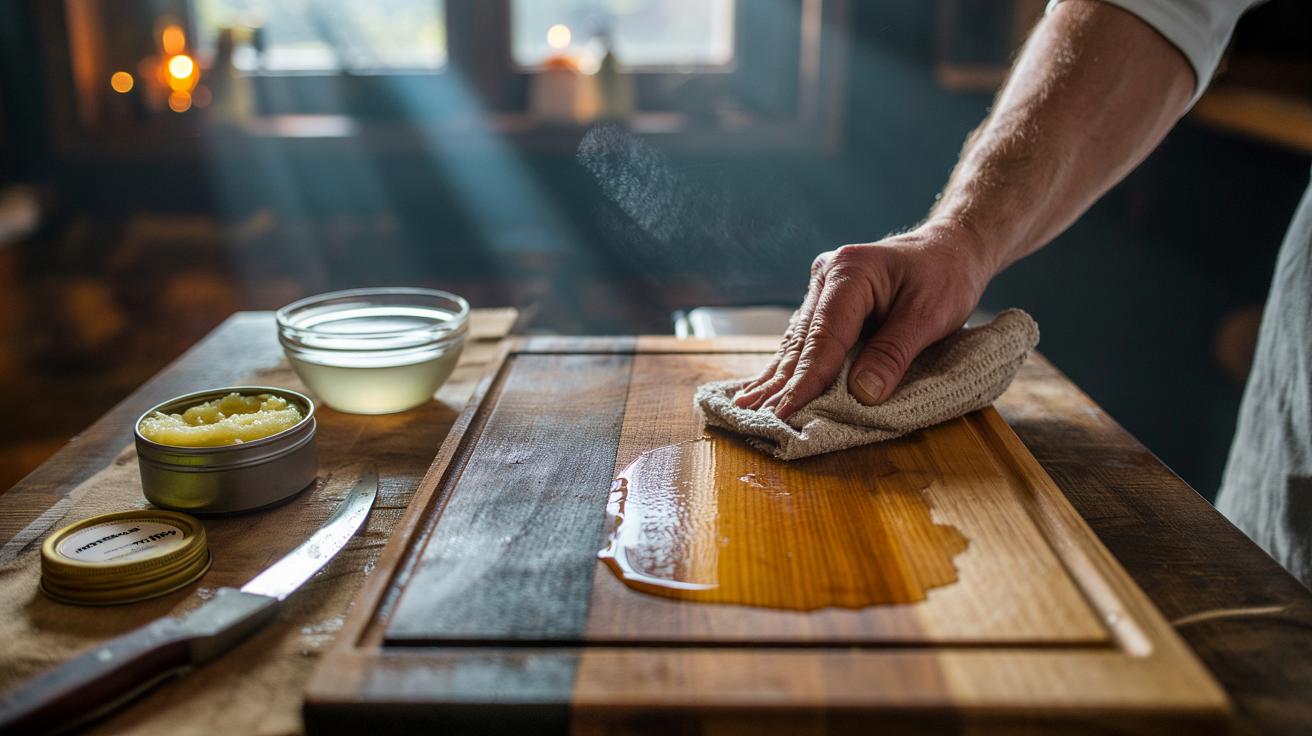
Start clean. Scrub the board with hot water and a drop of mild soap, then rinse and dry immediately. For stains, sprinkle coarse salt, rub with half a lemon, and wipe. Let the board dry upright for several hours. Warm a tablespoon of refined or fractionated coconut oil until fluid. Apply with a lint‑free cloth, working with the grain. Use thin coats—saturation comes from repetition, not puddles. Pay special attention to edges and end‑grain, where absorption is fastest.
Allow 20–30 minutes for absorption, then buff off every trace of excess until the surface feels dry and satiny. Repeat once or twice for a thirsty board. For deeper protection, finish with a light pass of beeswax paste, melting it in with the warmth of your palm and buffing to a soft sheen. Never soak wooden boards or put them in the dishwasher; heat and steam undo all your careful conditioning. Refresh monthly, or when water stops beading on contact.
Care, Hygiene, and Safety for Food Prep
Conditioning is only half the story. After raw meat, scrape, wash hot, and dry promptly. Deodorise with salt and lemon or a wipe of white vinegar; for a deeper clean, a brief mist of 3% hydrogen peroxide is effective on microbes, followed by a rinse and thorough drying. If a board smells sour or feels sticky, it needs a strip‑back and re‑oil. Sand lightly with 240‑grit to remove residue, wipe clean, then rebuild with two or three thin coats.
Store boards upright so air can circulate on both faces, reducing the chance of warping. Rotate use to avoid deep ruts in a single area, and inspect for deep cracks that can harbor food debris. Retire or repair a board with structural splits; oil is a conditioner, not a structural fix. If you worry about allergens, avoid nut‑based drying oils. With steady care—cleaning, drying, and a periodic coconut‑oil buff—a well‑made board can work for a decade or more.
Conditioned wood is forgiving under the knife, quiet on the worktop, and handsome on display. A regular coconut‑oil routine stabilises moisture, reduces fibre stress, and keeps the grain sealed against stains without resorting to synthetic varnish. The trick is consistency: thin coats, full absorption, and sensible washing habits. For many home cooks, that balance of practicality and pleasure is the heart of good kit. How do you maintain your chopping boards today, and what small changes could make them last longer and perform better in your kitchen?
Did you like it?4.3/5 (22)