In a nutshell
- 📚 The musty odour comes from paper ageing, dust, and dormant mould; keep Relative Humidity (RH) below 55% and allow airflow to limit VOC build-up.
- 🧺 Dryer sheets release light fragrance molecules that create odour masking and reduce static, freshening shelves without touching pages—never place them inside books.
- 🛠️ For setup, position 1–3 sheets at the back or in breathable sachets per metre of shelving, refresh every 2–4 weeks, and pair with dusting, ventilation, and spacing between books.
- ⚠️ Know the limits: residues and scent transfer risk; use activated charcoal, silica gel, or sealed bicarbonate of soda for archival-safe control and keep scented items off bindings.
- 🧠 The science of scent: mixture suppression makes “clean” notes dominate perception, so shelves smell fresher while chemistry remains—best combined with environmental control.
Open a cupboard of old novels or a charity shop haul and you’ll know the scent: a sweet, stale tang that clings to paper and dust jackets. Home owners swear by a simple trick—tucking a dryer sheet on the shelf—to tame the musty odour without scrubbing or special equipment. The idea blends fragrance chemistry with microclimate control, using light volatile compounds to freshen the air around your books. Done thoughtfully, it can be a tidy, low-cost fix while you tackle the bigger culprit: humidity. Used correctly, scented sheets offer quick relief, buying time to improve storage conditions and preserve your collection’s character.
Why Books Smell Musty
That tell-tale smell is a cocktail of breakdown products from lignin and cellulose in paper, traces of previous environments, and the metabolic signatures of dormant mould spores. When shelves sit in still, humid air, organic compounds accumulate. Dust binds these molecules, so odour intensifies between tightly packed spines. Old glues, leather dressings, and even previous cleaning sprays add to the mix. If the air cannot circulate, those volatiles linger and books smell older than they truly are.
The real driver is relative humidity and temperature. Above about 55% RH, mould risk rises and paper absorbs moisture, releasing more volatiles. Basements, box rooms, and closed cabinets are prime culprits. A scented sheet does not “fix” the chemistry of ageing paper, but it can reduce the perceived odour while you adjust the room’s microclimate. Keep RH below 55%, dust regularly, and space books to allow air flow; the fragrance then supports rather than substitutes preservation.
How Dryer Sheets Work in a Bookshelf
Dryer sheets are woven carriers infused with softeners, fragrance molecules, and anti-static agents. In a confined shelf, they slowly release light volatiles—esters, aldehydes, and musks—that occupy the air your nose samples. This causes odour masking: pleasant notes dilute or suppress perception of musty compounds. Anti-static additives also reduce dust cling on nearby surfaces, indirectly limiting odour reservoirs. The result is a fresher-smelling nook without chemicals touching the pages themselves.
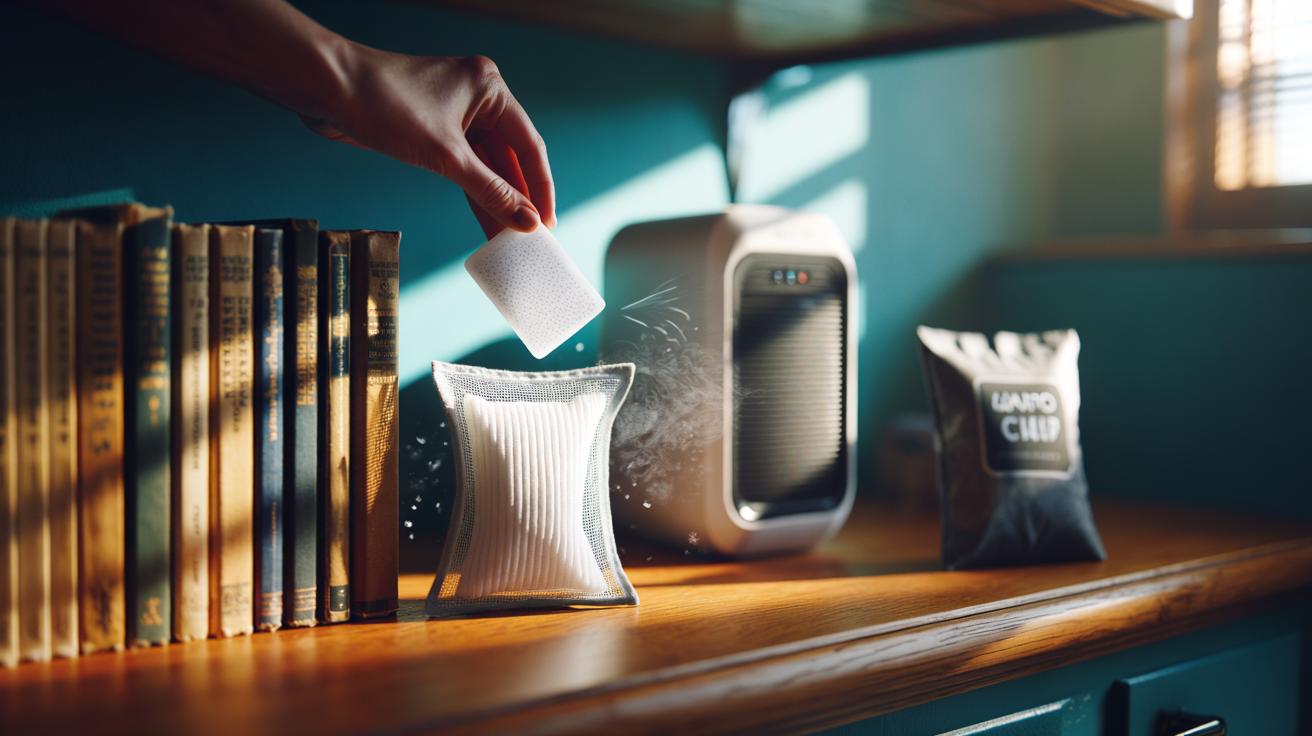
Placement matters. Slip one or two sheets at the back of each shelf or inside a breathable sachet hung from a bracket. Avoid stacking them in direct contact with covers. Adsorption and passive diffusion do the work; concentration should be gentle. Replace when scent fades—typically every 2–4 weeks. Never wedge dryer sheets between pages or inside jackets, as residues can mark paper and attract further dust.
Practical Setup: Placement, Quantity, and Timing
For a one-metre shelf of mixed paperbacks and hardbacks, start with one dryer sheet placed behind the spines, centred, and a second at the far end for tall or deep cases. If odour persists after a day, add one more in a mesh sachet and reassess. Pair the fragrance with basic housekeeping: vacuum dust with a soft brush, wipe shelves with a barely damp microfibre, and leave doors ajar for a few hours. Ventilation plus scent is more effective than scent alone.
Timing is strategic. Refresh sheets when you rotate or dust—fortnightly in humid months, monthly in winter. If you return from a long trip to a stale room, open the window, run a fan for 15 minutes, then install new sheets. Keep a small lidded tin of spare sheets in the same room to minimise cross-contamination of scents. Consistency beats intensity; a light, steady fragrance prevents rebound odours.
Risks, Limitations, and Archival-Safe Alternatives
Dryer sheets are a comfort fix, not a conservation cure. Softener residues and plasticisers can migrate if pressed against covers, and some fragrances linger in cloth. For rare volumes, steer clear of direct exposure and focus on environmental control. Use sheets only as nearby air fresheners, housed in breathable envelopes. If you value neutral odour or have fragrance sensitivities, choose sorbents that capture VOCs without adding scent. When in doubt, keep anything scented at least a hand’s breadth from vulnerable bindings.
| Method | What It Does | Best For | Cautions | Replacement |
|---|---|---|---|---|
| Dryer Sheets | Masks odours; reduces static | Quick refresh in living spaces | Keep off books; fragrance transfer | 2–4 weeks |
| Activated Charcoal | Adsorbs VOCs | Neutral odour control | Bagged, not loose; avoid dust | 1–3 months (sun to recharge) |
| Silica Gel | Controls humidity | Damp rooms and cabinets | Use indicating beads; avoid over-drying leather | Recharge when colour changes |
| Bicarbonate of Soda | Neutralises acids/odours nearby | Enclosed boxes | Closed container; no spills | Monthly |
For collections, combine low RH with charcoal and gentle air exchange; keep fragrances for general shelves. Environmental stability preserves paper; scent merely manages perception.
Science of Scent: Why Fresh Notes Fool the Nose
Your nose compares signals rather than measuring absolute concentrations. When fresh, familiar notes—citrus, cotton, mild musk—enter the mix, they trigger mixture suppression, reducing the brain’s attention to musty aldehydes from ageing paper. This is psychological as much as chemical: memory biases attach “clean” to certain accords, lowering annoyance even if total VOCs barely change. The shelf smells better because perception is reweighted, not because every odour molecule has vanished.
Dryer sheet fragrances are engineered for controlled release, with top notes that lift quickly and soft base notes that linger. The lightest molecules occupy air near the spines, while heavier ones cling to the sheet, extending effect without overpowering. Paired with dust control and modest dehumidification, they tip the balance from stale to pleasant. Think of scent as an acoustic panel for smell—shaping, not silencing, the room’s acoustics.
A dryer sheet on the bookshelf is a small, clever intervention: it refreshes the air while you fix the environment that created the smell. Keep humidity under control, dust with care, and position fragrance at a distance so residues never touch paper. For sensitive collections, rely on neutral sorbents and steady airflow; for everyday paperbacks, the scented approach can be perfectly acceptable. A shelf that smells inviting is one you’ll return to and maintain. How might you combine scent, sorbents, and humidity control to create a fresher home for your books without compromising their longevity?
Did you like it?4.4/5 (30)