In a nutshell
- 🌿 Boiling eucalyptus leaves releases eucalyptol that produces menthol-like vapours, activating TRPM8 receptors; alongside humidity, this delivers a cooling sensation and mucolytic effect that makes breathing feel easier.
- 🍲 The leaf boil method: gently simmer fresh or dried leaves for 10–15 minutes and let the vapours diffuse into a small room, balancing scent with light ventilation or using a few drops of essential oil in hot (not boiling) water.
- ⚠️ Safety first: Do not ingest oils, avoid steam burns, keep hot pans away from children and pets, and trial cautiously if you have asthma or migraines; infants are sensitive to strong aromas.
- 🔬 Evidence and limits: eucalyptol supports symptomatic relief (mucus clearance, reduced nasal obstruction) but is not a cure; doses from room vapours vary, so treat it as an adjunct to medical care.
- 🌬️ Menthol vs Eucalyptol: both engage TRPM8 but feel different; pair gentle aroma with hydration, saline rinses, and ventilation to optimise comfort without overpowering fragrance.
Every winter, British homes turn into sealed ecosystems of central heating, stale air, and lingering colds. One folk fix resurfaces reliably: a quick boil of eucalyptus leaves to send menthol-like vapours through a stuffy room. The idea is simple—release the plant’s volatile oils so they disperse, helping noses and chests feel freer. Science offers a plausible mechanism, though this is no medical miracle. Used safely, a eucalyptus leaf boil can make rooms feel fresher and breathing less laboured, especially when congestion and heavy air coincide. What follows is a practical guide grounded in research on eucalyptol, alongside sensible cautions for families, pet owners, and anyone with respiratory conditions.
How Eucalyptus Vapours Open the Airways
Eucalyptus leaves contain 1,8‑cineole (eucalyptol), a terpene that behaves in a menthol-adjacent way. It activates cold-sensitive receptors in the nose, notably TRPM8, producing a cooling sensation that the brain interprets as easier airflow. That perceived coolness can make breathing feel easier even when the air temperature hasn’t changed. Beyond sensation, laboratory and clinical research links eucalyptol with mucolytic (mucus-loosening) and modest anti-inflammatory effects in the upper airways. This helps explain why a room infused with eucalyptus vapours can feel clearer within minutes, particularly when winter dryness has thickened secretions.
There is also a humidity effect at play. Warm water vapour hydrates nasal passages, while volatile compounds from the leaves add a distinctive, sharp aroma that cuts through mustiness. Menthol itself is not identical to eucalyptol, but the sensory pathways overlap. Early trials in sinusitis and bronchitis suggest inhaled eucalyptol may reduce symptoms, though results vary and doses in studies are controlled. A eucalyptus boil offers ambience and symptomatic ease, not a cure. For persistent wheeze, fever, or chest pain, seek clinical guidance rather than aromatic improvisation.
A Simple Kitchen Method: The Leaf Boil
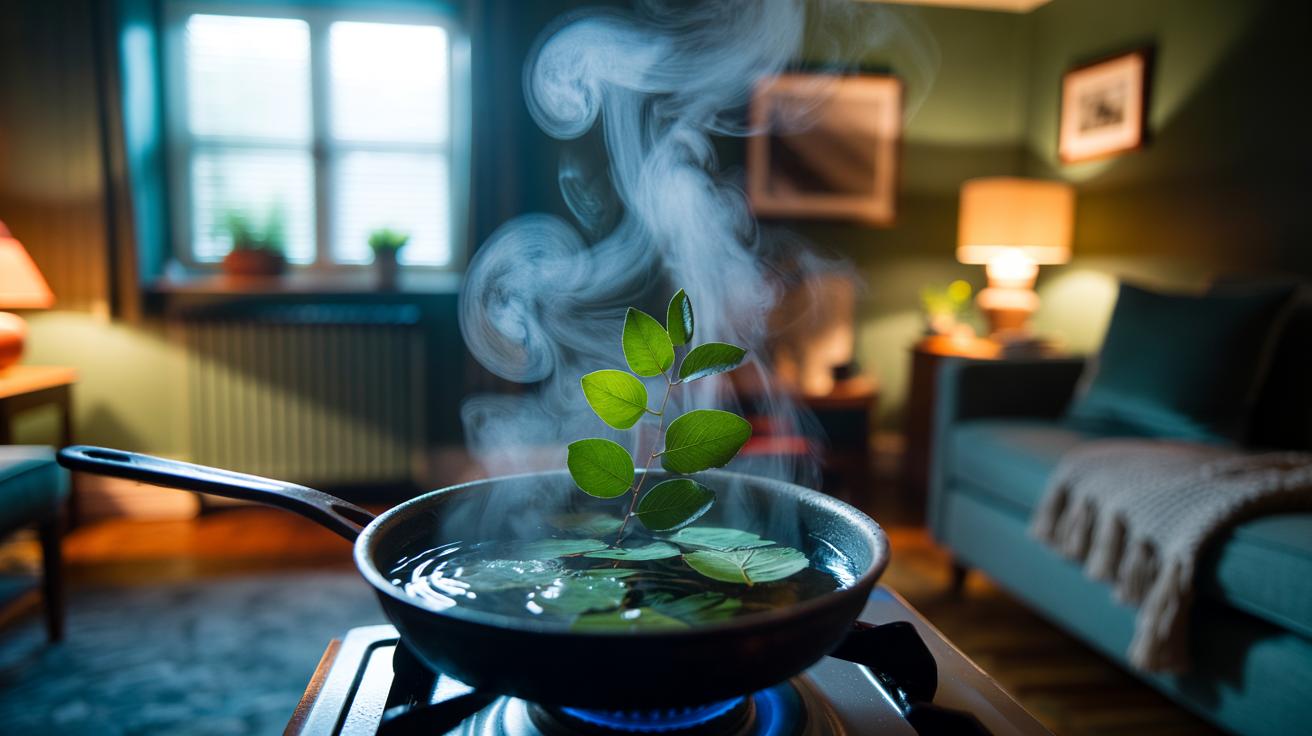
Start with a small saucepan of water and a loose handful of fresh or dried eucalyptus leaves (culinary or herbal-grade; avoid decorative foliage treated with dyes or preservatives). Bring to a simmer for 10–15 minutes with the lid ajar. Place the pan—carefully—on a heatproof surface in the room you want to freshen. Allow the vapours to drift; adjust by cracking a window for balance between fragrance and ventilation. One simmering pan typically scents a small lounge or bedroom for 20–30 minutes. If leaves are scarce, add 2–3 drops of eucalyptus essential oil to a bowl of hot (not boiling) water and refresh as the scent fades.
Safety matters. Never lean over a pan of boiling water or drape towels over your head—scald risk outweighs any breathing benefit. Keep hot liquids out of children’s reach and away from pets. Do not ingest eucalyptus oil; even small amounts can be toxic. Avoid direct use in cots or nurseries; infants are sensitive to strong aromas. Those with asthma should test briefly in a well-ventilated space, because pungent oils can sometimes provoke symptoms. When finished, air the room for a few minutes to disperse any heavy residues and reset humidity.
Evidence, Benefits, and Boundaries
What does the evidence truly support? Studies of eucalyptol as an inhaled or oral adjunct report improvements in cough frequency, mucus clearance, and nasal obstruction scores. Yet a room boil delivers variable doses, so benefits are best described as symptomatic easing, enhanced by comfort and humidity. That still counts on a clogged evening: less perceived blockage, gentler breathing, and a cleaner-smelling space. Limits are clear. Aromatics are not antibiotics, and they do not shorten viral colds in a proven way. Anyone with chronic lung disease should prioritise prescribed therapies, using eucalyptus only as a supportive measure.
Vulnerable groups warrant care. Strong scents can irritate airways in asthma, trigger headaches in migraine sufferers, and pose toxicity risks to pets. Pregnancy and medication interactions (notably with certain liver-metabolised drugs) deserve caution. Keep exposures short, keep doors slightly open, and stop if irritation occurs. The table below summarises core considerations for common situations people ask about when scenting rooms with eucalyptus.
| Group | Risk/Consideration | Practical Advice |
|---|---|---|
| Infants and young children | Sensitivity to strong vapours; accidental burns | Use in a separate room; keep hot water out of reach; brief, low-intensity exposure |
| Asthma or COPD | Potential airway irritation or cough | Trial for 5 minutes with ventilation; stop if symptoms flare; prioritise prescribed inhalers |
| Pregnancy | Limited safety data for concentrated oils | Prefer mild leaf simmering; avoid prolonged exposure and direct inhalation tents |
| Pets (cats, dogs, birds) | Essential oil toxicity; respiratory sensitivity | Keep animals out during use; ventilate thoroughly before re-entry |
Menthol Versus Eucalyptol: Similar Sensations, Different Molecules
Both menthol and eucalyptol excite cold-sensing pathways that signal freshness to the brain, yet they are distinct compounds with subtly different profiles. Menthol, from mint, is more potent on TRPM8 and produces a pronounced cooling tingle; eucalyptol offers a cleaner, camphoraceous lift that feels less sharp but more penetrating through musty air. The shared sensory trick is convincing the nose that airflow has improved, even as the true physiological gain comes chiefly from humidity and mucus-softening effects. That’s why a leaf boil can rival a menthol rub in perceived relief, especially in a dry, heated room.
Products often blend the two: balms, chest rubs, and lozenges lean on this synergy to deliver an immediately recognisable “clear” sensation. In a domestic simmer, eucalyptol remains the star. Keep the dose modest; stronger is not better if it stings the eyes or throat. Consider pairing the boil with practical habits—saline nasal rinses, a glass of water, and a short window purge—to align aroma with airway hygiene. The goal is comfort and clarity, not overpowering fragrance.
Eucalyptus has earned its reputation in British homes because it works with the body’s senses, not against them—cooling receptors, loosening mucus, and shifting a room’s mood from heavy to breathable. As a household ritual, the leaf boil is low-tech and, used judiciously, low-risk. Respect the cautions, mind the heat, and think of it as part of a toolkit alongside ventilation, hydration, and rest. When the next cold snaps at your door, will you turn to a gentle cloud of eucalyptol-rich vapours—and what other simple habits might you pair with it to keep your home’s air kinder on the lungs?
Did you like it?4.5/5 (27)