In a nutshell
- 🔇 Felt pads act as soft barriers, extending contact time and lowering peak force, turning sharp slams into a gentler thud and reducing impact noise.
- 🧵 The fibre web provides viscoelastic damping, converting collision energy to heat, cutting panel vibration and rebound (lower coefficient of restitution).
- 📏 Choose the right thickness and density (1–2 mm for most doors, 3–4 mm for heavier); avoid pads that bottom out or are too rigid to damp.
- 📍 Correct placement and fitting—pads at top and bottom corners, clean surface, firm pressure, slight pre-compression—deliver outsized noise reduction.
- 📊 Material options compared: felt suits most cupboards, silicone for heavier or humid settings, cork for light doors; replace worn pads and complement soft-close hinges.
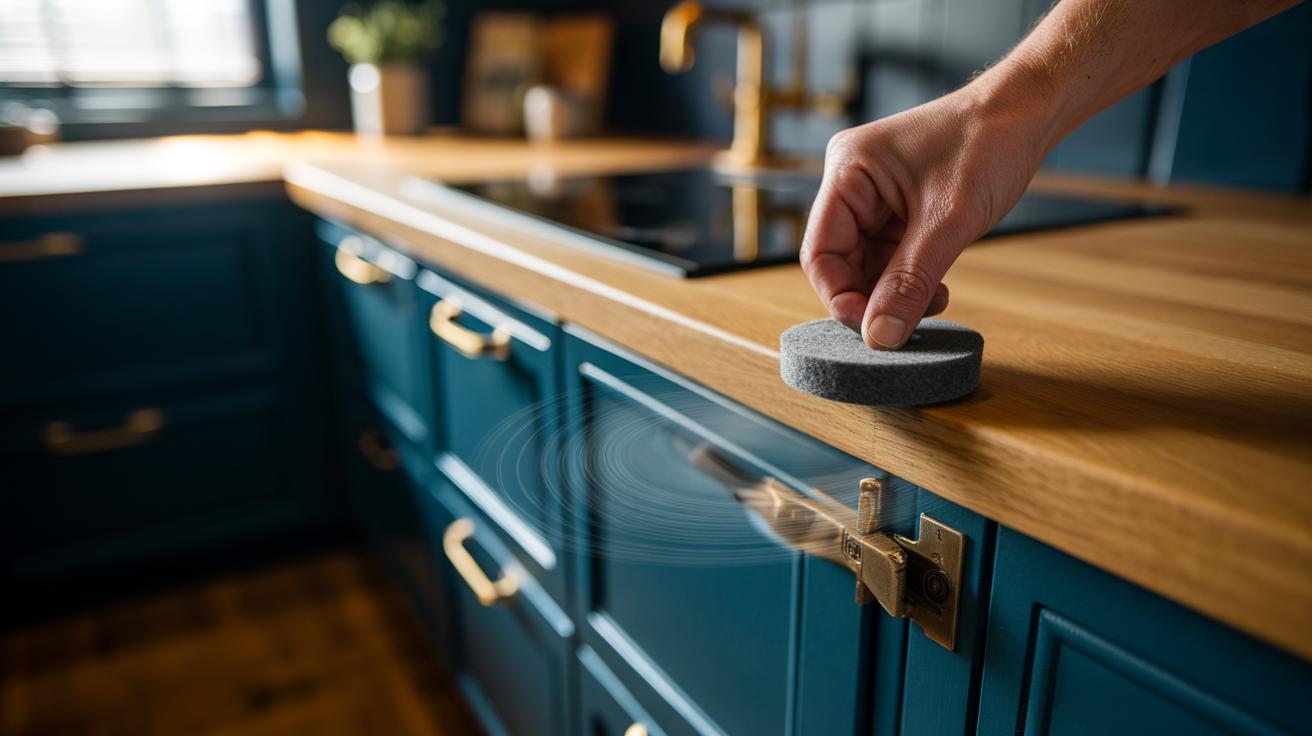
Kitchen life produces a chorus of clacks and thuds, but a humble felt pad can quieten it with surprising authority. By inserting a soft barrier between the door and the frame, you do not just cushion the blow—you change the physics of the collision. The pad spreads the impact over time, reduces the peak force, and transforms sharp vibrations into gentler, less audible motion. This small intervention targets the source of impact noise, preventing the cupboard from acting like a resonant drum. It is inexpensive, reversible, and easy to tune for different doors. Here is why it works, how to choose the right material, and the best way to fit it for long-lasting calm.
Why Soft Barriers Reduce the Slam
When a door hits a rigid frame, the collision is brief and violent, generating a high peak force that excites the wood panels and air with a broadband, attention-grabbing crack. Introduce a felt pad and the contact lasts longer. In simple terms, impulse is spread over a greater interval, so the peak force drops, and the sound’s harsh, high-frequency edge is blunted. Lengthening contact time, even by a few milliseconds, can significantly reduce the sharpness that our ears interpret as “slam.” The door still closes, but energy is released more gently, so less of it becomes noise.
Felt is also slightly viscoelastic, which means its tangled fibres rub and deform under load, turning part of the collision’s kinetic energy into tiny amounts of heat. This internal friction, or damping, prevents quick rebounds and suppresses the “ringing” of cabinet panels. The result is a lower coefficient of restitution—the door bounces less—and reduced transfer of vibration into the frame. A soft barrier cuts both the amplitude and the frequencies most likely to travel and annoy.
Inside the Felt: Fibres, Friction, and Viscoelasticity
Felt’s performance stems from its dense web of interlocked fibres. Under compression, fibres bend, slide and catch, converting motion into heat via micro-friction. That hysteresis resists quick changes in shape, which is ideal for taming the brief, sharp impulses of door closures. The material’s acoustic impedance differs from timber and MDF, so less vibrational energy crosses the interface into the cabinet carcass. Add an adhesive backing and you also gain a tiny layer that decouples the contact patch from the frame. This combination of compliance and internal loss is what turns a hard click into a discreet thud.
Thickness matters. A 1–2 mm pad preserves closing speed while shaving off harshness; 3–4 mm increases compliance for heavier doors, provided the pad does not “bottom out.” Density matters too: overly soft foam can compress fully and stop damping; overly hard rubber fails to extend contact time. Look for medium-density felt pads with reliable adhesive, and match size to the strike area so pressure isn’t concentrated on a tiny dot that wears quickly.
Choosing and Fitting Pads That Work
Placement is as important as material. Fit small pads near the top and bottom corners where the door meets the frame; this spreads load, controls twist, and prevents rattles. Clean the surface with isopropyl alcohol, let it dry, then apply firm pressure for 10–15 seconds to seat the adhesive. Aim for a light pre-compression when the door is shut—around a third of pad thickness—so the fibres stay in their sweet spot for damping. Adjust hinges if needed to ensure even contact. Tiny changes in contact geometry deliver a disproportionately large drop in perceived noise.
For a quick comparison of materials and use-cases, the guide below helps you pick a pad that suits your cupboards and tolerance for maintenance.
| Material | Typical Thickness (mm) | Feel | Typical Noise Change | Best Use |
|---|---|---|---|---|
| Felt | 1–4 | Medium, viscoelastic | 3–8 dB softer “thud” | Most cupboard doors |
| Silicone | 1–3 | Softer, springy | 4–9 dB, more bounce | Heavier fronts, humid kitchens |
| Cork | 1–2 | Firm, porous | 2–5 dB, crisp stop | Light doors, vintage cabinets |
Small, correctly placed pads often outperform larger, softer ones that compress fully and stop damping. Replace worn pads yearly, or sooner on high-traffic doors. If you already have soft-close hinges, adding discreet felt pads can still trim the last bit of impact and hush residual micro-vibrations as the latch engages.
In the end, the felt-pad trick works because it changes the collision itself: less peak force, more time, and energy bled away inside a web of fibres. The cabinet vibrates less, the air is excited less, and your kitchen sounds calmer. It is a low-cost, low-effort fix with a disproportionately high payoff, and it complements hinge adjustments or soft-close hardware. Once you hear the difference, you notice how many other household taps and knocks could benefit from a soft barrier. Where else in your home could a few millimetres of smart material make everyday living quieter?
Did you like it?4.6/5 (22)