In a nutshell
- 🧊 Use the freezer hack: press ice in a sealed bag for 3–5 minutes to make gum brittle, then freeze, chip, repeat to lift shards without smearing.
- 🥄 Choose safe tools: a spoon, plastic scraper, or credit card; add targeted freeze spray for stubborn spots and avoid metal blades that cut tufts.
- 🧴 Remove residue by blotting with isopropyl alcohol (70%) or a 1:4 white vinegar–water mix; rinse, dry, then fluff fibres and vacuum to restore texture.
- ⚠️ Prevent damage: test first, keep moisture off the backing, work with the pile, deodorise with bicarbonate once dry, and never yank warm gum.
- 👨🔧 Call a professional for deep, delicate, or seam-area gum; expect UK costs around £40–£80 and options like solvent gels, controlled cryogenics, and discreet re-tufting.
There’s a moment of dread when you spot a blob of chewing gum matted into a carpet. It looks immovable. It isn’t. The freezer hack turns that sticky mess brittle, so it lifts away cleanly, without shredding fibres or leaving a glossy stain halo. No fancy kit. No strong fumes. Just cold, patience, and a steady hand. In homes with children, pets, or teen bedrooms doubling as cinema screens, this trick is a quiet hero. The secret is to harden the gum before you touch it—and then work deliberately, so the pile stays plush and the colour true.
Why Freezing Works on Stubborn Gum
Chewing gum is a blend of elastomers and resins that stay pliable at room temperature. Warmth encourages spread. Cold does the opposite. Apply ice and the gum transitions from stretchy to brittle, weakening its grip on individual carpet fibres. That’s the moment to lift. Never yank warm gum out of carpet fibres; you’ll elongate the pile, fuzz the surface, and engrave a mark that outlasts the stain. The freeze-thaw approach gives control, breaking adhesion in chips rather than smears.
Carpet composition matters. Wool and blends are resilient but can felt under friction; polypropylene is tough yet can distort with heat. Nylon rebounds well but holds oily residues. The freeze-first rule avoids those pitfalls. Place ice in a sealed bag to keep water off the backing—moisture in the base can cause rippling and odour. Once the gum is glassy-stiff, use a spoon or a blunt knife to lever from the edges towards the centre, taking shallow, patient passes.
Step-by-Step: The Freezer Hack in Action
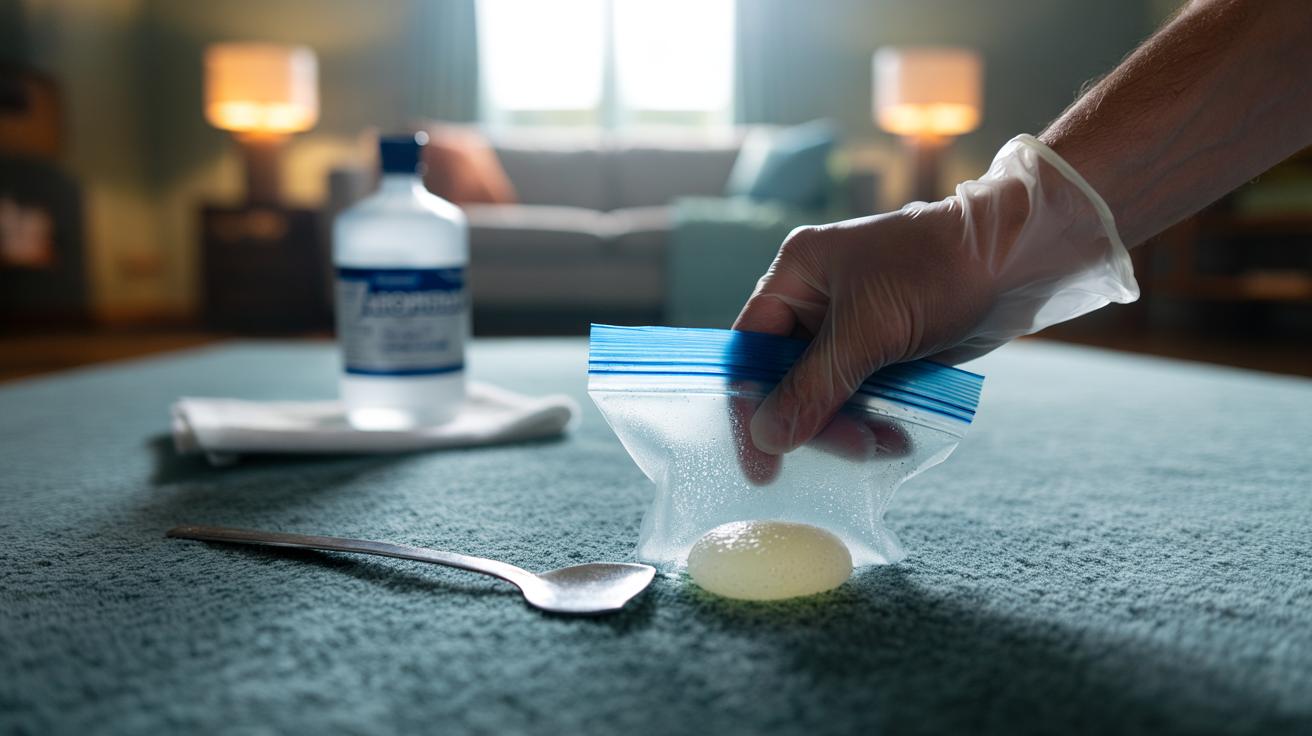
Seal a handful of ice cubes in a zip-top bag, or grab a bag of frozen peas. Press firmly on the gum for 3–5 minutes, keeping the cold concentrated without dripping. When the blob turns opaque and rigid, slide a spoon under the edge and flick off small shards. Work in cycles: freeze, chip, freeze again. Stubborn slivers? Touch them with a targeted freeze spray (used for electronics or sports injuries), then scrape lightly. Avoid metal blades that can cut tufts; a plastic scraper or credit card is safer on delicate piles and loop weaves.
Once the bulk is gone, you’ll often see a faint dark patch. That’s residue. Dab—don’t rub—with a cloth moistened in isopropyl alcohol (70%), or a 1:4 mix of white vinegar and cool water. Blot from outside to centre. Rinse by blotting with plain water, then press with a dry towel to lift moisture. Finish by fluffing fibres with a spoon and vacuuming once dry. If any tack persists, repeat a brief freeze-and-chip cycle to avoid over-wetting.
| Tool | How to Use | Typical Time | Risk Level |
|---|---|---|---|
| Ice in Zip Bag | Press 3–5 mins, repeat as needed | 10–20 mins | Low |
| Freeze Spray | Short bursts to spot-harden | 5–10 mins | Low–Medium |
| Spoon/Plastic Scraper | Lift chips from edges | 5–10 mins | Low |
| Isopropyl Alcohol | Blot residue sparingly | 5 mins | Medium (colour test) |
Prevent Damage and Tackle Residue
Always test on an inconspicuous area first, especially with wool or richly dyed rugs. Alcohols, citrus removers, and oxygen cleaners can shift colour on sensitive fibres. For natural fibres, start with the mildest option: a teaspoon of gentle washing-up liquid in 500 ml of cool water. Blot, rinse, blot again. Still tacky? A tiny amount of citrus-based adhesive remover on a cotton bud can release residue, but keep it on the gum only and neutralise with a detergent solution immediately after.
Technique counts. Work with the lay of the pile. Blotting compresses; rubbing frays. Keep moisture off the backing to avoid swelling or wicking lines, and dry the area quickly with circulating air. To reset texture, groom with a spoon’s rounded back. For odour control, dust on bicarbonate of soda once dry, leave 30 minutes, then vacuum slowly. If you feel drag on the nozzle, stop—residual tack can seize fibres. Freeze again, chip again, then complete your clean.
When to Call a Professional—and What They’ll Do
Not every case is a DIY job. If gum has been ground deep into dense Saxony, sits on a seam, or clings to antique or hand-knotted wool, bring in a pro. Multiple colours or whitening around the spot hints at dye movement. A technician can use controlled cryogenic sprays, micro-scrapers, and solvent gels that stay put instead of creeping into the backing. They’ll then rinse-extract to remove residues, re-balance pH, and speed-dry to prevent watermarking.
Costs vary by region, but in the UK expect roughly £40–£80 for a small spot visit, or inclusion within a standard room clean. Ask about fibre ID, dye-stability testing, and stain-blocking protectors once the area is restored. Pros should protect skirting boards, work under ventilation, and provide aftercare. If a tuft has been sliced or pulled, they can also perform a discreet re-tuft. Sometimes that’s the difference between a rescued rug and a permanent reminder.
The freezer hack earns its reputation because it’s simple, quiet, and spectacularly effective. Cold turns chaos into crumbs, allowing you to lift gum without scarring the weave or soaking the underlay. Keep a sealed ice pack in the freezer, a clean spoon in the drawer, and a small bottle of isopropyl alcohol for the final wipe, and most mishaps become footnotes. With that kit and a calm approach, mess loses its menace. What’s your most stubborn carpet challenge, and which home fix are you keen to test next?
Did you like it?4.6/5 (21)