In a nutshell
- 🔬 The hot vinegar cloth works because 5% acetic acid converts mineral salts into soluble acetates; heat and dwell time speed the reaction and stop evaporation on vertical tiles.
- 🧽 Step-by-step: heat white vinegar to about 50–60°C, soak a microfibre cloth, apply for 5–10 minutes, wipe, then rinse and dry; repeat for heavy scale and spot-treat as needed.
- ⚠️ Surfaces and safety: safe on glazed ceramic/porcelain and glass, brief on cement grout, avoid acids on marble/limestone, test metals, and never mix vinegar with bleach.
- 💷 Cost and speed: vinegar costs pennies per use, delivers fast results with less scrubbing, and is especially effective in hard-water homes where soap scum returns quickly.
- 🚿 Prevention: squeegee after showers, switch from bar soap to liquid body wash, run the extractor 15 minutes, consider a water softener, and use diluted vinegar for quick midweek touch-ups.
Bathroom tiles dulled by chalky residue aren’t a lost cause. A humble household staple—white vinegar—turns into a rapid-action cleaner when used hot and held in place with a cloth. The result is a practical hack that trades elbow grease for chemistry. Soap scum is a stubborn mix of body oils and limescale, but a heated dose of acetic acid dissolves those mineral soaps in minutes, restoring sheen with minimal scrubbing. The secret is dwell time plus temperature: a warm, soaked cloth keeps acid where it’s needed and speeds the reaction. Here’s how the “hot vinegar cloth” delivers clear grout lines, brighter tiles, and a fresher bathroom—without harsh fumes or costly products.
Why Hot Vinegar Works on Soap Scum
Soap scum often forms when hard water minerals bind with fatty acids in soaps and body products, creating insoluble deposits that cling to tiles. White vinegar, typically 5% acetic acid, reacts with alkaline compounds and mineral salts, converting them into water-soluble acetates that rinse away. Heat is the performance multiplier. According to basic kinetics, raising temperature increases molecular motion, boosting reaction rates and helping acid penetrate the film. A cloth soaked in hot vinegar acts as a reservoir on vertical surfaces, delivering even coverage where sprays run off.
Heat accelerates acid action, turning a slow soak into a swift dissolve. The cloth also blocks evaporation, so the vinegar doesn’t dry before it has finished dissolving limescale and soap residues. Because the mechanism targets the mineral component, it’s especially effective in hard-water homes where streaks and haze form quickly after showers. The method is simple, low-odour compared with many chemicals, and—used correctly—kind to ceramic and porcelain tiles.
Step-by-Step: The Hot Vinegar Cloth Method
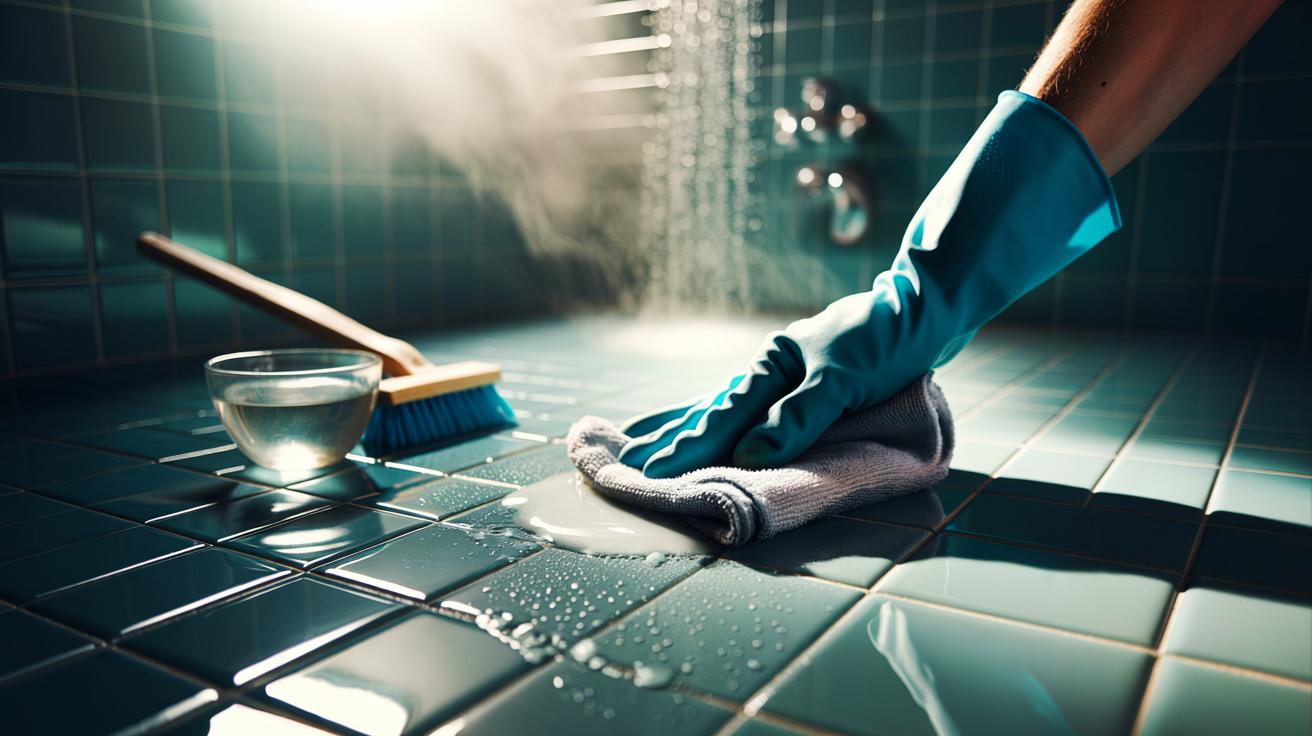
1) Warm 250–500 ml of white distilled vinegar in a microwave or saucepan until hot but not boiling (about 50–60°C). 2) Soak a clean microfibre cloth or cotton towel in the hot vinegar; wring lightly to prevent dripping. 3) Press the cloth onto the tiled area, ensuring full contact with haze or buildup, and leave for 5–10 minutes. On heavier scale, reheat and reapply to maintain warmth. 4) Remove the cloth and wipe firmly; deposits should smear and lift. 5) Rinse thoroughly with warm water and buff dry.
For stubborn patches, repeat or spot-treat with a vinegar-dampened scourer designed for non-scratch use. Do not mix vinegar with bleach or products containing chlorine—this releases hazardous gases. If desired, a drop of mild dishwashing liquid after the acid step helps lift any remaining oily film. Finish with a squeegee to prevent fresh droplets from drying into new limescale. Gloves are recommended if you have sensitive skin.
Surfaces, Safety, and What to Avoid
Hot vinegar excels on glazed ceramic and porcelain tiles, glass shower screens, and many stainless trims. Take care with cementitious grout: short, occasional contact is fine, but prolonged soaking can roughen or lighten surfaces. Rinse well and avoid daily use. Never use acid on natural stone such as marble, limestone, or travertine; acetic acid will etch the calcium carbonate, leaving dull patches. Similarly, test on anodised aluminium and brass, and keep exposure brief on chrome to avoid tarnish.
Choose white vinegar over malt or cider types to avoid residual colouring and fragrance. Use it neat for severe build-up or dilute 1:1 with hot water for routine maintenance. Ventilate bathrooms during cleaning to disperse vapour, and avoid inhaling steam from heated vinegar. If you have a sealed grout or specialist coating, check manufacturer advice; some sealants tolerate mild acid, others require neutral cleaners. When in doubt, perform a small patch test behind a fixture or under a shelf.
| Surface | Vinegar Strength | Dwell Time | Notes |
|---|---|---|---|
| Glazed ceramic/porcelain tiles | Neat or 1:1 | 5–10 min | Rinse and dry; safe for routine use |
| Glass shower screens | Neat | 3–7 min | Prevents spotting; squeegee after |
| Cement grout | 1:1 | 3–5 min | Limit frequency; rinse well |
| Marble/limestone/travertine | None | — | Avoid acids—risk of etching |
| Chrome/metal trims | 1:1 | 1–3 min | Test first; do not soak |
Cost, Speed, and Long-Term Prevention
A bottle of supermarket vinegar costs pennies per use, undercutting branded bathroom sprays while reducing plastic and perfumed additives. The hot cloth approach is swift: a single pass often clears haze in one session, saving the repeated spritz-scrub cycles typical of weaker cleaners. It’s a high-contact, low-effort technique that turns chemistry into labour saved. Because it targets the mineral component specifically, results are consistent even in very hard water areas that defeat ordinary detergents.
Prevention begins after the rinse. Wipe or squeegee tiles post-shower to stop droplets drying into limescale. Switch from bar soap to liquid body wash, which forms fewer insoluble mineral soaps. Keep extractor fans running for 15 minutes after bathing to reduce humidity. For chronic scale, a water softener or inline filter can cut maintenance dramatically. Store a microfibre and a small spray of diluted vinegar for quick midweek touch-ups, reserving the hot cloth for monthly deep-cleans.
From a chemistry standpoint, the hot vinegar cloth is a precise fix for a specific problem: breaking down the mineral-fatty matrix that makes soap scum cling. It pairs a mild acid with heat and contact time, delivering a clean you can see and a shine you can feel underfoot. With a few sensible precautions and consistent rinsing and drying, bathrooms stay brighter for longer. Will you adopt the hot cloth ritual as part of your weekly reset, or save it as your rapid-response tactic when haze returns?
Did you like it?4.5/5 (28)