In a nutshell
- 🔬 Hot water and dish soap dissolve hairspray fast: heat softens polymer films (PVP/acrylates) while anionic surfactants emulsify oils and debris—soften, emulsify, rinse.
- ♨️ Method: remove trapped hair, soak bristles (not handles) in 55–60°C water with a pea of dish soap for 5–10 minutes, brush the base with a toothbrush, rinse warm, reshape, and dry face-down—avoid boiling water.
- 🛡️ Safety: go gentler on natural bristles, keep wooden handles and cushion vents dry, skip abrasives, and consider a 1:10 vinegar rinse; optional 70% alcohol spritz after drying for hygiene.
- ⏱️ Speed tips: pre-mix a “clean pot,” use a two-bowl loosen–rinse flow, do 60-second daily mini-cleans, add a teaspoon of bicarbonate of soda for stubborn films, and rotate brushes while others dry.
- ✨ Payoff: cleaner brushes glide better, style more evenly, and stay more hygienic—an inexpensive, solvent-free routine that preserves tools and boosts performance.
Every bathroom has its quiet workhorses: hairbrushes loaded with life’s leftovers—shed strands, sebum, and a lacquer of stubborn hairspray. When time is tight, the fastest rescue is deceptively simple: hot water and dish soap. The heat softens styling polymers while surfactants unhook grime from bristles in minutes. This fuss-free pairing restores glide, helps bristles detangle efficiently, and keeps scalp contact hygienic. As a bonus, it’s budget-friendly and kinder to the environment than harsh solvents. Here’s how the chemistry clicks, why temperature matters, and the safest technique to clear a week’s worth of product build-up—quickly, cleanly, and without damaging your favourite brush.
Why Dish Soap Breaks Down Hairspray Residue
Most hairsprays rely on film-forming polymers such as PVP (polyvinylpyrrolidone) and acrylates. They create a flexible net that locks hair in place—but the same lattice clings to bristles. Enter dish soap, rich in anionic surfactants like LAS or SLES. These molecules latch onto oily soils with their hydrophobic tails and face water with their hydrophilic heads, micellising grease and loosening polymer films. The result is rapid lift-off of sticky residue, flakes, and trapped dust. The chemistry is simple: soften, emulsify, rinse.
Temperature accelerates the process. Hot water lowers the viscosity of sebum and softens hairspray films, creating micro-gaps for surfactants to penetrate. A mild alkaline pH in many washing-up liquids helps disrupt ionic interactions in the spray film, while agitation dislodges debris from the base pad. Add time—just five to ten minutes—and the combined effect is a clean brush without abrasive scrubbing that can bend or split bristles.
The Optimal Hot Water Method, Step by Step
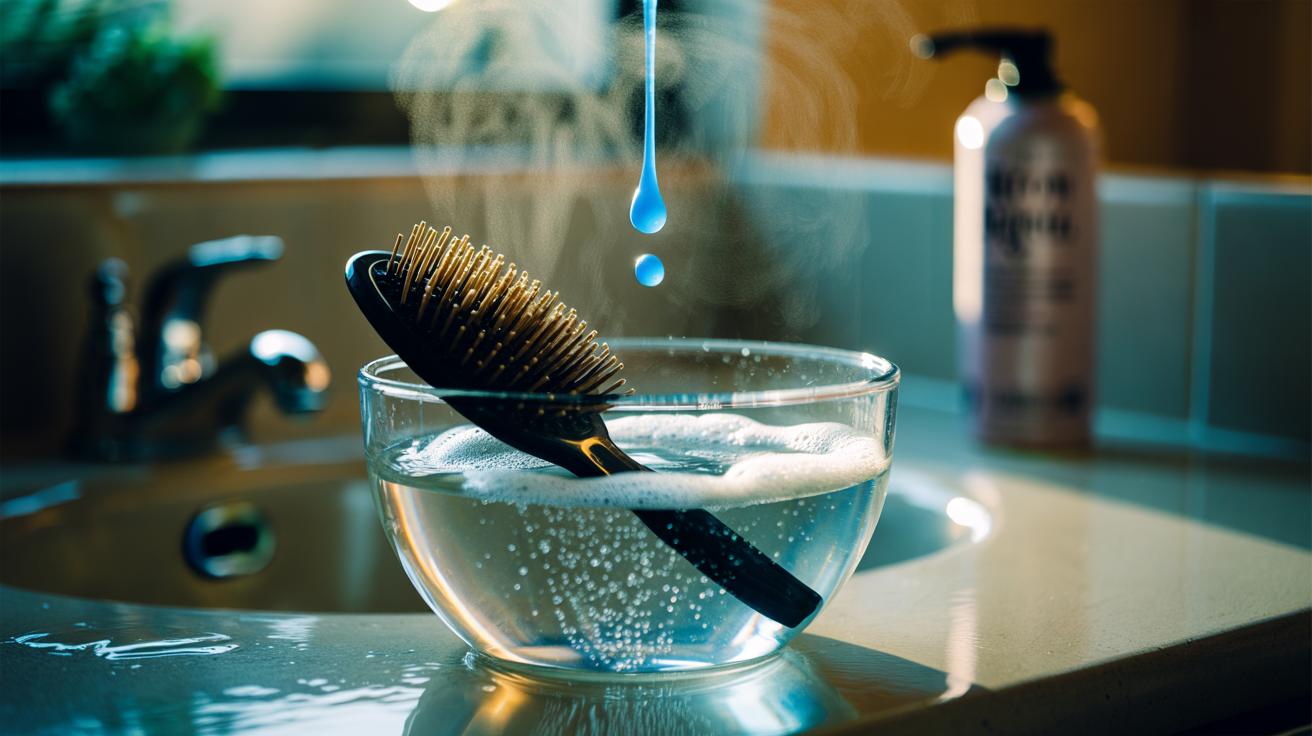
Start by removing visible hair with a tail comb or fingers. Fill a bowl with hot water around 55–60°C—comfortably hot but not scalding. Add a small squeeze of dish soap and swirl to disperse. Submerge only the bristle field; keep wooden handles and cushion vents above water where possible. Soak for five minutes, then use an old toothbrush to sweep along the bristle roots, lifting softened hairspray film and lint. Rinse under warm running water until squeak-clean. Never use boiling water, which can warp plastics and loosen glued pads.
Finish with a quick shake, blot on a towel, reshape the bristles, and dry face-down on a rack to drain. For stubborn lacquer or salon-duty brushes, repeat once with fresh solution. A brief, cool hairdryer burst at arm’s length can speed drying, but avoid heat on natural bristles. Optional: a 1:10 white vinegar rinse after washing can neutralise soap traces and brighten bristles without harshness.
| Component | Effect on Hairspray | Practical Tip |
|---|---|---|
| Hot Water (55–60°C) | Softens polymer film; thins sebum | Use “hot bath” not boiling kettle water |
| Dish Soap | Surfactants emulsify oils and residue | A pea-sized squeeze per litre is enough |
| Agitation | Dislodges film from bristle roots | Toothbrush strokes in one direction |
| Vinegar Rinse (Optional) | Neutralises soap; reduces dulling film | 1:10 vinegar to water, quick dip |
Safety Notes and Material Considerations
Not all brushes are equal. Natural bristles—boar or horse—benefit from gentler temperatures and a milder soap dose to preserve the cuticle-like surface. Wooden handles swell and crack if soaked, and cushion pads with air vents can trap water. Keep these sections as dry as possible during cleaning. For vented or thermal brushes, check that the barrel glue is heat-safe; if it loosens, reduce water temperature and contact time. Metal barrels can heat rapidly, so avoid near-boiling water.
If your brush carries anti-static or ceramic coatings, avoid abrasive tools and high-pH cleaners. A small, soft nail brush is kinder than scouring pads. Sanitising? A spritz of 70% alcohol after drying works, but don’t soak; polymers in the pad can degrade. If dye stains are present, spot-treat with diluted dish soap rather than harsh solvents. Finally, ensure full drying: bacteria thrive in damp, dense bristle beds and can generate odours and scalp irritation.
Speed Tips for Salons and Busy Mornings
Time-pressed? Keep a “clean pot” ready: a lidded tub pre-measured with dish soap concentrate. Add hot water, dunk bristles, and set a five-minute timer while you prep. Use two bowls—the first to loosen, the second to rinse—so brushes move along a mini conveyor. For daily maintenance, a 60-second warm rinse and brief soap swipe prevents heavy build-up, reducing deep cleans to weekly. A little, often, beats a marathon scrub.
Salon trick: detangle hair from the base with a metal tail comb before wet work; it doubles the effectiveness of surfactants. For extra-stubborn hairspray films, mix a teaspoon of bicarbonate of soda into the wash bowl to boost cleaning power, then rinse thoroughly. Store brushes bristle-down in an airy caddy so moisture escapes. Rotate sets: while one dries, another is in service, preserving shape and ensuring hygiene during back-to-back appointments.
A clean brush doesn’t just look respectable; it styles better, glides more evenly, and protects the scalp from grime and product flakes. The uncomplicated alliance of hot water and dish soap dissolves hairspray films at speed, sidestepping harsh solvents and saving tools you rely on daily. With correct temperatures, measured soak times, and sensible drying, the method is safe for most bristles and barrels, including salon stalwarts. What tweak—temperature, timing, or tools—will make this routine effortless in your home or studio, and which brush will you rescue first?
Did you like it?4.3/5 (26)