In a nutshell
- ❄️ Freezing science: the glass transition turns gum brittle so it fractures cleanly instead of smearing into fibres.
- 🧊 Step-by-step: apply bagged ice until rigid, then lift, don’t scoop with a dull edge; re-chill and repeat to pop off chunks.
- 🧰 Tools and timings: ice or gel packs, spoon or card, freezer-bag method for small items; fabric-specific tips from denim to silk.
- 🧴 Aftercare: dissolve residue with isopropyl alcohol, mild dish soap, or citrus remover; then launder per the care label.
- ⚠️ Precautions: keep fabric dry, avoid tugging warm gum, no heat until all stickiness is gone; lift with the nap on pile fabrics.
You spill a latte, you shrug; you sit on gum, you panic. Yet the simplest fix is sitting in your freezer. The ice cube rub transforms gummy chaos into clean fabric by exploiting the material science behind chewing gum. When iced, gum turns from stretchy to brittle, making it easier to lift off without shredding fibres. Instead of smearing and grinding the mess in, you’re making it crack and release. Below, we unpack why freezing works, the right way to do it at home, and the tools and timings that protect everything from denim to delicate knits. Consider this your pragmatic, step-by-step guide to salvage your clothes without solvents or drama.
Why Freezing Works on Chewing Gum
Chewing gum is built on a base of synthetic elastomers and resins plasticised for chewability. At room temperature, that mix is elastic and tacky, bonding to fibres and resisting mechanical removal. Apply low temperatures and the polymer blend crosses its glass transition, shifting from rubbery to glass-like. That phase change is the secret: the once-stretchy gum becomes brittle enough to fracture under light pressure. Microcracks spread through the gum, which reduces surface contact and weakens adhesion to the fabric’s weave.
This change also curbs the gum’s viscoelastic creep—the slow, sticky flow that smears it deeper into textiles. Once chilled, it holds shape, so a firm edge can shear it away cleanly. The colder the gum, the more pronounced the brittleness. That’s why an ice cube rub—or placing the garment in a freezer—delivers dramatically better results than scraping warm gum and risking fibre damage.
Step-By-Step: The Ice Cube Rub Method
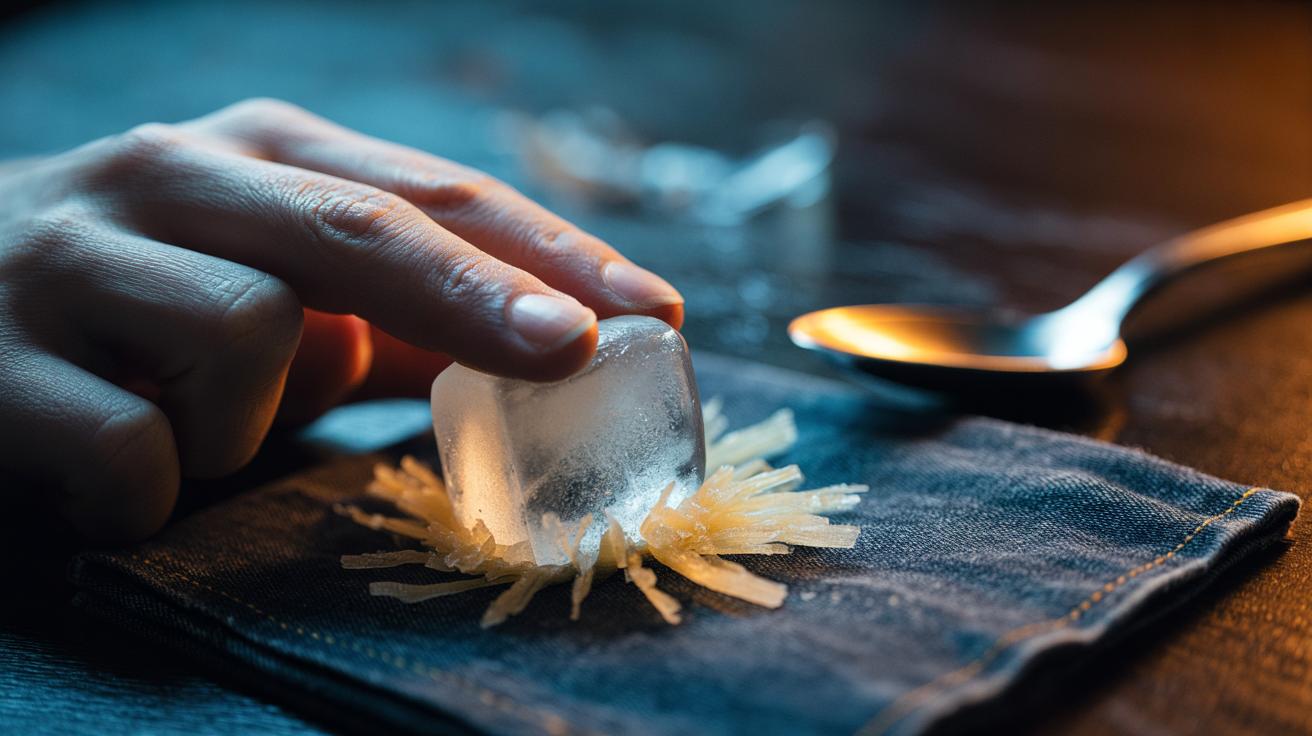
Start by isolating the area. Lay the fabric flat over a hard surface. Place a few ice cubes in a small zip bag to keep the textile dry and press the bag directly onto the gum. Chill until the gum stiffens thoroughly—pliability means it isn’t ready. Once rigid, use a dull, firm edge such as a spoon, butter knife, or credit card to lift from the outside in. Aim to pop off chunks rather than scoop; the fractures are your friend.
Repeat the cycle: re-chill, then lift. For bulky deposits, hold the ice in place for 2–3 minutes; on thin smears, 60–90 seconds often suffices. If tiny fragments cling, use a strip of masking tape to dab them away after each pass. Never yank warm gum—it stretches, embeds deeper, and can distort delicate fibres. Finish by checking the weave under good light to make sure no sticky residue remains before any heat is applied.
Tools, Timings, and Fabric Considerations
You don’t need specialist kit. A bag of ice, a spoon, and patience do the job. For speed, a gel ice pack or a packet of frozen peas spreads cold evenly over larger patches. If the garment is small, sealing it in a bag and popping it in the freezer for 30–60 minutes works well. The aim is consistent, penetrating cold, not frostbite to the fabric. Different textiles respond differently: rugged cottons and denim tolerate firmer scraping, while wool, silk, and viscose demand a gentler hand and shorter chilling intervals.
| Fabric | Approx. Freeze Time | Notes / Precautions |
|---|---|---|
| Cotton / Denim | 2–5 minutes with ice | Use a spoon or card edge; robust fibres handle pressure. |
| Wool / Knitwear | 1–3 minutes | Short cycles; avoid snagging loops. Lift, don’t drag. |
| Silk / Viscose | 1–2 minutes | Minimal pressure; test on seam. Consider freezer bag method. |
| Synthetics (Polyester) | 2–4 minutes | Chills well; check for static fragments and dab with tape. |
| Leather / Suede | Spot-chill only | Use bagged ice; avoid saturating. Brush nap after. |
Always keep the fabric dry while chilling; water can wick gum deeper into fibres. For pile fabrics (corduroy, fleece), lift with the nap, not across it. If colour-transfer risk worries you, test the scraping tool on an inside seam and work slowly under steady light.
What to Do After the Gum Is Gone
Even a spotless lift can leave a whisper of residue. Treat it like a stain, not a blob. Dab the area with a small amount of rubbing alcohol (isopropyl) on a cotton pad, then blot with a clean cloth. Alternatives include a drop of dish soap in warm water, eucalyptus oil, or a citrus-based remover (d-limonene)—always patch-test first. Avoid heat from irons or dryers until residue is fully removed; warmth can reactivate tackiness and set any colouring agents left behind.
Once the stickiness is gone, launder per the care label. For wool or silk, spot rinse and air-dry flat. Restore texture with a soft clothes brush, lifting the nap where needed. If you still feel faint grip after drying, repeat a brief ice rub and light scrape rather than escalating to strong solvents. The priority is preserving the weave and colour while achieving a truly clean finish.
The genius of the ice cube rub lies in simple physics: chill, fracture, lift. It trades frustration for control, sparing fibres while turning gummy elasticity into brittle crumbs you can whisk away. By keeping water off the textile and scraping with a dull edge, you protect the fabric as much as you remove the mess. With a few house-cupboard tools and an understanding of glass transition, most gum mishaps become routine clean-ups. Next time you find a sticky surprise on your clothes, will you reach for the freezer bag and try the cold, clean break?
Did you like it?4.6/5 (27)