In a nutshell
- 🎾 A tennis ball in the dryer disrupts fibre clumps through shear and point loading, while heat and airflow drive out moisture to restore pillow loft.
- ⚙️ Safe method: pre-fluff, add 1–3 clean tennis balls (in white socks), choose low heat on a gentle cycle, pause every 15 minutes to hand-fluff, and finish with a cool air cycle to set volume.
- ⚠️ Materials matter: down/feather prefer low heat and frequent checks; synthetics tolerate slightly warmer, shorter cycles; wool needs gentle settings; Do not tumble‑dry memory foam—air-dry flat instead.
- 🔇 Alternatives and optimisers: switch to wool dryer balls for quieter impact, add a damp cloth briefly for light steam, use sunlight and breeze to pre-refresh, balance the drum with two pillows, and use a vinegar rinse to cut residue.
- 🌿 Sustainability and longevity: restore loft to extend pillow life, reduce energy use with lower temperatures and dryer balls, schedule off-peak cycles, and apply the fold test to know when to replace.
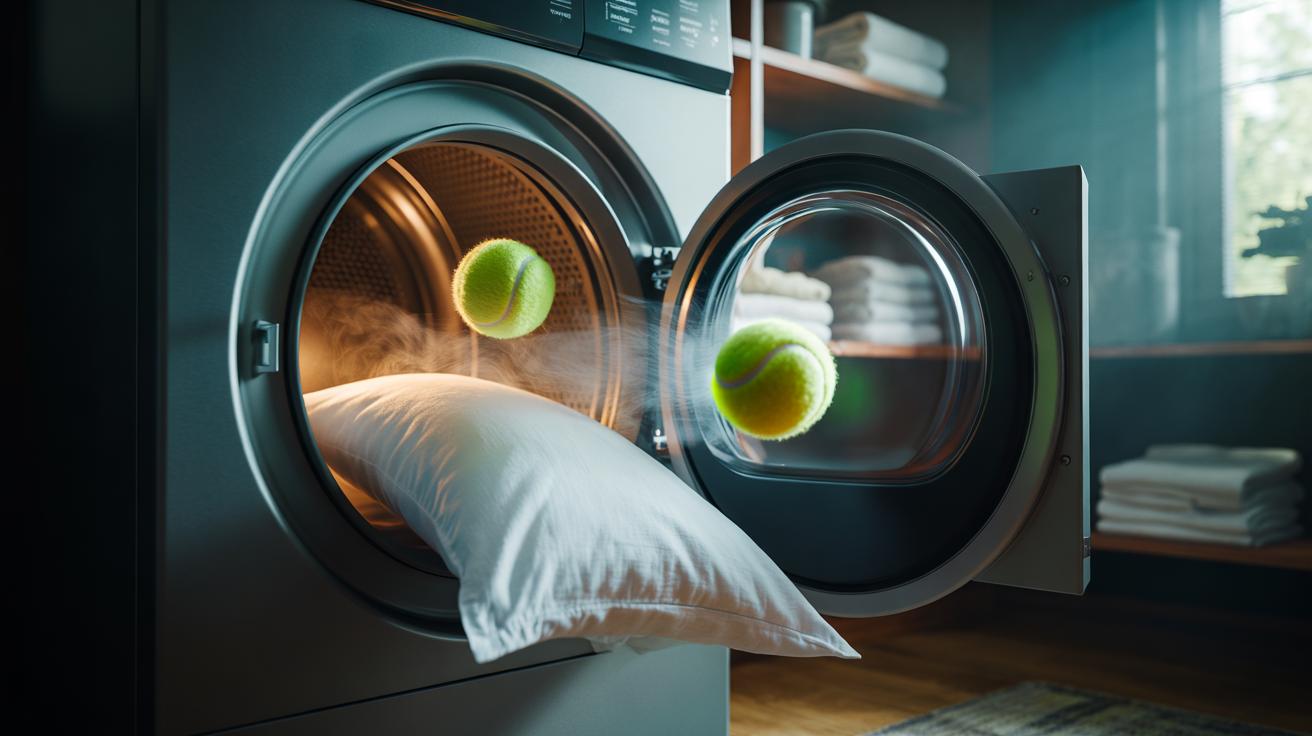
It’s a laundrette tip that sounds like folklore yet earns its place in many British homes: pop a tennis ball in the dryer to revive tired pillows. The truth is rooted in physics. When pillows lose loft, internal fibres or down clusters bunch together, forming dense clumps that trap moisture and resist airflow. A resilient sphere bouncing beside them interrupts this compacted structure, restoring volume and comfort. Used correctly, a single tennis ball can turn a flat, lumpy pillow into something you’ll actually look forward to sleeping on. Below, we unpack the science, offer safe, step-by-step guidance, and explain when to swap that green ball for better tools.
Why Pillows Clump in the First Place
Pillows clump because moisture, pressure, and residue conspire to bind the filling. During sleep, perspiration and ambient humidity seep into the pillow. Water creates capillary bridges that pull fibres together; as the pillow cools, those bridges harden into tight nodes. Residual detergent and skin oils add stickiness, so the bunches persist. Mechanical compression from nightly use squeezes air out, reducing loft and making clusters denser, while static charge can lock synthetic fibres in awkward formations.
Materials matter. Down and feather pillows rely on delicate clusters that need space to trap air; when they mat, softness evaporates. Microfibre pillows are vulnerable to heat and static, which encourage pancakes of filling. Wool balls and buckwheat hulls behave differently, but the principle holds: clumps block airflow and trap damp. One essential caveat: do not tumble-dry solid memory foam pillows. Heat can degrade the foam, and the mass won’t redistribute through bouncing.
How a Tennis Ball Breaks Clumps
The trick works because a tennis ball delivers repeated, localised impacts that apply shear and point loading to the fill. Each bounce generates an impulse that nudges compacted fibres apart while the drum’s rotation continuously repositions the pillow, preventing the same spot from absorbing every knock. The ball’s fuzzy nap increases friction, gently combing the surface through contact and drag. Over hundreds of collisions, those once-stubborn capillary bridges are disrupted, and air invades the voids again.
Airflow is the unsung partner. As clumps loosen, warm air penetrates deeper, driving out residual moisture. That dries the binding films that previously glued fibres together, making separation permanent rather than momentary. The bounce provides mechanical disruption; the heat and airflow make the fix stick. Two or three balls diversify impact paths and reduce cycle time. This combination mimics the manual “shake and slap” you’d do outdoors, only more consistently and with less effort.
Step-by-Step: The Safe Dryer Method
Before you start, give the pillow a brisk pre-fluff to loosen the outer layer. Place it in the tumble dryer with one to three clean tennis balls (wrap them in white socks to avoid dye transfer). Opt for low heat and a gentle cycle. Low heat protects the fill and the ticking. Pause every 15 minutes to break up remaining knots by hand and check progress. When the pillow feels dry and springy, finish with a cool, short air cycle to dissipate heat and set the loft.
To reduce noise and wear, consider wool dryer balls, which work similarly but quietly. Add a clean, damp cloth for the first 10 minutes to create light steam that softens residue, then remove it to complete drying. Always ensure the pillow is fully dry before use to prevent mildew. If in doubt, err on the side of a longer, cooler cycle.
| Pillow Type | Heat Setting | Cycle Duration | Tennis Balls | Notes |
|---|---|---|---|---|
| Down/Feather | Low | 40–60 mins, check every 15 | 2–3 | Stop and hand-fluff mid-cycle; avoid high heat. |
| Microfibre/Polyester | Low to Medium-Low | 30–50 mins, check every 10–15 | 1–2 | Watch for static; a wool ball helps. |
| Wool-Filled | Air/No Heat or Low | 20–40 mins, check often | 1–2 | Gentle cycles only; keep slightly underfilled. |
| Memory Foam (Solid) | Do Not Tumble | — | — | Air-dry flat; spot clean only. |
Alternatives and Optimisers
If the squeak of tennis balls grates, wool dryer balls are the refined option. They deliver the same impact-and-shear effect with less racket and can cut drying time by improving airflow. For stubborn clumps in down, pause the cycle and massage clusters between your fingers to free stuck quills. A damp microfiber cloth or a couple of ice cubes at the outset introduce mild steam that relaxes residues; remove them early to finish dry. Sunlight remains a superb ally: an hour on a breezy washing line refreshes, deodorises, and preps the fill for an easier tumble finish.
Guard against re-clumping with pillow protectors that block oils and sweat. Wash two pillows at once to balance the drum and encourage more even tumbling. If you lack balls entirely, a lightweight, clean trainer can suffice in a pinch, though it is noisy and less gentle. Add a small vinegar rinse during washing to cut soap residue that causes stickiness.
Sustainability and Longevity
The bouncing trick isn’t just about comfort; it’s a quiet win for the planet and your wallet. Restoring loft extends a pillow’s service life, delaying replacements and reducing waste. Lower temperatures paired with impact-agitation avoid the harsh heat that frays fibres and accelerates microfibre shedding. Two or three dryer balls can trim drying time, shaving kilowatt-hours off the bill. For UK homes on time-of-use tariffs, schedule cycles for off-peak windows and finish with an outdoor air-dry when weather allows.
Care routines matter. Rotate and air pillows weekly, wash seasonally, and tumble with agitation aids to keep clusters from forming in the first place. Down responds best to gentle, repeated sessions; synthetics prefer slightly warmer, shorter cycles. Replace when the pillow fails the “fold test” (it doesn’t spring back) or smells musty after full drying. Small habits compound into longer-lasting, cleaner bedding and fewer groggy mornings.
Used with a light touch and a little patience, the tennis ball in the dryer is a clever, physics-backed way to restore lift without wrecking the fill. By breaking clumps and inviting air back into the structure, you recover the pillow’s natural buoyancy and comfort. Keep temperatures modest, check regularly, and switch to wool dryer balls if you prefer a quieter drum. The result is a fresher, fluffier pillow and a more restful night. What small change will you try next to extend your bedding’s life while lifting your sleep quality?
Did you like it?4.4/5 (28)