In a nutshell
- 🧊 Freeze white vinegar into cubes for targeted cleaning: acetic acid dissolves limescale, cuts odours, and the slow melt boosts contact time; it’s a cleaner and mild sanitiser, not hospital-grade.
- 🔬 Smart use: glide the cube, hold 30–90 seconds on buildup, then scrub and rinse; avoid neutralising by not pre-mixing with bicarbonate of soda inside the cube.
- 🧽 Best places and no-go zones: excels on taps, tiles, grout, showerheads and fridge seals; avoid natural stone, aluminium, unsealed grout, cast iron, electronics, and screens.
- ⚖️ Ratios that work: Neat (5%) for heavy limescale (3–10 min), 2:1 for chrome/ceramic (2–5 min), 1:1 for plastics/bins (1–3 min), 3:1 for quick freshen-ups.
- ⚠️ Safety & storage: use a dedicated silicone tray, label “Cleaning—Not for Food,” store sealed for up to ~3 months, wear gloves if sensitive, and never mix vinegar with bleach.
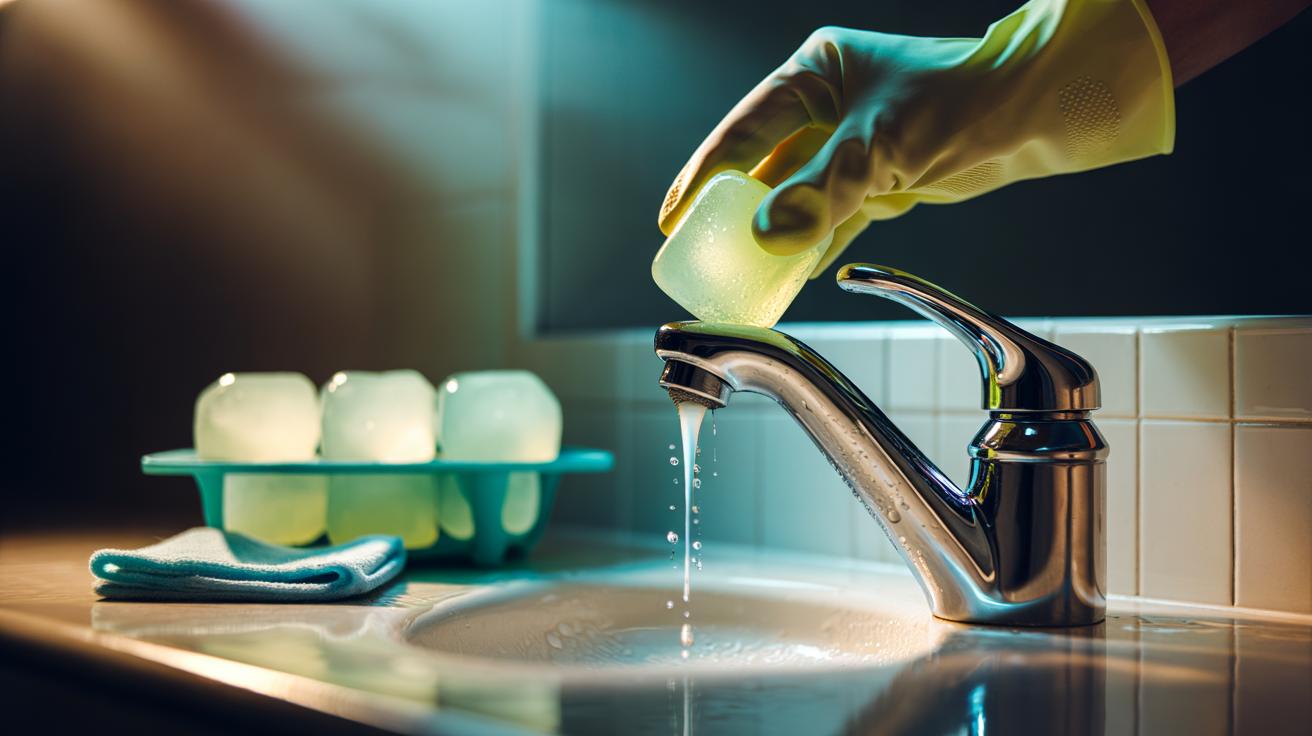
The humble ice cube tray has a surprising second life: freezing vinegar into tidy cubes that deliver instant cleaning power. When you rub a cube over taps, tiles, or bins, its slow melt releases acetic acid evenly, dissolving limescale, cutting soap scum, and taming odours without sprays or clutter. It’s a low-cost, low-waste trick, handy for quick wipe-downs or focused descaling. Keep a tray in the freezer and you have a ready-to-go cleaner for small jobs and tight corners. Below, we explain how these cubes work, how to use them safely, and where they truly excel—plus a simple guide to mixing ratios and materials to avoid.
What Vinegar Ice Cubes Are and Why They Work
Vinegar ice cubes are simply frozen portions of white distilled vinegar—typically 5% acetic acid—sometimes diluted with water for gentler tasks. This weak acid reacts with mineral deposits such as calcium carbonate, loosening the crust that marks shower screens, taps, and kettles. The cold slows evaporation, extending contact time and helping the acid stay where it’s needed. On grimy grout or mildewy seals, the chilled cube glides, melts, and wets, giving the chemistry time to lift residues and neutralise odours. Add a microfibre cloth and you’ve got mechanical action plus chemical action, neatly delivered.
Microbiologically, acetic acid disrupts cell walls and can reduce common household bacteria and some fungi on non-porous surfaces. Vinegar is a cleaner and mild sanitiser, not a hospital-grade disinfectant. It is not certified to UK disinfectant standards and won’t reliably inactivate viruses such as norovirus. Still, for everyday kitchens and bathrooms, these cubes are effective at breaking scale and biofilm that shelter microbes. For belt-and-braces hygiene after raw meat prep or illness, follow with a certified disinfectant. Otherwise, rinse or wipe residue, then dry surfaces to discourage regrowth and water spots.
Melting Mechanics: From Freezer to Fizz
As the cube warms in your hand, latent heat melts its surface and releases a thin film of vinegar. The chilled liquid clings, reducing drip and wastage, while micro-abrasion from ice edges helps disrupt scale. On vertical tiles, the melt rate is slow enough to maintain coverage without immediate runoff. That matters: longer, controlled contact unlocks faster descaling. For taps and showerheads, hold a cube against crusted areas for 30–90 seconds, then wipe. For heavy limescale, press the cube into seams and around aerators, letting melting vinegar seep into crevices before scrubbing with a soft brush.
To use: pop out a cube, wrap it in a thin cloth if your hands are sensitive, and glide over the target. Reapply as needed, then rinse and dry. Avoid pre-mixing with alkaline powders; don’t combine vinegar with bicarbonate of soda inside the cube, or you’ll neutralise its cleaning power. Instead, apply bicarbonate afterwards if you want gentle scouring. For stubborn deposits, cycle: melt, wait 5–10 minutes, scrub, rinse. The cube’s cold also helps control odour when tackling bins, fridges, and pet areas.
Where They Shine: Practical Uses Around the Home
In bathrooms, vinegar cubes excel on glass screens, ceramic tiles, chrome taps, grout lines, and shower doors. They soften soap scum, lift hard-water halos, and reach tight corners where sprays sputter. In kitchens, they freshen chopping boards (plastic only), bin rims, fridge seals, and extractor hoods, cutting grease film and stale odours. On stainless steel, use light pressure and brief contact, then rinse and dry to prevent dulling. Around laundry rooms, glide cubes over detergent drawers and rubber seals to break detergent crust and mouldy smells. For kettles and coffee makers, descale removable parts only—never pour cubes into a machine unless manufacturer guidance permits vinegar.
Avoid porous or acid-sensitive surfaces: natural stone (marble, limestone, granite), unsealed grout, waxed wood, aluminium, or cast iron. Test a hidden spot first, especially on anodised aluminium or exotic finishes. Don’t use on screens or electronics. If in doubt, switch to a diluted cube and rinse promptly. For odour control, run a cube around inside bins, cat litter trays’ hard plastic edges, or fridge drawers, then wipe dry. Finish with a clean cloth to prevent streaks, and keep ventilation in mind—the scent disperses quickly yet signals where you’ve cleaned.
| Mixture Ratio (Vinegar:Water) | Best For | Avoid On | Suggested Contact Time |
|---|---|---|---|
| Neat (5%) | Heavy limescale, grout stains, showerheads | Natural stone, aluminium, cast iron | 3–10 minutes, then rinse |
| 2:1 | Chrome taps, ceramic, tough soap scum | Unsealed grout, waxed wood | 2–5 minutes, then rinse |
| 1:1 | Fridge seals, plastic boards, bins | Electronics, screens | 1–3 minutes, then wipe dry |
| 3:1 | Quick freshen-ups, odour control | Porous finishes | Under 2 minutes, then dry |
Safety, Materials, and Smart Storage
Use a dedicated silicone tray and label it clearly. Mark cubes “Cleaning—Not for Food” to avoid mix-ups. Silicone releases cubes cleanly and resists odour better than hard plastic. Store cubes in a sealed container or freezer bag to prevent vinegar aroma from creeping into food. They keep well for about three months; after that, evaporation can weaken them. Wear gloves if you have sensitive skin, and ventilate small rooms. Never mix vinegar with bleach or chlorine-containing products—dangerous fumes can result. Rinse surfaces thoroughly before switching products.
Skip essential oils in the cubes; they can soften some silicones and may leave residue. If you like fragrance, add a citrus peel to your cleaning cloth instead. On metals, limit dwell time and always dry to curb corrosion. On rubber gaskets, gentle dilution (1:1) is wise. For households with very hard water, keep a small stock of neat cubes for periodic deep-descaling, and use milder ones for weekly maintenance to prevent build-up before it hardens.
Vinegar ice cubes compress a cupboard’s worth of cleaning into a handful of tidy, melt-on-contact blocks. They offer precise application, reliable limescale removal, and odour control without aerosols or harsh residues. With the right ratio, smart contact time, and a disciplined rinse-and-dry, they can transform bathrooms and kitchens alike. Treat them as a cleaner and mild sanitiser, and reserve certified disinfectants for higher-risk tasks. Ready to try a tray yourself—what surfaces in your home would benefit most from a slow-melting, targeted clean?
Did you like it?4.6/5 (27)