In a nutshell
- 🔬 Ketchup works because its mild acids (citric and acetic) gently dissolve copper oxide tarnish, while its viscosity keeps the reaction in place without scratching.
- 🧰 Use it safely: confirm solid brass vs brass‑plated (magnet test), check for intact lacquer, apply a thin film for a short dwell time (5–10 minutes), don’t let it dry, then rinse and dry with microfibre; finish with microcrystalline wax.
- ⚠️ Key cautions: avoid intact lacquer and abrasives, Never mix acids with bleach, keep acids off porous stone, test in a hidden spot, and treat plating with minimal contact and only soft tools.
- 🧪 For tougher jobs: choose gentle alternatives like lemon + salt or a vinegar–flour paste; tackle limescale separately with diluted vinegar on a cloth, and reserve commercial polish for heavy tarnish.
- ✨ Keep the shine: daily wipe-and-dry, weekly neutral soap clean, occasional ketchup touch-ups, monthly protective wax, plus hard‑water mitigation, clean aerators, and prompt drip fixes to slow re-tarnish.
There’s a quietly brilliant hack living in your fridge: ketchup. Homeowners across the UK have discovered that a thin smear of tomato sauce can revive dim brass taps, lifting brown tarnish and dull water marks without harsh chemicals. The secret is ketchup’s mild acid, which loosens the thin film of copper oxide and grime that masks a warm golden finish. Its thickness clings to curves and threads, breaking down years of residue while you make a cup of tea. Yes, ketchup can polish brass—if you use it carefully and keep an eye on dwell time. Here’s how the chemistry works, the safest method to try, and what to do when ketchup isn’t quite enough.
Why Ketchup Works on Brass
Brass is an alloy of copper and zinc. Over time, oxygen, hand oils, and trace sulphur compounds form a surface layer of tarnish—mainly copper oxides and sulphides—that looks brown or dark. That film scatters light, so taps lose their glow. Ketchup contains citric acid (from tomatoes) and acetic acid (from vinegar) at a gentle pH, potent enough to loosen oxides yet mild enough to avoid etching sound metal. The sauce’s viscosity means it stays where you spread it, giving acids time to react with the tarnish rather than running off into the sink.
Salt and sugars in ketchup aid the process too. Salt raises ionic strength, nudging reactions along; sugars help the paste sit evenly on vertical surfaces. Because the acids are dilute, the action is gradual: you can watch the red film turn slightly darker as oxides dissolve and then rinse at the right moment. The trick is controlled, gentle dissolution of oxides—not heavy abrasion. That’s why ketchup often outperforms scouring powders that can leave fine scratches in brightwork and blur crisp edges around tap logos and knurling.
Step-by-Step Method for Safe, Effective Cleaning
First, identify your surface. Is the tap solid brass or brass-plated? A small hidden magnet can help: solid brass is non-magnetic, while steel beneath thin brass plating will attract the magnet. Also check for lacquer. Many taps are factory-lacquered; if the clear coat is intact, acids won’t reach the metal. Do not use ketchup on intact lacquer—clean with mild soapy water instead. If the lacquer is worn or the tap is unlacquered, protect surrounding stone or grout with masking tape, and assemble soft cloths, a cotton bud or toothbrush, and warm water.
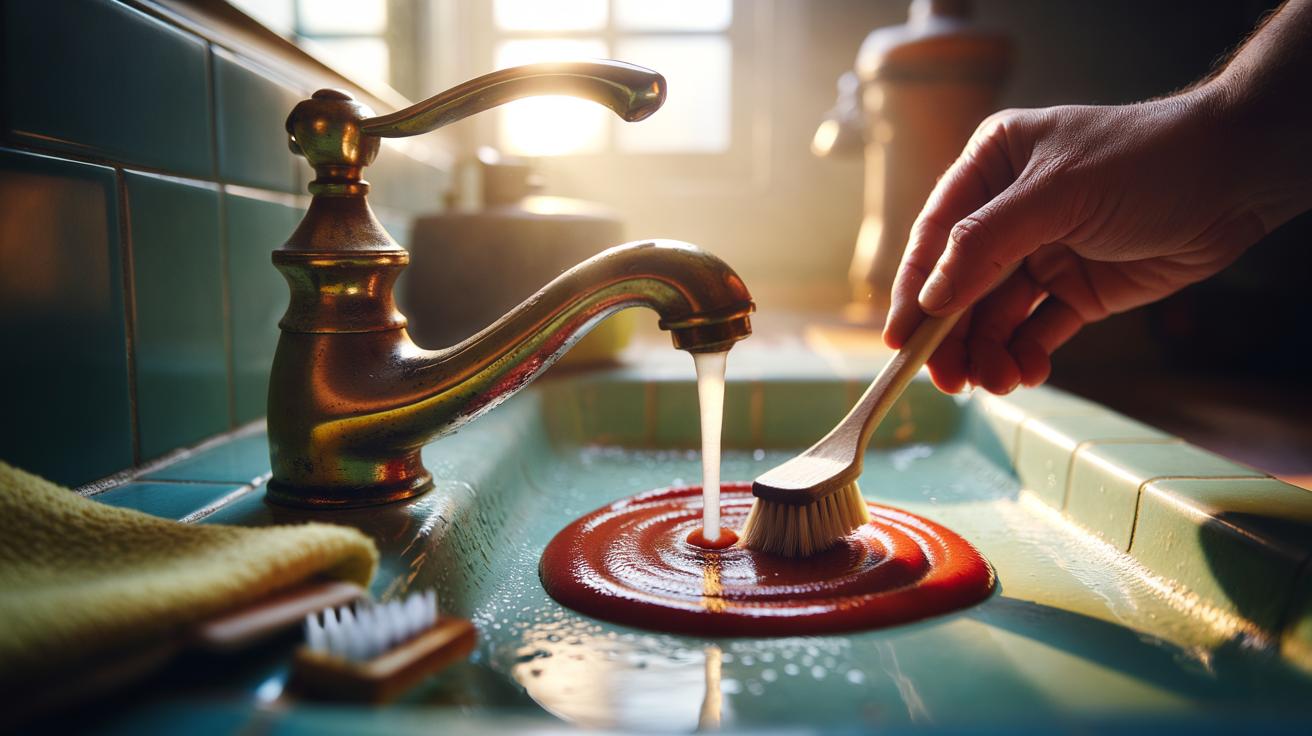
Dampen the brass, then smooth on a pea-sized amount of ketchup in a thin, even film. Allow a dwell time of 5–10 minutes, checking progress. Never let the ketchup dry on the surface. For crevices, gently work the sauce with a soft brush—no scrubbing. If tarnish persists, reapply for another few minutes rather than extending a single, long exposure. Rinse thoroughly with warm water, then dry immediately with a microfibre cloth to prevent water spots. Finish with a drop of neutral pH soap on a damp cloth and a final dry. For added protection, apply a whisper-thin coat of microcrystalline wax and buff—this slows future tarnish and fingerprints.
When to Use Alternatives and What to Avoid
Ketchup excels at light to moderate tarnish and grime. For heavier oxidation or greenish patches of verdigris, a slightly stronger—but still gentle—method may be better: a paste of white vinegar and flour, or fresh lemon juice with a pinch of salt, used with the same short, observed contact time. For plated taps, choose the least aggressive route and avoid any abrasive cloths. If the problem is limescale (chalky white deposits), target that with a brief application of diluted white vinegar on a cloth, keeping acids away from marble or limestone surrounds. Always test in an inconspicuous spot first.
| Method | Acid Source | Typical Dwell Time | Best For | Watch-outs |
|---|---|---|---|---|
| Ketchup | Citric & acetic acids | 5–10 mins | Light tarnish, routine spruce-ups | Don’t let dry; avoid intact lacquer |
| Lemon + Salt | Citric acid | 2–5 mins | Stubborn spots, edges | Rinse fast; salt can abrade if rubbed |
| Vinegar + Flour Paste | Acetic acid | 10–15 mins | Even coverage on curved parts | Keep off stone; neutral rinse |
| Commercial Polish | Varies | As directed | Heavy tarnish, final gleam | Can remove plating if overused |
Avoid harsh powders, steel wool, and concentrated ammonia. Never mix acids with bleach—that creates dangerous fumes. Keep acids away from porous stones, and take care around rubber seals. For brass-plated fixtures, treat the finish like a delicate veneer: short contact, soft cloths only, and stop at “better,” not “perfect,” to preserve the thin layer.
Care and Maintenance to Keep the Shine
Once your taps are bright again, a light routine keeps them that way. After daily use, a quick wipe and dry prevents mineral spots and fingerprints from taking hold. Each week, wash with warm water and a dab of neutral pH soap, then dry with microfibre. On unlacquered brass, a monthly coat of wax creates a breathable barrier that slows tarnish without sealing in grime. Drying thoroughly is the single best habit for preserving shine. Keep aerators free of scale to reduce splash marks, and fix drips promptly—constant moisture accelerates oxidation and limescale build-up.
If you live in a hard-water area, consider a small jug filter or point-of-use softening to limit limescale. For occasional touch-ups, the ketchup trick is safe when monitored, but keep sessions brief to protect plating and seals. Store a soft toothbrush and cloth under the sink so you can act at the first sign of dullness. Consistency beats deep cleans: small, gentle interventions preserve the metal’s character and glow.
Ketchup won’t replace every polish on the market, yet its mild acid, tidy application, and low cost make it a clever first resort for tired brass taps. With short, supervised contact and careful rinsing, you can dissolve oxide films while avoiding scratches, then lock in the shine with a thin wax layer and regular drying. The result is a warm, reflective finish that looks cared-for rather than overworked. What’s your go-to trick for restoring household metals—have you tried the ketchup method, or do you swear by another low-tech, high-impact approach?
Did you like it?4.6/5 (26)