In a nutshell
- 🍋🧂 The lemon-and-salt scrub pairs citric acid with salt crystals for a fast, low-tox two-stage clean that loosens oxides and abrasively lifts residue.
- 🧼 Method: halve a lemon, add 1–2 tbsp coarse salt, scrub in circles, brief dwell on tough spots, rinse warm, neutralise with bicarbonate of soda, and dry immediately.
- ⚙️ Surfaces: shines stainless steel, enamelled cast iron, and copper; short contact on aluminium; avoid non-stick; test soft glazes on stoneware/ceramic.
- 🧪 Science: citric acid chelates metal oxides (heat tint, tannin stains) while NaCl’s low Mohs hardness targets brittle films, with grains breaking down to gentler action.
- 🔥 Tips & cautions: work on warm pans to soften polymerised oils; go light near enamel edges; avoid acid on bare cast iron unless re-seasoning; ventilate when brightening copper.
Grease shadows, tea-tinted rings and rainbow streaks can make even cherished pans look tired. A simple kitchen standby cuts through all three: the lemon-and-salt scrub. It pairs sharp, natural citric acid with the gentle bite of salt crystals to dislodge build-up without gouging the surface. In practice, the acid loosens oxides and browned sugars, while the grains shear softened residue, restoring clarity and colour. This is a low-cost, low-tox routine that feels almost instant compared with soak-and-scrub marathons. Below, we unpack the chemistry, set out a safe method, and flag where this trick shines—and where to leave it on the shelf.
Why Lemon and Salt Work on Stains
Lemon juice brings citric acid at a pH near 2, which binds with metal oxides and breaks the bonds holding tannins, polymerised oils and mineral deposits. That chemical nudge turns stubborn films into removable slurries. On stainless steel and enamel, this acidity is strong enough to lift marks yet mild enough to avoid etching when contact is brief. The scent also neutralises kitchen odours that cling to metal.
Salt does the mechanical job. Coarse grains form countless micro-cutting edges that abrade residue rather than the pan beneath. With a Mohs hardness around 2–2.5, sodium chloride is softer than steel, so it scours films without leaving the tell-tale swirl scratches of harsher powders. The roughness also traps loosened grime, preventing it from smearing back across the surface.
Together, the duo acts like a two-stage cleaner in one pass. The lemon wets, penetrates and softens; the crystals roll and scrape. This interplay makes the technique feel faster than detergent alone, especially on heat-tinted stainless rims and caramelised spillovers. A brief rinse resets the surface, often with a renewed gleam.
How to Mix and Scrub Safely
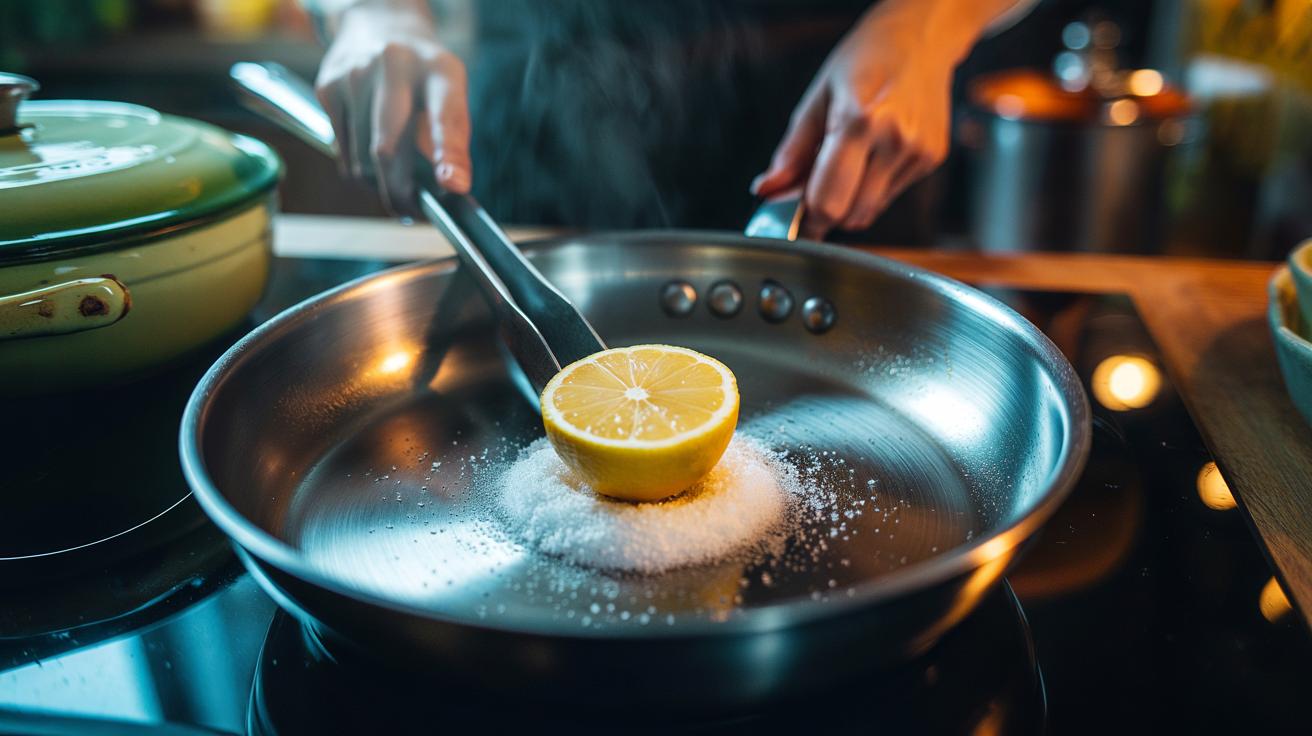
For most pans, halve a fresh lemon, sprinkle 1–2 tablespoons (10–20 g) of coarse sea salt into the base, and use the cut face as your handle and applicator. Squeeze lightly to seed the salt with juice, then work in small circles. Let difficult patches sit damp for two minutes before resuming; that dwell time lets the acid loosen deposits so you can use less pressure.
Rinse with warm water and a soft cloth. On stainless steel, a quick follow-up with a drop of washing-up liquid removes any last film. If you’ve used generous lemon, neutralise with a splash of diluted bicarbonate of soda, then rinse and dry to prevent water spots. Always dry immediately—air-drying invites new marks.
For enamelled cast iron, keep strokes gentle along the rim where enamel thins. On bare cast iron, avoid acid unless you plan to re-season: wipe with oil and heat after cleaning. Non-stick coatings don’t enjoy grit; switch the salt for bicarbonate paste and a soft sponge. Gloves help if you have sensitive skin, and ventilate when tackling copper tarnish loosened by acid.
What to Use It On—and What to Avoid
The lemon-and-salt combo is brilliantly versatile, yet it is not universal. Match the method to the material to avoid unintended damage. As a rule, the harder and more chemically resistant the surface, the better it responds to brief acidic contact and light abrasion. Porous or reactive metals need caution or an alternative cleaner.
| Material | Result | Caution |
|---|---|---|
| Stainless steel | Brightens, removes heat tint and tea lines | Rinse and dry to prevent water spots |
| Enamelled cast iron | Lifts scuffs without haze | Go light near edges; avoid chips |
| Copper (unlacquered) | Rapid tarnish removal, warm glow | Rinse thoroughly; avoid on lacquer |
| Aluminium (bare) | Can brighten | Short contact only; acid may dull/pit |
| Non-stick coatings | Not advised | Use non-abrasive cleaners instead |
Stoneware, glass and ceramic respond well, though coarse salt can leave faint trails on soft glazes—test a discreet spot first. If in doubt, start with less acid, less pressure and shorter contact time. For lacquered copper or anodised aluminium, choose a manufacturer-approved polish to protect the finish.
Small Science: Crystals, Acids, and Heat
Cleaning power scales with surface science. Citric acid is a weak, multi-dentate ligand: it forms soluble complexes with iron and copper ions in thin oxide films, which helps detach discoloured layers from stainless and copper. That’s why a brief rub can disperse blue-brown “heat tint” and the bruise-like halos from tea and coffee spills. The acid doesn’t need to be strong; it needs to be targeted.
Salt’s grain size matters. Coarse crystals act like tiny ball bearings with edges, rolling under light pressure and fracturing as they work. The grains break down during scrubbing, so the process naturally becomes gentler as the surface brightens. Because NaCl is softer than stainless, it preferentially abrades the brittle residue rather than the substrate, limiting swirl marks.
Temperature adds another lever. Warm pans soften polymerised oils, letting acid and abrasion work with less force. Try rinsing with hot water, then scrubbing while the metal is still warm to the touch. Heat plus chemistry beats brute force and reduces the risk of micro-scratches. Finish by drying with a lint-free cloth to lock in the shine.
The quiet magic of lemon and salt lies in the pairing: quick chemistry to loosen, controlled abrasion to lift, and a rinse to reveal the metal you remember. It’s kinder to surfaces than scouring powders and quicker than long soaks, with a scent that leaves the kitchen fresher. With a cut lemon, a pinch of coarse salt and a minute of method, dull pans step back into service. Which piece in your cupboard deserves a citrus reset next, and how will you adapt the technique to its material?
Did you like it?4.3/5 (23)