In a nutshell
- 🧼 Thick foam with gentle surfactants lifts soil on microbubbles, keeping cushions dry and preventing water marks.
- 📝 Step-by-step: spot test, vacuum, apply foam to a cloth (not fabric), blot—don’t rub, 3–5 min dwell, blot again, light rinse, and dry with airflow.
- ⚠️ What to use/avoid: choose white shaving foam; avoid dyed gels and alcohol-heavy products; treat viscose, silk, wool, leather, and large areas with caution.
- 🛠️ Troubleshooting: use light, repeated passes; gentle agitation for grease; enzyme follow-up for pet odours; stop early on ink to prevent spread.
- 💡 Benefits: minimal moisture, controlled cleaning, quick drying, budget-friendly maintenance that extends upholstery life between deep cleans.
It sounds implausible, yet a can of shaving cream can rescue a marked armchair faster than many specialist cleaners. The secret is in the thick foam: it suspends grime on millions of microbubbles, letting you lift stains with control rather than soaking the padding beneath. This keeps upholstery from warping, shrinking, or developing that dreaded damp smell. Minimal water, maximal contact time is the winning formula. With the right product and a light touch, you can revive fabric seats, headboards, and sofas without dragging out a wet vac. Here’s how the science stacks up, the method experts use, and the pitfalls to avoid.
Why Thick Foam Works on Upholstery
Shaving foam is essentially a stable emulsion packed with surfactants and air. The bubbles enlarge the surface area that contacts the stain, while the gentle surfactants lower surface tension so soils detach from fibres. Because the foam holds its shape, it doesn’t run deep into the cushion. That means far less risk of water rings, wick-back stains, or slow-drying odours. The emulsion’s modest moisture softens dried residues—coffee sugars, skin oils, food proteins—so they can be blotted off the pile rather than driven into it.
Most classic foams sit close to neutral pH, kinder to household textiles than harsh alkalines. The viscosity also slows evaporation, granting a safer “dwell time” without flooding. In practice, the foam acts like a temporary sponge that grabs dirt, then transfers it to your cloth. The trick is contact and patience, not pressure, allowing the bubbles to do the lifting while you keep the fabric barely damp.
Step-By-Step Method for Safe Stain Removal
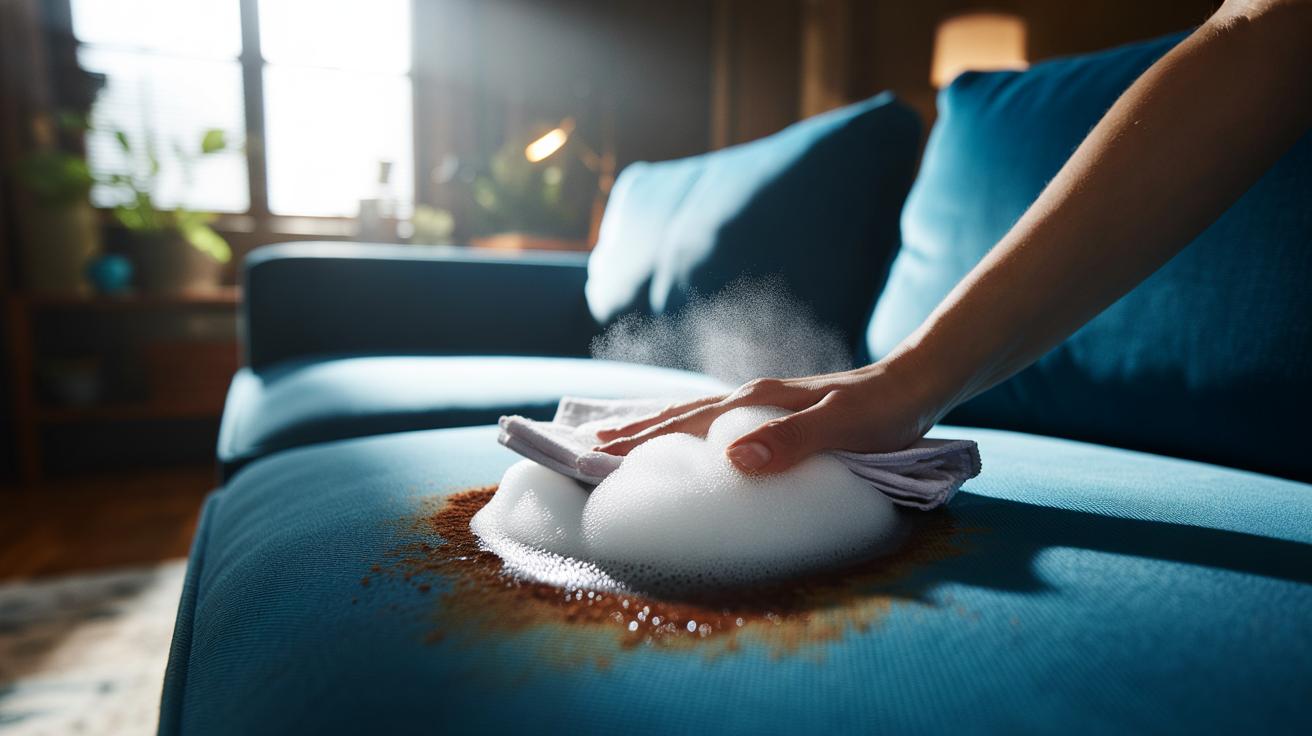
Begin with a spot test on an inconspicuous area. Dab a little shaving foam, wait five minutes, then blot. If the colour holds and the texture looks normal, proceed. Vacuum the area first to remove grit that can abrade fibres. Dispense a walnut-sized puff of foam onto a clean, white microfibre cloth—never straight onto the sofa—and pat it onto the stain. Blot, don’t rub. Rubbing frays fibres and drives pigment deeper.
Allow 3–5 minutes’ dwell time. For greasy spots, gently agitate with a soft brush in short, cross-grain motions. Blot with a fresh cloth, lifting the soil the foam has captured. If needed, repeat lightly rather than going heavy once. Finish by wiping with a barely damp cloth to remove residue, then blot dry with paper towels pressed under and over the fabric. Encourage airflow—a fan or open window speeds drying and prevents tide marks.
What to Use and What to Avoid
Choose a traditional white shaving foam—unscented or lightly scented—over coloured gels. Look for a short ingredient list (stearic acid, glycerin, water, surfactant, propellant). Gels often contain dyes and alcohols that can leave shadows or strip finishes. If a product tingles on skin, it may be too zingy for textiles. Use white cloths to monitor transferred soil and avoid colour bleed from towels. For delicate weaves, apply foam via a dampened cloth to dilute intensity but keep the bubble structure.
Some fabrics are risky. Viscose/rayon can water-spot, and silk or wool may felt or change sheen. Leather and suede require specialist care. If the cushion core is feather or down, keep moisture minimal. Always test and respect any “dry clean only” label; if the area is large, consult a pro.
| Item | Guidance |
|---|---|
| White shaving foam | Best choice; stable bubbles, low dye risk |
| Coloured gel | Avoid; potential staining and higher alcohol content |
| Coffee/tea stains | Short dwell, multiple light passes |
| Grease marks | Gentle agitation; extend dwell slightly |
| Viscose, silk, wool | High caution; prefer specialist cleaning |
Troubleshooting and Pro Tips for Stubborn Marks
If shadowing remains, it’s often residue rather than fresh soil. Mist your cloth with water, reapply a thin layer of foam, and blot again. Light, repeated cycles beat one heavy, wet attempt. For old spills with a sugary edge, warm the area slightly with a hairdryer on cool–warm from a distance before foaming; this softens residues. Oil-based marks respond to a tad longer dwell and a microfibre towel pressed firmly to wick the lifted oils.
Ink needs care: foam can lighten fresh ballpoint, but permanent markers typically require specialist solvents—stop early to avoid spreading. Pet odours? The foam lifts the visible soil; follow with an enzyme spray once dry to digest hidden residues. Always finish by grooming the pile with a dry brush so the fabric dries evenly. Never saturate the cushion; the aim is surface cleaning with controlled moisture.
Used with restraint, the shaving cream trick is a practical, budget-friendly tool for everyday spills: it suspends dirt in thick foam, keeps padding dry, and avoids the pitfalls of overwetting. The method rewards patience, clean cloths, and gentle pressure, making it ideal for busy households and renters wary of water marks. Keep a can to hand, do a quick test, and treat stains before they set. With a little know-how, you can refresh upholstery between deeper cleans and extend fabric life. Which piece of furniture in your home would benefit most from a careful foam-and-blot treatment today?
Did you like it?4.5/5 (27)