In a nutshell
- 🥖 Why it works: a porous crumb structure creates gentle mechanical interlock and mild adhesion that traps micro‑shards without scratching surfaces.
- 🧤 Safe routine: wear gloves and closed shoes, sweep large pieces, dab with a fresh slice (rotate to clean sections), then finish with a damp microfibre cloth; keep children and pets away.
- 🗑️ Disposal: wrap the bread in paper, seal in a rigid container (jar or tin), label as glass, and bin—do not compost; clean tools to prevent re‑spread.
- 🔄 Alternatives: compare soft bread, sticky tape, putty/Blu‑tack, and a HEPA vacuum; pair methods—broom for bulk, bread for splinters, careful vacuuming for edges.
- 🚫 When not to use: avoid on wet/greasy floors, contaminated or hazardous breakages (e.g., thermometers, CFLs), and deep‑pile carpets; follow local council guidance.
Drop a glass, and the mess seems to multiply before your eyes. Even after sweeping, tiny, almost invisible splinters wait for bare feet and pets. One old domestic trick still earns its keep: press a slice of soft bread over the area to lift the micro‑shards your broom leaves behind. The bread’s cushion of crumb conforms to the floor, clings to edges and holds the fragments fast. It’s cheap, quick, and friendly to delicate surfaces. The key is using gentle pressure, fresh sections of bread, and safe disposal. Here’s how the crumb’s physics work, when to trust it, and the limits every careful cleaner should respect.
Why Soft Bread Works on Shattered Glass
At first glance, bread looks too innocent for broken glass. Its secret lies in a porous crumb structure made of tiny air cells held by a flexible starch‑protein network. Pressed lightly, this spongy matrix deforms around jagged edges, creating mechanical interlock that grips splinters without pushing them across the floor. The slight tack of a fresh slice adds mild adhesion, helping to lift particles your broom and dustpan miss.
Moisture matters. A slice that’s fresh—or minimally dampened—has enough surface humidity to promote surface energy contact with glass while staying cohesive. The crumb compresses into grooves, grout lines, and textured vinyl. It reaches where bristles can’t, then bounces back, trapping fragments inside. This controlled squish is what makes bread safer than dragging a cloth that can skate shards into new territory.
Compared with blu‑tack or tape, bread spreads the load across a wide, soft face, reducing the risk of forcing splinters deeper into wood grain or scratching finishes. Its pliability gives you the gentleness of a sponge with more consistent pickup of needle‑fine fragments, the pieces most likely to end up in skin—or paws.
Step-by-Step Safety Routine for the Bread Method
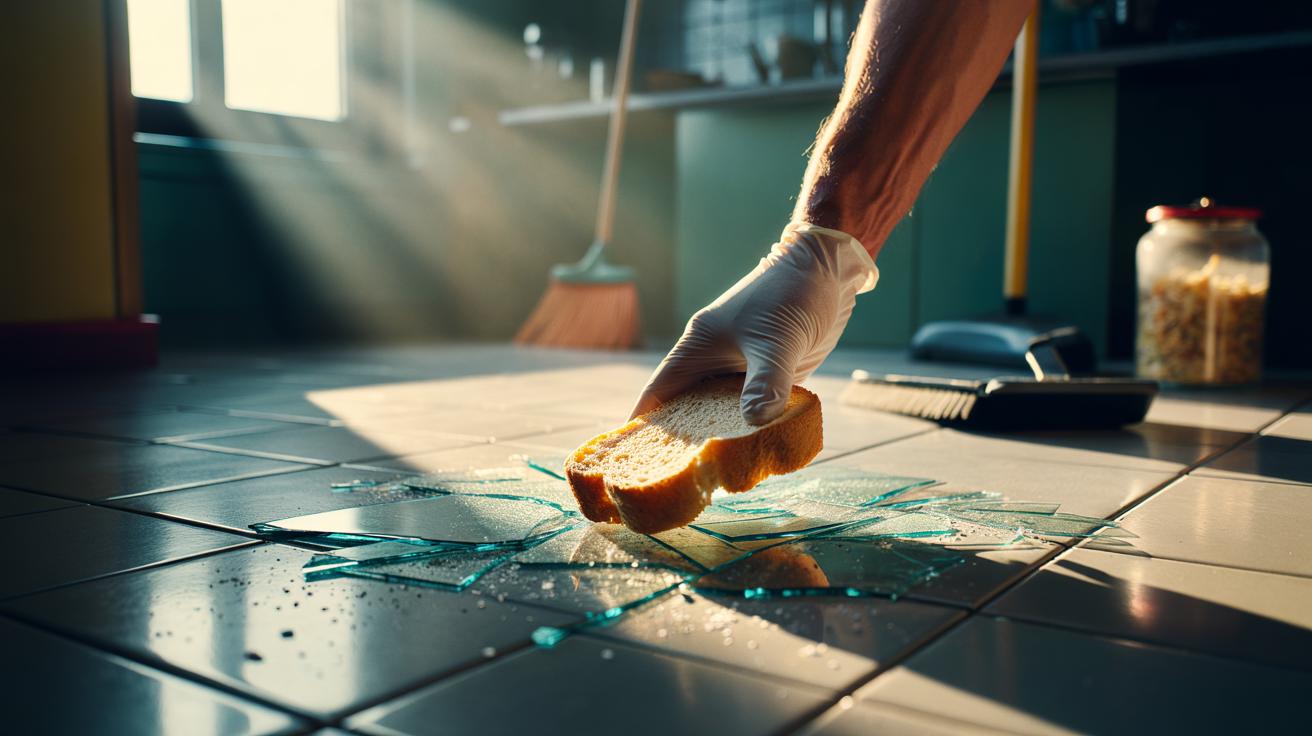
First, protect yourself: put on closed shoes and gloves. Ventilate if a bulb or coated glass has broken. Use a broom and dustpan to remove visible chunks, sweeping in one direction to avoid scatter. Scoot large pieces onto stiff card rather than fingers. Once the obvious debris is cleared, reach for a soft, fresh slice of bread. If it’s very dry, mist once with water; it should be pliable, not soggy.
Fold the slice over your fingers to create a padded puck. Dab—don’t drag—pressing with light, even pressure. Rotate to a clean patch of crumb after each dab so you don’t redeposit fragments. Work from the perimeter towards the centre of the spill, then along skirting boards, under appliances, and through grout lines. Use a new slice for carpets or textured floors to maintain grip.
Finish with a wipe of a damp microfibre cloth to catch remaining dust. For disposal, wrap the used bread in newspaper, place it in a rigid container (an empty jar or tin), and seal before binning. Label “glass” if others handle your rubbish. Avoid composting. Wash the broom bristles or tap them out over a bag to keep glass out of the home.
Bread Versus Other Cleanup Options
The bread trick isn’t the only route. Your choice depends on surface, shard size, and how much mess you face. For smooth hard floors with hard‑to‑see splinters, soft crumbs offer a quick sweep‑up that preserves finishes. Sticky tape excels on glossy tiles, while putty‑like tack can pull fragments from deep texture. Vacuums are useful with the right filter and care. No single method is perfect; the smartest clean‑ups pair tools strategically.
| Method | Best For | Pros | Cautions |
|---|---|---|---|
| Soft Bread | Micro‑shards on hard floors, grout | Cheap, gentle, conforms to gaps | Not for wet spills or contaminated glass |
| Sticky Tape | Glossy tile, worktops | High pickup of tiny specks | Residue; can flick shards if yanked |
| Damp Paper Towel | Quick end‑wipe | Disposable, familiar | Pushes shards if dragged |
| Putty/Blu‑tack | Textured surfaces | Strong grip | Grease marks on porous materials |
| Vacuum (HEPA) | Rugs, hard‑to‑reach crevices | Thorough if done carefully | Risk to hoses/bags; empty outdoors |
If you do vacuum, use a nozzle, not a rotating brush that can fling shards, and choose a HEPA filter. Empty the canister into a bag outdoors. Many households find the sweet spot is broom for bulk, bread for splinters, then a cautious vacuum along edges. Keep pets and children away until every stage is complete.
When Not to Use Bread—and How to Dispose Responsibly
Avoid bread on wet, greasy, or sticky floors; moisture saturates the crumb, releasing shards as it tears. Skip it for contaminated breakages—such as thermometers, certain CFL bulbs, or laboratory glass exposed to chemicals—where official guidance recommends sealed containers, ventilation, and specific disposal. For deep‑pile carpets, a vacuum with nozzle and slow passes beats bread, which can shed crumbs. If glass is embedded in skin or fabric, do not press bread down; seek medical help or isolate the item for safe removal.
For disposal, wrap the used slice in paper, then seal it inside a jar, tin, or double‑bag. Mark it clearly to protect refuse workers. Never place glass‑laden bread in food or garden waste. Wipe skirting boards and mop the area to prevent strays. Check adjacent rooms; splinters travel surprisingly far. If the breakage involved treated or coated glass, consult your local council’s advice on hazardous fragments and recycling rules before discarding.
A Frugal, Low‑Waste Trick With a Long Shelf Life
In an era of single‑use wipes and specialty gadgets, the bread method is a small triumph of ingenuity. The spare heel of a loaf, often destined for the bin, becomes a nimble cleaner that protects floors and feet. Its softness spares lacquered wood and polished stone, while its pliability draws out fine slivers from seams and joints. Households that keep a slice in the freezer for spill emergencies save money and cut packaging waste from disposable products. It’s a humble fix, yes, but quietly effective.
Think of it as a layered safeguard. Sweep for the obvious, use bread for the invisible, then finish with a damp microfibre and mindful disposal. You’ll spend pennies, not pounds, and reduce risk without harsh chemicals. That mix of thrift and safety earns the trick its place in domestic lore—handed down, tested often, and still meeting modern standards.
Accidents don’t wait for ideal conditions, and that’s the charm of this method: it uses what most kitchens already have to neutralise a risky mess. The soft crumbs do the delicate work, your routine does the rest. Keep a slice to hand, a jar for disposal, and a little patience for methodical dabbing, and you’ll turn a hazardous sprawl into a tidy, safe floor. Which everyday item in your home could become the next unsung hero of practical safety—and what trick would you trust it for?
Did you like it?4.4/5 (27)