In a nutshell
- 🌿 Olive oil polish nourishes wood, deepens the grain, and, paired with wax, creates a subtle hydrophobic barrier for a natural, breathable sheen.
- 🧪 Reliable recipe: 2–3 parts olive oil to 1 part beeswax; add carnauba for durability and vitamin E to slow oxidation; optional lemon oil for scent—use refined oil to avoid tint.
- 🧴 Application essentials: Clean first, apply a thin film with the grain, wait 10–15 minutes, then buff to dry clarity; layer lightly next day; never apply to floors; always test discreetly.
- 🧳 Care and storage: Dust weekly, refresh monthly, store polish cool and sealed; typical shelf life is 6–9 months; keep furniture out of direct sun and use coasters and felt pads.
- 🛠️ Troubleshooting: Haze = over-application (reflow and buff); streaks signal a dirty cloth or short dry time; reset build-up with a 1:4 white vinegar solution; seek a restorer for valuable antiques.
From Victorian parlours to contemporary flats, British households have long prized a soft, natural sheen on well-loved tables and sideboards. One humble hero still hiding in the cupboard is olive oil, transformed into a gentle furniture polish that coaxes depth from the grain, revives tired finishes, and resists dust without harsh chemicals. Unlike synthetic sprays that leave a brittle shine, a balanced blend of oil and wax creates a breathable, protective veil that respects the timber beneath. Used correctly, this polish nourishes wood, enhances colour, and shields against daily scuffs. It is affordable, easy to mix in a small batch, and it leaves that comforting, hand-buffed glow which mass-market aerosols rarely replicate.
Why Olive Oil Revives Wood
Wood is a living material, even after it’s milled. Its fibres and pores respond to humidity, light, and abrasion. The triglycerides in olive oil migrate into microscopic checks in a finish, evening out light scatter and intensifying colour contrast in the grain. This is why a dab on a dull patch looks instantly richer: the refractive index of oil aligns more closely with the finish than air, so reflections appear deeper. That optical effect reads as “shine” but it’s actually clarity. A good polish does more, though. When paired with a natural wax, the oil contributes suppleness while the wax sets a subtle, hydrophobic barrier that helps repel fingerprints and minor spills.
There’s nutrition of a sort at play. While modern furniture is typically sealed, residual interactions still occur: oil reduces micro-dryness in old finishes, keys into cellulose at the very surface, and softens the look of hairline scratches. Choose a lighter, neutral oil profile to avoid aroma and colour cast. Extra virgin has protective polyphenols but can oxidise faster and carry a green tint; a refined olive oil is paler and more predictable for surface work. Whichever you pick, the polish must remain thin and buffed—glut leads to tack and dust traps.
A Tried-and-True Recipe: Ratios, Variations, and Safety
The classic home blend is simple: melt beeswax, whisk in warm olive oil, and condition with a drop of antioxidant. A 3:1 ratio (oil to wax) yields a soft balm for most sealed furniture; 2:1 gives a firmer cake for high-touch areas. For extra resilience, swap a third of the beeswax for carnauba, which is harder and scuff resistant. Add a few drops of vitamin E (tocopherol) to slow rancidity. Scent is optional: one or two drops of lemon essential oil per 100 ml brightens the aroma but keep doses low to protect sensitive finishes. Always test on an inconspicuous area and avoid unfinished, raw wood that will drink the blend unevenly.
Safety is straightforward. Food-safe components like beeswax and olive oil are gentle on nursery and kitchen furniture, though essential oils can irritate if overused. Store your polish in a clean, lidded jar. Keep it cool and dark to maintain consistency and stability. Discard at the first hint of a stale or “painty” smell—this signals oxidation. If you prefer a pourable oil, increase olive oil or warm the balm slightly before use. A firm balm travels well and avoids over-application on delicate veneers.
| Ingredient | Ratio (by volume) | Purpose | Notes |
|---|---|---|---|
| Olive oil (refined) | 2–3 parts | Penetration, gloss, conditioning | Lighter scent, slower yellowing than extra virgin |
| Beeswax | 1 part | Film formation, water beading | Creamy feel; easy to buff |
| Carnauba (optional) | Up to 0.5 part | Durability, higher sheen | Raises melting point; buff promptly |
| Vitamin E (tocopherol) | 0.5–1% total | Antioxidant | Extends shelf life |
| Lemon essential oil (optional) | 1–2 drops/100 ml | Fresh scent, mild solvent lift | Patch test on shellac and French polish |
How to Apply for a Lasting Sheen
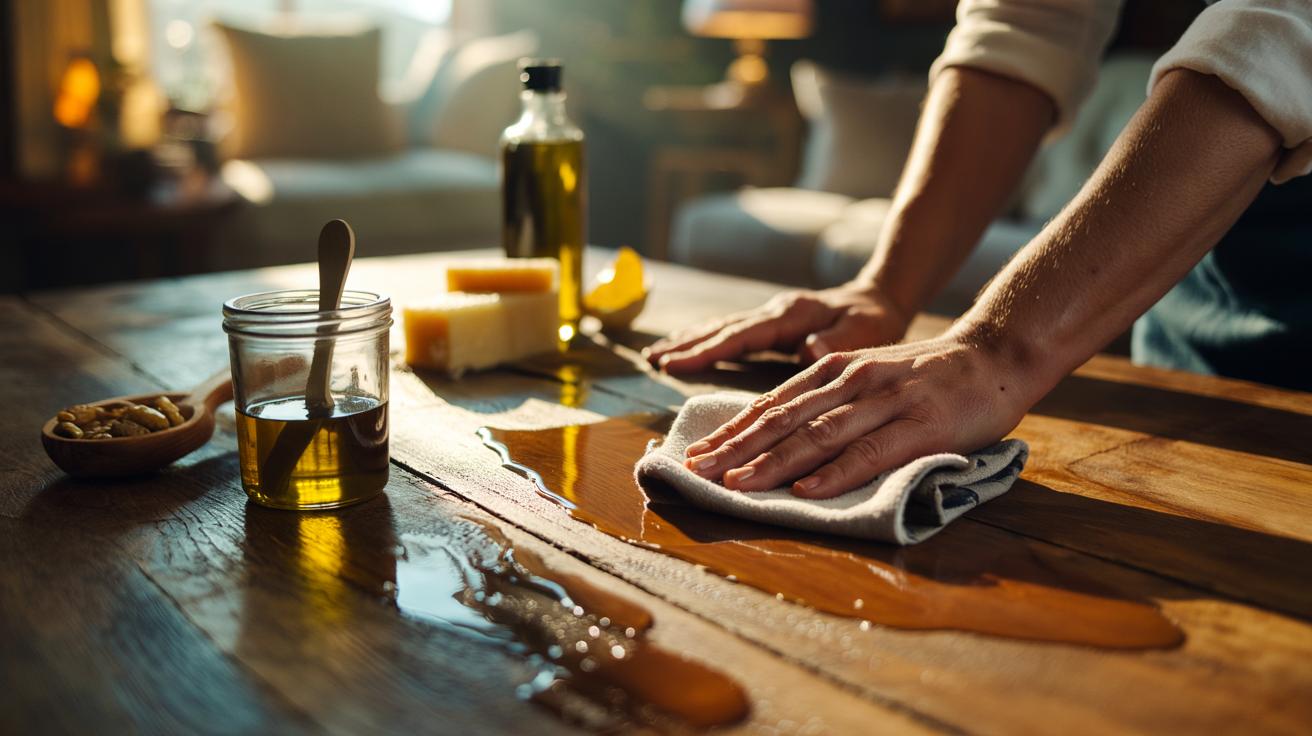
Start clean. Dust with a soft cloth or a barely damp microfibre, then dry thoroughly. Scoop a pea-sized amount of polish onto a lint-free cotton cloth. Less is more: a thin film avoids streaks and build-up. Work with the grain, using small circles to massage the balm into the finish, then long, straight passes to level. For intricate mouldings, use a soft shoe brush, then wipe away excess. Leave for 10–15 minutes to set. Now buff vigorously with a fresh cloth until the surface feels dry and crisp—not greasy. The sheen should look calm, not wet.
Layer if needed. A second, lighter coat the following day deepens the patina and evens out thirsty spots. Never apply to floors—oil-wax films are slippery and hazardous. For dining tables, give the polish a longer cure before heavy use, and always protect with mats under hot dishes. If you notice drag while buffing, warm the surface briefly with your hands and keep the cloth moving; carnauba-rich blends set quickly and respond to brisk friction.
Care, Storage, and Troubleshooting
Maintenance is minimal. Dust weekly, then refresh the polish monthly or after parties and seasonal heating spells when finishes dry out. Store your jar in a cool cupboard; keep the lid tight to reduce oxygen exposure. With vitamin E, a small batch typically lasts 6–9 months. If the balm smells rancid or separates irreversibly, dispose and remix. Sunlight fades colour fast; consider a curtain or UV film for pieces near windows. Coasters and felt feet stop micro-scratches that defeat even the best wax layer.
Issues are usually easy to solve. Dull haze means over-application: reapply a drop, then buff hard to reflow the wax. Streaks signal insufficient drying or a contaminated cloth; swap for clean cotton. Sticky patches on antique shellac respond to gentle passes and patience—avoid solvents. To reset heavy build-up, wipe with a 1:4 white vinegar and water solution, dry, then re-polish sparingly. When in doubt, consult a restorer for high-value antiques; preservation trumps shine.
A humble tin of olive-oil polish turns routine dusting into quiet restoration, feeding tired finishes and guarding against the small harms of daily life. The blend’s appeal lies in its tactility: you see the wood again, not a glassy film, and you feel the surface respond under a cloth. Keep the recipe simple, the coats light, and the buff brisk, and you’ll coax depth and warmth from even modest timbers. Ready to swap aerosols for a handmade balm—and which cherished piece in your home would you polish first?
Did you like it?4.3/5 (23)