In a nutshell
- 🧪 Use a plastic bag filled with white vinegar to dissolve showerhead limescale—it’s cheap, quick, and avoids disassembly while restoring flow and shine.
- 🔬 It works because acetic acid reacts with calcium carbonate, creating soluble salts and CO₂; bag immersion keeps constant contact for thorough descaling.
- 🧰 Steps: submerge the spray face 20–120 minutes (finish-dependent), secure with an elastic, brush gently, massage rubber nozzles, then flush hot water for a clean, even spray.
- ⚠️ Safety and eco: never mix vinegar with bleach, protect natural stone, ventilate; reuse bags, try citric acid, and neutralise spent solution with bicarbonate of soda.
- 🔧 Prevention and help: monthly mini-soaks and post-shower drying slow build-up; consider a water softener or polyphosphate filter, and call a plumber if pressure, leaks, or thermostatic issues persist.
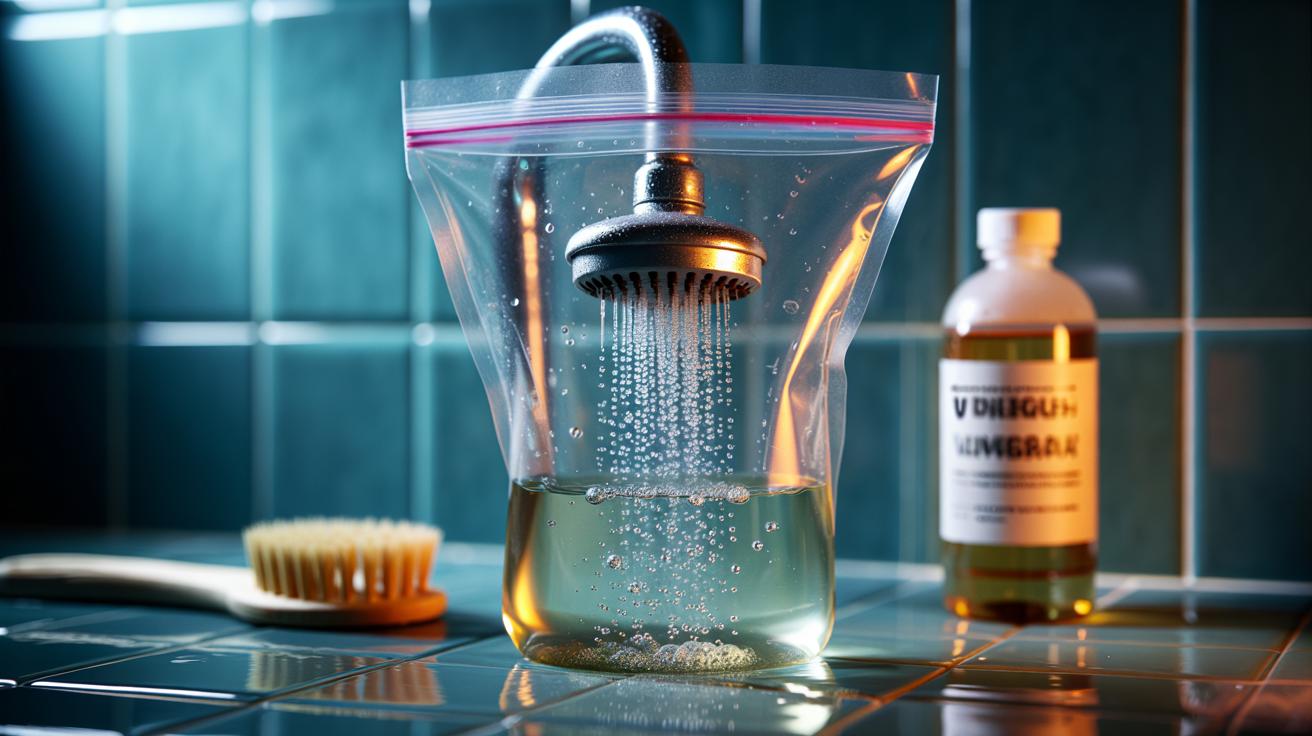
It’s the hack plumbers recommend to clients who dread tackling crusty fixtures: a plastic bag filled with everyday white vinegar tied around a blocked showerhead. In homes across the UK, hard water leaves stubborn limescale that throttles flow, skews spray patterns, and dulls chrome. The bag method brings the acid to the problem instead of removing the showerhead or using harsh chemicals. It’s cheap, quick, and reliably effective when done correctly. Below, we explain why it works, how to do it safely, and when to call a professional. Used with care, this simple setup can restore pressure and sparkle without dismantling your bathroom.
What Causes Limescale and Why Your Shower Suffers
Across much of the UK, tap water is “hard,” laden with calcium and magnesium bicarbonates. When heated or left to dry, these minerals precipitate as calcium carbonate—commonly called limescale. The rough, chalky deposits cling to shower nozzles and internal channels, narrowing pathways and disrupting the mix of air and water that creates a clean, even spray. Over time, flow weakens, droplets shoot sideways, and temperature stabilisation can wobble. That chalk also creates a film on chrome, so fixtures look tired even when freshly wiped.
Showerheads are especially vulnerable because they concentrate many tiny outlets in one plate. Each nozzle becomes a ledge where crystals form. The hotter and drier your bathroom, the faster scale grows between showers. If your boiler runs hot or you live in a very hard-water postcode, the build-up can be felt within weeks. Left unattended, limescale can shorten component life and mask deeper issues in valves and hose connections.
The Plastic Bag Trick: Step-by-Step
You need a sturdy plastic bag (or reusable silicone bag), an elastic band or cable tie, and white vinegar (around 5% acetic acid). Fill the bag with enough vinegar to submerge the showerhead face. Slip it over the head and secure tightly so the nozzles stay immersed. Leave to soak, then remove the bag, scrub gently with a soft brush, and run hot water to flush loosened scale. Wipe the faceplate to finish. Do not mix vinegar with bleach or any chlorine-based product—dangerous gases can form.
Soak time depends on finish and severity. Chrome tolerates longer; delicate plated finishes require care. Handheld heads are simple to bag; for fixed heads, support the bag with tape to avoid strain on the arm. If rubber nozzles are present, massage them after soaking to free granules. A final rinse clears any vinegar scent. Always test a small area first if you are unsure about a specialty finish.
| Material/Finish | Recommended Soak Time | Notes |
|---|---|---|
| Chrome | 60–120 minutes | Generally safe; check for lacquer wear |
| Stainless steel | 60–120 minutes | Rinse well; dry to avoid spotting |
| Brushed nickel | 20–45 minutes | Shorter dwell to protect sheen |
| Oil-rubbed bronze | 10–20 minutes | Test first; wipe promptly |
Why Plumbers Say It Works Every Time
The science is disarmingly simple. Acetic acid in vinegar reacts with calcium carbonate to form soluble calcium acetate, water, and carbon dioxide. Those fizzing bubbles you see are CO₂ signalling the reaction. Because the head sits submerged, acid remains in constant contact with every obstructed nozzle and crevice. That’s the genius of the bag: it prevents evaporation, maintains concentration, and uses gravity to bathe areas you can’t reach with a cloth. Consistent contact time is the secret to complete dissolving rather than patchy softening.
Plumbers like this method because it avoids dismantling, preserves gaskets, and reduces risk of cross-threading or cracked housings. It’s predictable, cheap, and gentle compared with strong acids. The elastic-bag seal helps the vinegar penetrate into micro-channels behind the spray plate, where scale often hides. After soaking, a light brush frees residue, restoring flow and symmetry. When combined with a quick nozzle massage, most heads behave as-new—no specialist kit required.
Safety, Materials, and Eco Considerations
Vinegar is mild, but respect the basics. Wear gloves if you have sensitive skin, ventilate the room, and keep the bag secure to prevent drips onto vulnerable surfaces. Keep acidic solutions off natural stone tiles and porous grout, which can etch or lighten. Protect the tub or tray with a towel while you work. If you’ve recently used a chlorine cleaner, rinse thoroughly before applying vinegar. After soaking, flush the head for 30 seconds before showering to remove any residual acid and loosened grit.
To minimise waste, choose a reusable silicone bag or repurpose a freezer bag, then rinse and store it for the next clean. Neutralise spent vinegar with a spoon of bicarbonate of soda before disposal to reduce odour. If you dislike vinegar, citric acid crystals dissolved in warm water are a good alternative. Avoid aggressive descalers unless the manufacturer approves them for your finish. Finally, dry fixtures after use to extend the time between deep cleans.
Prevention and When to Call a Professional
Prevention is simpler than cure. After the last shower of the day, give the head a quick shake and wipe to deny scale its drying time. Once a month, run a rapid 10-minute vinegar bag soak as maintenance instead of waiting for clogs. Consider a water softener or inline polyphosphate filter if your postcode is extremely hard; both reduce deposition in pipes and on fixtures. Choose showerheads with flexible rubber nozzles that can be pinched clean, and keep the flow restrictor debris-free by checking it during routine bathroom cleaning.
Call a plumber if low pressure persists after descaling, if the diverter struggles, or if temperature swings suggest a failing thermostatic cartridge. Persistent leaks at the swivel ball or hose indicate worn seals, not just limescale. When build-up is heavy inside the valve body, specialist tools and parts may be needed to prevent damage. Set calendar reminders for seasonal descaling so small deposits never become concrete-hard problems.
A plastic bag and vinegar won’t win design awards, but they deliver repeatable, science-backed results that restore water flow and shine with minimal effort. The method scales from budget rentals to boutique bathrooms, requiring no disassembly or caustic chemicals. Stick to proper soak times, protect delicate finishes, and keep up light maintenance to stay ahead of the chalk. Used regularly, this trick can extend the life of your shower and reduce energy waste from throttled flow. What’s your current hard-water strategy, and which small change could make your next shower feel brand new?
Did you like it?4.7/5 (24)