In a nutshell
- 🧼 How it works: Uncooked rice provides gentle abrasion while dish soap surfactants lift grime; vigorous shaking creates turbulence that scrubs hard-to-reach contours without scratching.
- 📝 Simple steps: Add 1–2 tsp rice, 2–3 drops washing-up liquid, warm water, then shake 20–30 seconds, check, repeat if needed, and rinse thoroughly; finish with a hot-water swirl for faster drying.
- 🌾 Right grain, right bottle: Short/medium grain scrubs evenly, long grain reaches corners; millet can help in very narrow necks. Use no abrasives on crystal or coated interiors to protect finishes.
- ♻️ Hygiene and sustainability: Lifts biofilm, deodorises with baking soda or a vinegar rinse, and air-dries clean; cuts chemical use and waste, costing pennies with biodegradable detergents.
- ⚠️ Safety and retrieval: Vent fizzy remnants, avoid aggressive shaking on fragile glass or decals, and remove leftover grains; test gently and inspect surfaces before vigorous cleaning.
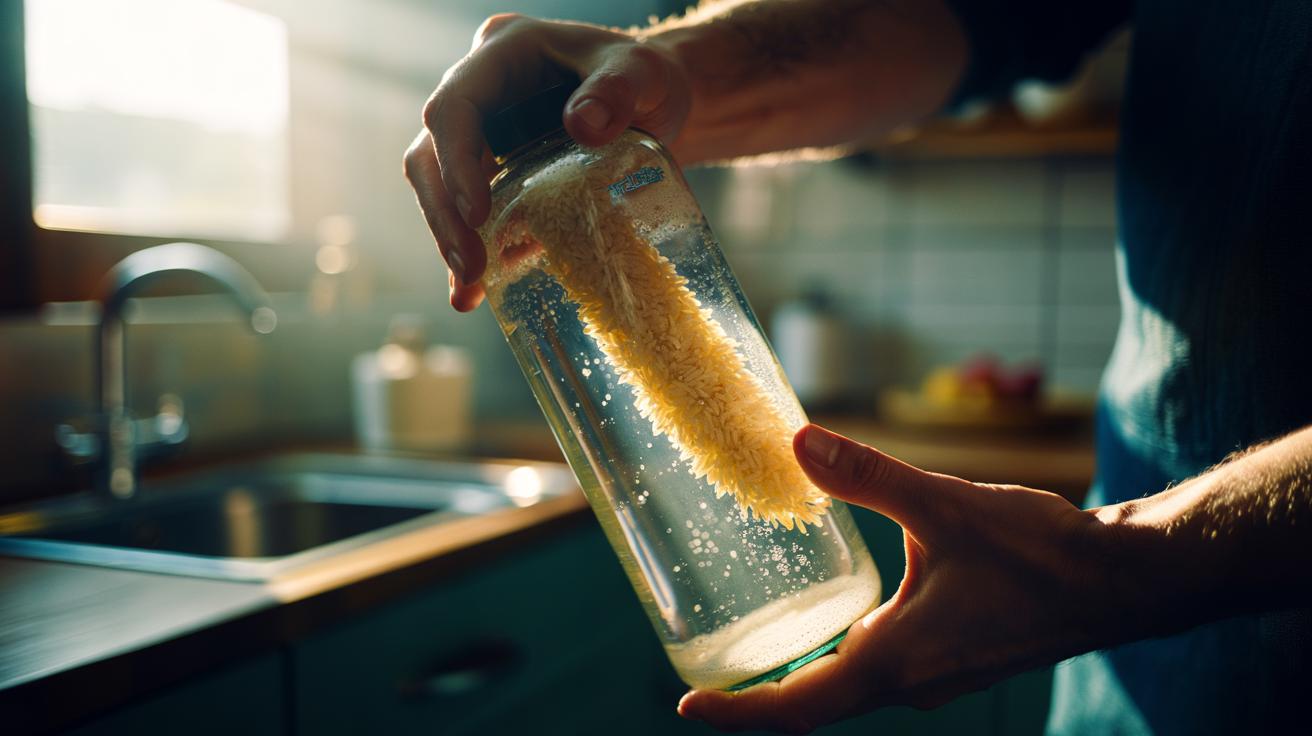
Narrow-neck bottles and reusable flasks collect a stubborn halo of residue that bristles can’t reach, yet sending them to landfill feels wasteful. Enter the humble kitchen combo of rice and dish soap: a low-tech, high-impact clean that costs pennies and takes minutes. The grains behave like hundreds of tiny scrubbers, skittering along the glass while the surfactant lifts grease, tannins and biofilm. With warm water and a firm shake, you can revive cloudy carafes, sports bottles and vintage milk bottles without specialist gear. There’s no brush to jam, no batteries to charge, just physics and pantry staples doing the hard work. Here’s why it works, how to do it safely, and when to choose alternatives.
How the Rice-and-Soap Method Works
Uncooked rice provides gentle mechanical abrasion. Each grain has micro-edges that glide across the interior, dislodging deposits where a sponge can’t reach. When you add warm water and a few drops of washing-up liquid, the surfactant action breaks the surface tension, letting water creep under grime while encapsulating oils and tannins. The shake creates turbulence: grains bounce, swirl and scour, constantly changing contact points so the same patch isn’t overworked. This is why curved decanters and tight shoulders, notorious for film build-up, yield to a 30-second agitation cycle.
Unlike steel shot or harsh powders, rice is softer than glass and most stainless steel, offering effective friction with minimal scratch risk. Used correctly, the method clears the “tea tide line” and dried pulp without marring the vessel. The key variables you control are grain size, shaking intensity and soak temperature—all small changes that dramatically change how efficiently residues detach and rinse away.
Step-by-Step: From Stuck Residue to Sparkle
1) Add 1–2 teaspoons (about 10–20 g) of uncooked rice to the bottle. 2) Squeeze in 2–3 drops of washing-up liquid. 3) Pour in 200–300 ml of warm (not boiling) water—hot enough to soften residues, safe enough for adhesives and seals. 4) Cover the opening with your palm or a tight stopper. 5) Shake vigorously for 20–30 seconds, rotating the bottle so grains visit every contour. 6) Check progress, then repeat if a ring remains. 7) Rinse thoroughly with clean water until no suds or grains remain. A final swirl of hot water speeds drying and reduces spotting.
For extra-stubborn films, pre-soak for 10 minutes in warm soapy water, then add rice and shake. Target the neck by tilting the bottle and pulsing short shakes so grains ride the shoulder. Avoid aggressive shaking on fragile crystal or antique decals. If your bottle is pressurised (e.g., a fizzy-drink remnant), vent first. Always fish out leftover grains before storage; a long skewer or blast of water helps dislodge any stragglers.
Choosing the Right Grain and When to Avoid the Hack
Short- to medium-grain rice (risotto or sushi styles) scrubs evenly because its plumper shape contacts more surface area, while long-grain varieties dart quickly into corners. Very narrow neck? A pinch of millet flows where rice won’t, but it’s harder to retrieve. Avoid couscous; it softens and gums up. Coarse salt works in a pinch, but it dissolves and can etch soft plastics over time. Baking soda boosts deodorising if you’re battling odour, though it’s less abrasive than rice. When in doubt, test gently and inspect under light before committing to vigorous shaking.
There are red lines. Don’t use abrasives in bottles with delicate gold leaf, soft coatings, or anti-stick liners (common in some insulated flasks). For lead crystal heirlooms or lab-grade borosilicate with calibrated markings, switch to a soak-and-rinse routine or a purpose-made bottle brush to preserve surfaces.
| Bottle Material | Recommended Abrasive | Amount | Pros | Watch-outs |
|---|---|---|---|---|
| Glass (standard) | Rice (short/medium grain) | 1–2 tsp | Effective, low scratch risk | Rinse grains fully |
| Stainless steel | Rice + baking soda | 1 tsp + 1 tsp | Deodorises coffee/tea | Avoid scrubbing painted logos |
| Plastic (hard) | Fine rice | 1 tsp | Gentler than salt | Check for micro-scratches |
| Crystal/coated | None (soak only) | — | Preserves finish | Avoid abrasion entirely |
Hygiene, Sustainability, and Cost
Rice-and-soap cleaning tackles more than aesthetics. By lifting biofilm—that slippery layer where bacteria cling—you improve hygiene between proper hot washes. If odours linger, add a teaspoon of baking soda or finish with a vinegar rinse, then flush with hot water to neutralise. Air-dry upside down to discourage trapped moisture. Odour-free bottles are less likely to be abandoned in cupboards and replaced with new plastic.
There’s a sustainability dividend. You avoid disposable brush heads and harsh chemical cleaners, and the rice—kept out of the drain with a sieve—can go into food waste. The method uses minimal product: a few drops of washing-up liquid and a spoon of rice amount to pennies per clean. Mind water use by batching cleans, and choose biodegradable detergents where possible. For offices or cafés, it’s a speedy back-of-house fix that extends bottle and carafe lifespans without specialist kit.
Simple, effective and frugal, the rice-and-soap shake turns a design flaw—narrow necks—into a solvable problem using everyday staples. With an understanding of gentle abrasion, surfactants and smart technique, you can clear cloudy rings, banish odours and keep bottles in rotation for years. The trick is knowing when to shake, when to soak and when to reach for a brush. What vessel in your cupboard is begging for a test run, and how will you tweak the grain, water temperature and shaking pattern to get that satisfying, glass-bright finish?
Did you like it?4.5/5 (30)