In a nutshell
- ⚡ The rubber glove works via static electricity and the triboelectric effect, charging fur and fabric so hairs leap onto the glove in tidy clumps.
- 🖐️ Master the one-pass swipe: pull fabric taut, make a slow, continuous stroke, then lift and bin the fur; use fingertips for seams and tufting.
- 🧤 Choose the right glove: nitrile for hypoallergenic grip, latex for high friction; ensure a snug fit and use light, nap-following strokes on delicate textiles.
- 💧 Conditions count: dry air boosts static; in humidity, try a lightly damp glove or follow with a microfibre cloth to catch strays.
- 🧰 Pick tools by task: the glove handles daily spruce-ups; escalate to a vacuum pet tool, squeegee, or lint roller for deep or specific clean-ups.
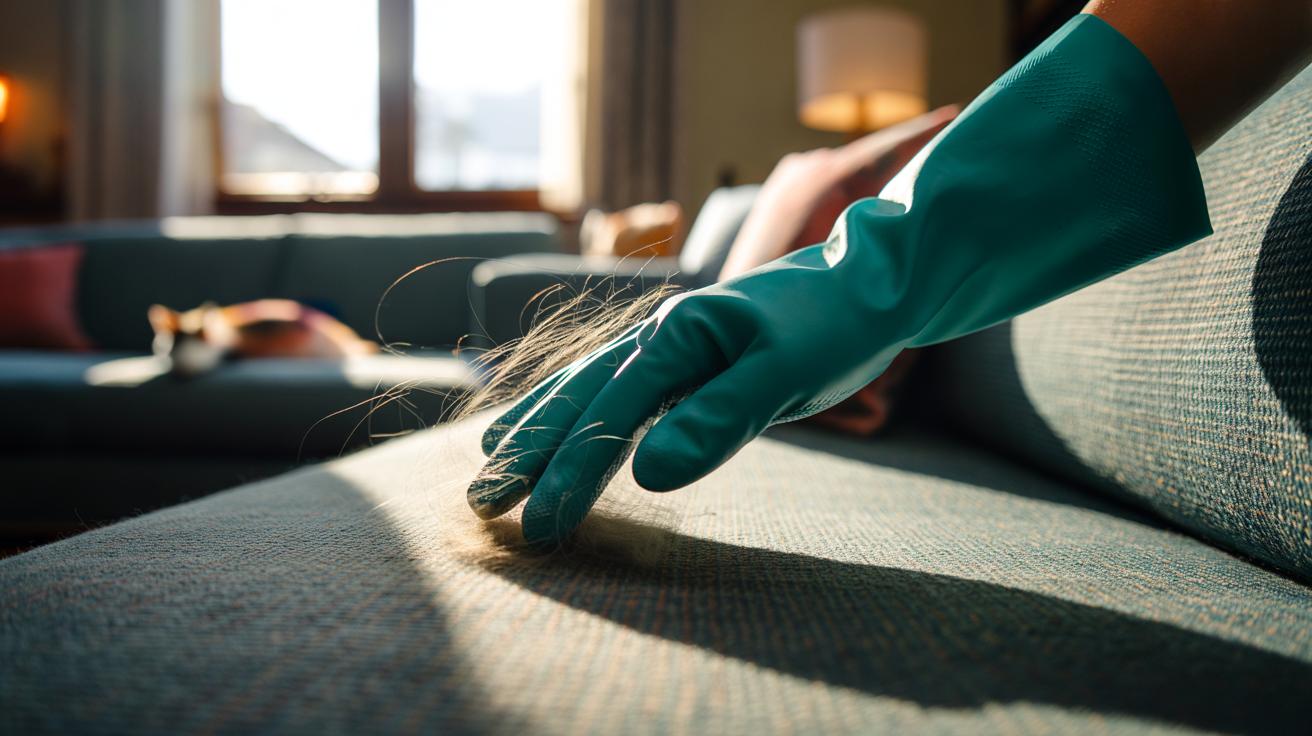
Pet fur threaded into upholstery can make a well-tended home look unkempt in minutes. Yet there’s a low-tech trick that’s both swift and oddly satisfying: put on a rubber washing-up glove and swipe. The science is as simple as it is effective. Friction builds static electricity, drawing loose fibres and whiskers out of fabric and into tidy clumps you can lift away. One steady pass often collects more fluff than a full roll of sticky tape. It’s gentle on fabrics, free to try, and ideal for sofas, car seats, lampshades, and pet beds. Here’s how the charge works—and how to nail that single sweep.
Why Static Electricity Loves Pet Hair
When rubber glides across fabric, it taps the triboelectric effect: two materials contact and separate, exchanging electrons and creating opposite charges. Animal fur tends to become positively charged; many rubbers skew negative. The result is a strong attraction that pulls strands off the weave and onto the glove. Because the charge acts along the surface, even fine, flyaway fibres lift without scrubbing. You’re not gluing hair to tacky adhesive; you’re persuading it with physics. That’s why the clumps form quickly and stay together until you shake or rinse them away.
Conditions matter. Dry rooms magnify static; humid kitchens and bathrooms damp it down. A glove used dry maximises charge on most textiles, while a lightly damp glove adds a touch of grip for stubborn patches on tight weaves. Always test a discreet area if you’re working on delicate fabrics such as silk or cashmere-blend upholstery. The aim is controlled friction, not abrasion, so keep your pressure firm but gliding, not grinding.
The One-Pass Glove Technique
Slide on a snug-fitting latex or nitrile glove (nitrile is ideal if you have latex allergies). Stand square to the cushion or seat and pull the fabric taut with your free hand. Start at the far edge and sweep your gloved palm towards you in a single, deliberate stroke. One slow swipe beats a flurry of short, frantic rubs, because continuous contact builds an even charge and funnels hair into a neat windrow. Lift the line of fur, pinch it off, and flick it into the bin.
For seams and tufting, switch to your fingertips, bending them slightly so the ridges of the glove catch embedded hairs. Repeat the long, single-direction stroke across larger panels. If fibres resist, very lightly mist the glove (not the fabric) and try again; the micro-film of water adds cohesion without destroying the static entirely. Rinse the glove under the tap to reset its grip. In many living rooms, one pass per panel is enough to transform a sofa from speckled to pristine.
Choosing the Right Glove and Surfaces
Nitrile gloves are durable, hypoallergenic, and offer a slightly tacky finish that grips fur; latex provides excellent friction but can bother sensitive skin. Textured washing-up gloves, particularly those with raised dots or gentle ribs, work brilliantly on woven upholstery and car interiors. Fit matters: a tight glove transmits pressure evenly so the whole palm generates charge. On delicate velvet or chenille, keep strokes light and in the direction of the nap to avoid bruising the pile.
Leather and faux leather release hair easily; use a dry glove with feather-light pressure to avoid streaking. Suede demands caution—test first and stick to fingertip strokes. Microfibre (microfiber) cloths can follow as a polishing step, capturing strays the glove corrals. Avoid anti-static sprays before you clean; they tame future cling but blunt the glove’s power in the moment. Applied afterwards, though, a fabric-safe anti-static finish can keep seats cleaner between sessions.
When to Reach for Other Tools
The glove swipe excels at daily spruce-ups, but other tools have their moment. Deeply embedded fur in high-pile carpets might need a vacuum with a motorised pet tool. On stair treads or car boot liners, a window squeegee can rake out hair from the backing. Think of the glove as your fast first responder, then escalate only if the fabric or the depth of hair demands it. The matrix below helps you match the job to the kit.
| Tool | How It Works | Best For | Key Strength |
|---|---|---|---|
| Rubber/Nitrile Glove | Static attraction via friction | Sofas, cushions, car seats | Fast, low-cost, gentle |
| Lint Roller | Adhesive lift | Clothing, lampshades | Precise spot clean |
| Vacuum Pet Tool | Airflow and agitation | Rugs, deep pile, stairs | Deep extraction |
| Squeegee | Mechanical raking | Carpeted mats, boot liners | Pulls embedded clumps |
| Microfibre Cloth | Electrostatic lift | Finishing passes | Captures strays |
Humidity, shedding season, and fabric weave dictate your choice on any given day. If winter air is dry, the glove is a powerhouse; on muggy afternoons, pair it with a microfibre cloth or jump straight to the vacuum. The smartest routine is layered: glove for the bulk, targeted tool for the rest, prevention spray to slow the next build-up.
The rubber glove swipe endures because it fuses kitchen-drawer simplicity with elegant physics. Static does the heavy lifting; your technique ensures it happens in one calm, confident pass. Keep a glove near the sofa, another in the car, and you’re seconds from presentable whenever guests or a last-minute school run beckon. Once you see the fur roll into tidy ropes, you’ll never chase it with tape again. Which piece of furniture—or which four-legged culprit—will you test with the one-pass glove first, and how will you tailor the method to your home’s fabrics?
Did you like it?4.5/5 (24)