In a nutshell
- 🧤 The rubber glove method uses mild friction and static to lift hair from velvet without crushing the pile; work with the nap and apply gentle pressure.
- 🧭 Step-by-step: test colourfastness, identify nap direction, make light strokes, use fingertip arcs on seams, and finish with feather-light passes to re-lift the pile.
- 🧪 Glove choice: pick nitrile or powder-free latex with textured palms and a snug fit; avoid heavy grooming mitts and manage moisture carefully.
- ⚖️ Comparison: versus lint rollers and vacuums, the glove offers high pickup without residue; pair with a low-suction upholstery head for deeper dust removal.
- 🌱 Maintenance and sustainability: a reusable glove reduces waste and cost while keeping velvet polished and protecting the fabric’s sheen and structure.
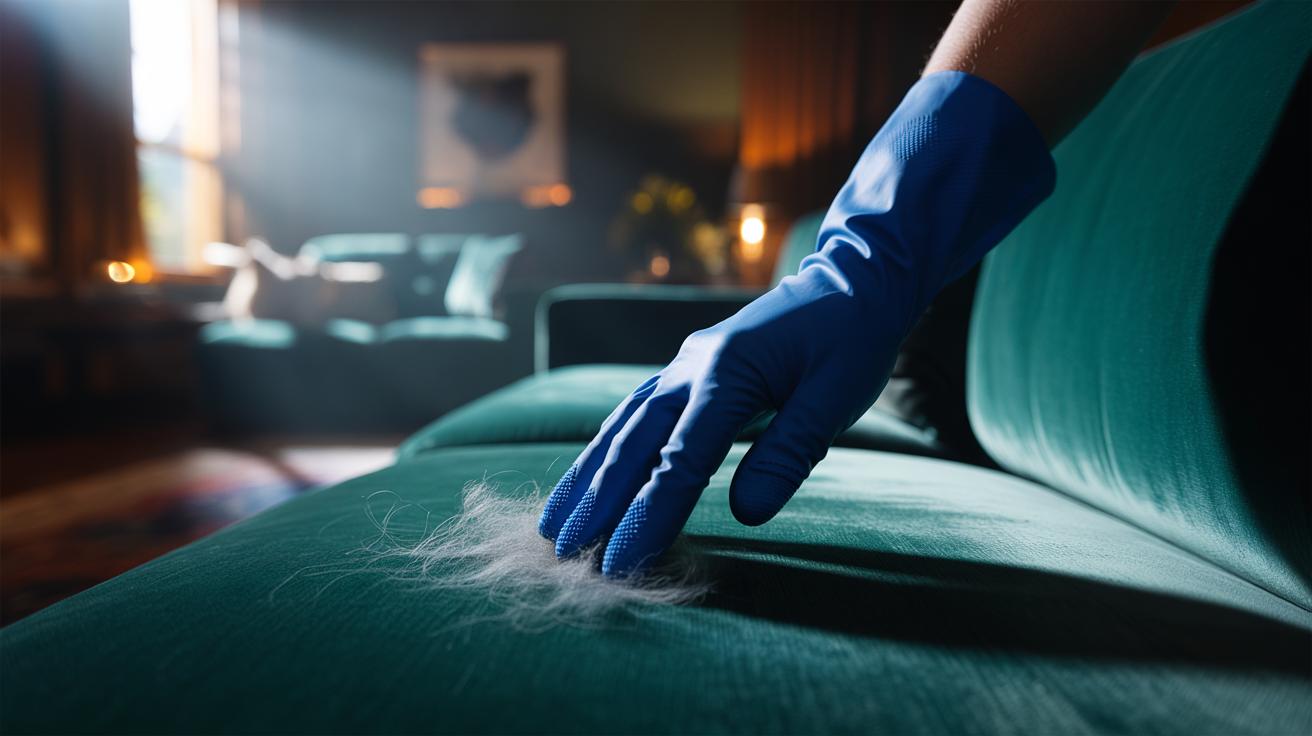
Pet hair and lint love velvet. The plush, directional pile makes sofas look glamorous, yet it clings to fibres like a magnet and shows every stray strand. Vacuums often skate over the surface, and sticky rollers can flatten the nap. Enter the humble rubber glove, a low-cost tool that uses texture and gentle friction to lift debris without harm. By pairing a light static charge with subtle grip, a glove coaxes hair out of velvet’s weave while preserving its sheen. The key is controlled contact that grips the hair, not the fabric, letting you restore that showroom finish in minutes, without chemical residue or snags.
Why Velvet Traps Hair—and How a Rubber Glove Releases It
Velvet’s beauty lies in its cut pile and directional nap, which reflect light and deliver that signature depth. Those same upright fibres catch pet hair through micro-hooks and static interaction. As you sit, move, or brush clothing against the sofa, strands lodge between tufts and build with each pass. Traditional brushes can roughen the surface, while adhesives press hair deeper. A rubber glove sidesteps the problem by combining mild friction with electrostatic attraction: rubber sits high on the triboelectric scale, so gentle strokes help pull loose hairs outward rather than pushing them in.
Texture matters. The glove’s micro-ridges and tacky surface lightly snag hair and lint, forming clumps you can lift away by hand. A barely damp glove adds capillary pull, enhancing pickup without soaking the fabric. Because the glove amplifies controlled grip, not scraping force, it preserves velvet’s structure and avoids crushing the pile. The result is cleaner fabric, protected nap, and a quick routine you can repeat between deeper cleans.
Step-by-Step Technique for Safe, Effective Hair Removal
Start by checking the sofa’s colourfastness in a hidden spot with a lightly damp cloth. Moisten a latex or nitrile glove under the tap and shake off excess; you want a soft sheen, not wetness. Identify the direction of the nap by stroking the fabric—smooth feels darker, against the grain looks lighter. Always work with the nap to avoid roughing the surface. Using light, short strokes, sweep hair into visible lines, then gather the strands into a clump at the edge of your palm and lift away. Refresh the glove with a quick rinse if it loses tack.
For seams, buttons, and piping, curl a gloved fingertip and make small arcs to tease out embedded hairs. On large cushions, remove and place flat so the pile isn’t dragged by gravity. After the main pass, finish with feather-light strokes to re-lift the pile for an even appearance. If residue remains, a low-suction upholstery nozzle can whisk away the final specks without collapsing the fibres. Gentle pressure, steady direction, and minimal moisture are the trio that keeps velvet pristine.
Choosing the Right Glove and Avoiding Common Mistakes
Material dictates feel and performance. Nitrile offers a slightly firmer, drier tack and is a solid choice for those with latex allergies. Traditional latex provides excellent grip but should be powder-free to prevent residue. Lightly textured palms outperform smooth ones, while heavy, studded grooming mitts risk grabbing fibres on delicate velvet. A snug fit improves control; if the glove is baggy, bunching can catch threads. Silicone dish gloves work in a pinch, but their thicker ridges require an even lighter touch.
Moisture management is critical. A glove that’s too wet can leave tide marks or push moisture into backing cloth. Use only a light dampness, never a soak. Test first on silk or antique velvets; some natural piles are particularly sensitive to pressure and water. Avoid aggressive back-and-forth scrubbing, which can disturb the nap. If you notice dye transfer or sheen change, stop immediately and consult a professional cleaner. Store gloves clean and lint-free; a quick rinse maintains the micro-texture that makes this method so effective.
How It Compares to Lint Rollers and Vacuums
Lint rollers are quick but can compress pile and leave adhesive traces, while vacuums often glide over velvet unless fitted with a soft upholstery head and low suction. The rubber glove method sits neatly between: it delivers high pickup without residue and with minimal mechanical stress. Because it relies on tactile grip rather than stickiness or suction, it’s kinder to the fabric’s architecture. For routine refreshes, the glove excels; for deep cleans, combine the glove with careful vacuuming to remove dust beneath the surface.
Cost and sustainability tip the scales, too. A single glove can last months, cutting down on disposable sheets. The technique is quiet, quick, and ideal for daily maintenance in pet-friendly homes. Use the table below to decide when each tool shines.
| Method | Pros | Cons | Best Use |
|---|---|---|---|
| Rubber glove | High pickup, no residue, low cost | Needs correct technique, patch test advised | Daily hair removal on most velvets |
| Lint roller | Fast, convenient | Adhesive flattening, ongoing cost | Quick touch-ups on small areas |
| Vacuum (soft head) | Removes dust as well as hair | Can skate over pile, risk of crush on high suction | Periodic deeper refresh after glove pass |
Handled with care, a simple rubber glove is a quiet revolution for velvet care: tactile, precise, and kind to the pile. It keeps pet-friendly homes looking polished without wasteful consumables or risky abrasion. The winning formula is light moisture, gentle direction, and patience, three habits that protect sheen and texture while lifting stubborn hair. As you refine your routine—glove first, vacuum second—you can extend the life of your sofa and enjoy its lustre every day. What combination of tools and techniques has worked best on your velvet, and how would you adapt them for different fabrics across your home?
Did you like it?4.6/5 (26)