In a nutshell
- 🧪 Science of clean: Ethanol in plain vodka dissolves fingerprint oils and evaporates quickly, reducing surface tension for an even, streak‑free dry‑down.
- 🧴 Best mix: Use vodka + distilled water at 1:1 for stubborn smears or 1:2 for routine cleaning and protection of AR coatings.
- 🧼 Method that works: Rinse away grit, mist lightly, wipe centre‑to‑edge with a clean microfibre cloth, then buff dry—aim for damp, not soaked.
- 🚫 What to avoid: Skip flavoured spirits, ammonia, bleach, vinegar, acetone, window sprays, and paper towels; they scratch or leave residue.
- 🌦️ Practical tips: Adjust the ratio for humidity, use distilled water to prevent mineral spots, and keep contact brief to protect coatings.
Smudged spectacles are a daily frustration, and many reach instinctively for tissues or T‑shirts, only to add lint and fresh streaks. A simple fix is hiding in the freezer: a vodka + water mix that lifts oils and evaporates cleanly, leaving lenses bright. It works because ethanol, the alcohol in vodka, dissolves fingerprint grease and then vanishes far faster than water. Add the right dilution and a soft microfibre cloth, and you have a fast, reliable cleaner that rivals shop-bought sprays. Use only plain, unflavoured vodka and distilled water for the best, streak-free finish. Below, the science, the method, and the sensible limits—so your glasses stay pristine without risking delicate coatings.
Why Vodka Works on Lenses
Vodka is essentially a mixture of ethanol and water. Ethanol is a superb solvent for sebaceous oils and cosmetic residues that smear across lenses. Those greasy films resist water alone; ethanol cuts through them, then evaporates quickly, reducing the window for streaks to form. The blend lowers surface tension, helping the liquid sheet evenly rather than bead into droplets that dry with tide marks. This uniform wetting is the heart of a clean, streak-free finish. Because ethanol carries dissolved oils away, there’s minimal residue left to smear under your cloth.
Crucially, plain vodka contains few congeners and virtually no sugars, so it leaves no sticky film—unlike flavoured spirits, which can deposit aromatics and sweeteners. Do not use flavoured or sweetened vodka; they will cause haze. While specialist lens cleaners often rely on isopropyl alcohol, the diluted ethanol in vodka can serve as a handy substitute when mixed carefully, applied sparingly, and paired with a clean microfibre cloth.
The Ideal Vodka–Water Ratio and Method
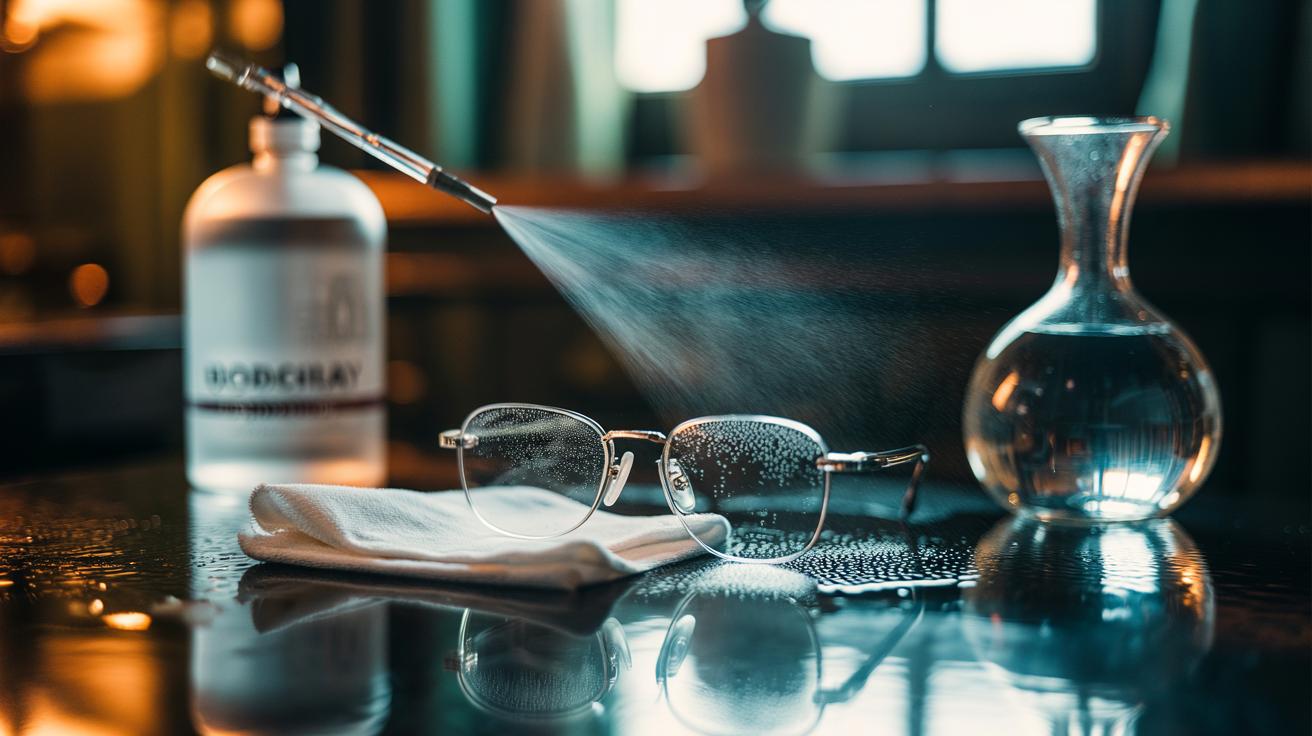
For everyday cleaning, mix 1 part vodka to 1–2 parts distilled water. The 1:1 ratio cuts stubborn sunscreen and skin oils; 1:2 is gentler on sensitive anti-reflective (AR) coatings. Decant into a small, clean spray bottle. Before spraying, blow or rinse away grit with cool water to avoid scratches. Mist each lens lightly, then wipe in slow, overlapping strokes from centre to edge using a fresh microfibre cloth. Flip to a dry section and buff until the lens squeaks. Aim for damp, not soaked—excess liquid can creep into frames and cause residue at the edges.
| Mix | Best For | Notes |
|---|---|---|
| 1:1 vodka:distilled water | Heavy fingerprints, sunscreen, make-up | Fast evaporation; use a gentle touch on AR coatings |
| 1:2 vodka:distilled water | Routine cleaning, coated lenses | Lower alcohol reduces long-term stress on coatings |
| Drop of mild dish soap in 100 ml mix | Persistent smears | Use sparingly; rinse and dry thoroughly |
Always launder microfibre cloths without fabric softener, which leaves waxy residues. If you notice ghosting at the edges, re‑mist lightly and rebuff. Distilled water prevents mineral spotting that tap water can leave behind.
Evaporation, Streaks, and the Science
Streaks arise when a liquid dries unevenly. Pure water evaporates slowly and forms high surface tension droplets that create “coffee ring” outlines as solutes migrate to the edge. Adding ethanol speeds evaporation by increasing vapour pressure and reducing surface tension, so the film spreads thinner and dries more uniformly. The cooling that accompanies rapid evaporation lowers viscosity momentarily, helping the fluid glide across microscopic pits and coatings. Faster, more even drying means fewer tide marks and clearer lenses.
Although ethanol and water form an azeotrope at high concentrations, vodka sits well below that, so its behaviour in cleaning is straightforward: it dissolves oils and then flashes off predictably. This predictability explains why small amounts leave negligible residue when applied sparingly. If ambient humidity is high, a slightly richer alcohol mix (1:1) can counter slow drying. In drier rooms, the gentler 1:2 dilution is ample and kinder to lens coatings while still delivering a streak-free finish.
Safety, Coatings, and What to Avoid
Modern lenses often carry layers: anti-reflective films, oleophobic and hydrophobic top coats, and blue‑light filters. Many manufacturer care guides permit mild alcohols, but long, repeated soaking or harsh additives can dull these finishes. Keep contact brief, apply lightly, and never leave lenses wet for extended periods. If your warranty booklet warns against alcohol outright, stick to soap and water or a maker‑approved spray. Always remove dust before wiping to prevent micro‑scratches that mimic streaks in sunlight.
Avoid ammonia, bleach, vinegar, acetone, and window sprays—these can cloud coatings. Skip paper towels and tissues, which shed lint and can scratch; choose a clean microfibre cloth instead. Don’t use fragranced or flavoured vodkas; the aromatics linger as film. For frames, test a corner first, as some painted or lacquered finishes can soften with alcohol exposure. When in doubt, confirm the care advice for your specific lenses and coatings.
Used thoughtfully, a plain vodka + water mix is a quick, thrifty way to banish haze and fingerprints from spectacles. Ethanol’s rapid evaporation, paired with distilled water and microfibre, yields an even dry‑down that resists streaks and reveals crisp detail. Keep the solution mild, the spray light, and the cloth clean, and you’ll match the performance of many branded cleaners at a fraction of the cost. Your lenses should look clear without effort, not after minutes of rubbing. What ratio, technique, or cloth brand gives you the crispest, streak‑free shine in your daily routine—and why do you think it works best for your lenses and lifestyle?
Did you like it?4.4/5 (29)