In a nutshell
- 🍋 The salt and lemon combo dissolves rust by pairing citric acid’s chelating power with salt’s mild abrasion for gentle, effective removal.
- 🧰 Step-by-step: salt the rust, add lemon to form a paste, let it sit 20–40 minutes, scrub, rinse, dry thoroughly, and finish with a thin coat of protective oil to prevent flash rust.
- 🔍 Best for light to moderate surface rust on tools, chrome, and stainless specks; avoid long contact on high-carbon steel, delicate finishes, and lacquered/anodised surfaces.
- ⚠️ Control dwell time and test a discreet area; chloride ions help lift rust briefly but can harm if left too long—rinse and dry meticulously.
- ♻️ A low-cost, eco-friendly option (often under £1) with clear trade-offs versus commercial gels; effectiveness hinges on proper post-care.
Rust creeps in quietly. A garden spade left damp after a rainy Saturday, a bike chain stored near the sea air, a chrome tap speckled with brown pinpricks. The fix doesn’t have to smell of solvents or come with hazard symbols. The humble pairing of salt and lemon takes on corrosion with surprising bite, blending gentle acidity and gritty abrasion to strip back oxidised metal. It’s cheap, biodegradable, and sitting in most UK kitchens already. Used correctly, it can save tools, cookware, and fixtures from the bin. Handled carelessly, it can mark finishes or invite fresh rust overnight. Here’s how to get the balance right.
Why Salt and Lemon Dissolve Rust
Rust is iron oxide. Lemon juice supplies citric acid (and a touch of ascorbic acid), which loosens and dissolves that oxide by chelating iron ions and lowering surface pH. The acid nibbles at the brittle rust layer, making it less adherent. Then the salt steps in. Coarse grains act as a mild abrasive, scouring the softened oxide without tearing into the base metal as aggressively as sanding might. Salt also draws moisture, keeping the reaction mobile where you need it.
There’s a second effect at play. Chloride ions in salt can accelerate corrosion in the wrong conditions, yet in a controlled, short treatment they help undercut stubborn spots so they release during scrubbing. Time is the critical variable. A 20–40 minute dwell loosens light to moderate rust; hours of soaking may etch plating or darken carbon steel. Think of the duo as a targeted, temporary chemistry set: activated, supervised, then neutralised and removed.
Step-by-Step: Cleaning Metal With Citrus and Salt
Gather your kit: a fresh lemon (or bottled juice), coarse salt (sea or kosher), a soft-bristle brush or non-scratch pad, clean cloths, warm water, and a few drops of light oil for protection afterwards. Optional: aluminium foil for chrome, gloves to protect skin, and masking tape for nearby finishes you don’t want splashed.
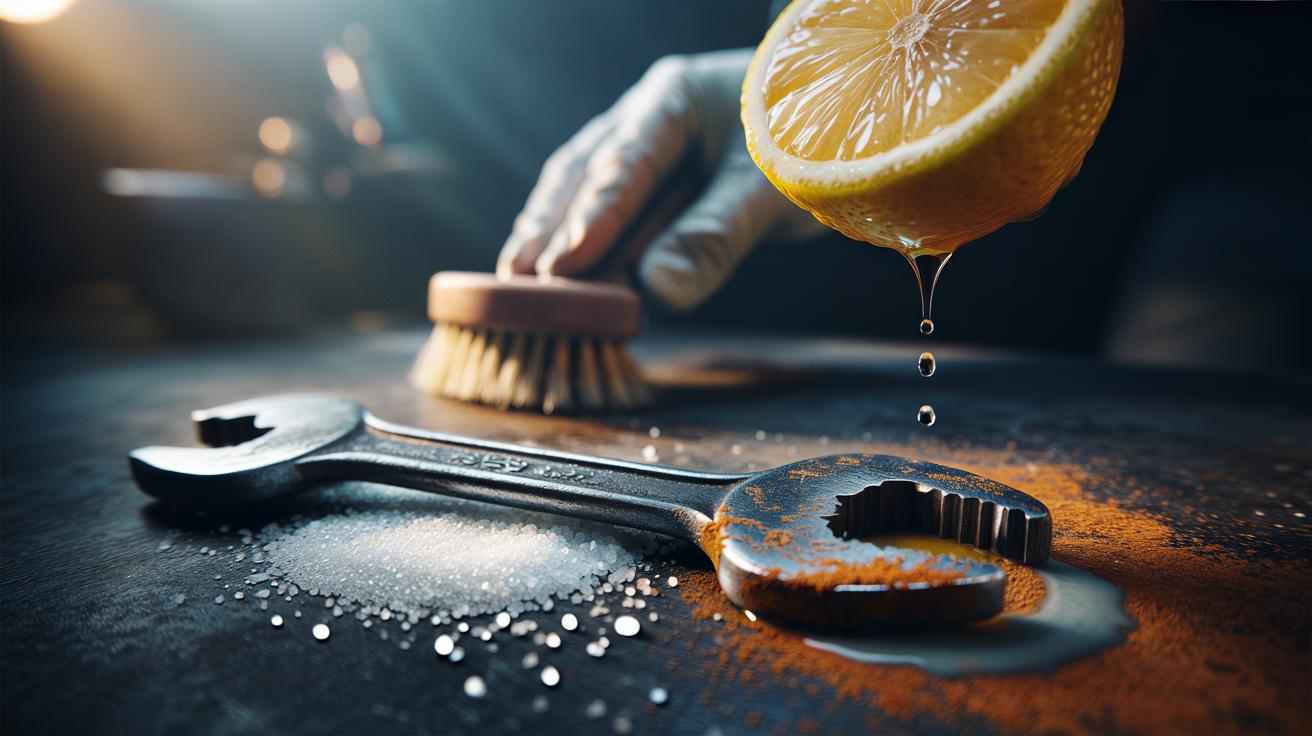
Method: sprinkle a thin, even layer of salt over the rusty area; half a teaspoon per small tool, a tablespoon for a shovel blade. Squeeze enough lemon to wet but not drown the crystals. You want a paste, not a puddle. Leave for 20–40 minutes. For taps or chrome trim, check at 10 minutes. Then scrub in small circles, adding a touch more salt where rust persists. On chrome, rubbing gently with crumpled aluminium foil lubricated by lemon can lift specks without scratching. Rinse thoroughly with warm water.
Post-care matters. Dry the metal immediately with a towel and warm air if possible. Always finish with a thin film of protective oil (food-safe mineral oil for kitchen kit, light machine oil for tools). This prevents flash rust, which can appear within minutes on bare steel. If staining remains, repeat once; if not, escalate to a specialised remover to avoid over-etching.
When It Works — and When It Doesn’t
The salt-and-lemon trick excels on light to moderate surface rust on carbon steel tools, chrome-plated bathroom fittings, garden gear, and mild steel brackets. It’s gentle enough for stainless cutlery speckling (tea-stain rust), though you should keep dwell times short and rinse well. For cast iron cookware, it can lift orange bloom without stripping seasoning if you confine the paste to affected spots and re-season immediately after. It’s also handy for bike components you can remove, treat, rinse, and dry indoors.
It isn’t a miracle for deep pitting, structural corrosion, or flaky scale on automotive chassis. Don’t use on delicate patinas, lacquered brass, anodised aluminium, or natural stone surrounds; acid can bite. Prolonged contact can stain high-carbon steel darkly, and chloride ions can creep under damaged chrome if left too long. Test on a discreet patch. If rust returns fast, you likely skipped neutral rinsing, thorough drying, or post-treatment protection; fix the process, not just the symptom.
Safety, Sustainability, and Cost
This kitchen-counter method wins on simplicity and environmental footprint. No acrid fumes, no tricky disposal, and ingredients that break down benignly. Still, treat acids with respect. Wear gloves if you have sensitive skin, ventilate small bathrooms, and keep the paste off grout and limestone. The economics are attractive: a lemon and a handful of salt can rescue several tools for under £1, while specialist gels often cost £8–£15 a bottle. The trade-off is speed and predictability; commercial products can act faster on heavy rust but demand stricter handling.
Use this quick guide to pick your approach wisely, then adapt based on the item, the rust’s depth, and your timeline. The most sustainable repair is the one that actually gets done, so choose the method you’ll complete properly — including the vital protective finish.
| Method | Active Agents | Best For | Approx. Cost | Notes |
|---|---|---|---|---|
| Salt + Lemon | Citric acid, abrasion | Light–moderate rust on tools, chrome | £0.50–£1 per session | Eco-friendly; watch dwell time; always oil after |
| Vinegar Soak | Acetic acid | Small parts you can submerge | £0.30–£0.80 per litre | Can undercut plating; neutralise and dry fast |
| Commercial Gel | Phosphoric or oxalic acid | Heavier scale, vertical surfaces | £8–£15 per bottle | Faster; follow safety guidance; may darken steel |
In a world that bins too quickly, the quiet efficiency of salt and lemon feels almost subversive. It restores function, respects materials, and keeps harsh chemistry off your hands and drains. The catch is discipline: short contact times, thorough rinsing, meticulous drying, and a whisper of oil. Treat rust like a recurring villain, not a one-off foe, and you’ll stretch the life of tools, taps, and treasured kit. Ready to put the method to work this weekend — and which rusty candidate will you rescue first?
Did you like it?4.4/5 (26)