In a nutshell
- 🧽 Remove surface water with a shower squeegee to cut moisture and reduce “time‑of‑wetness,” starving mould of the conditions it needs to grow.
- 🚿 Practice a two‑minute routine: top‑to‑bottom overlapping strokes on glass and tiles, finish edges with a microfibre cloth, and repeat after every shower for consistent protection.
- ⏱️ Expect faster drying: stripping bulk water can shrink drying times from hours to minutes on glass, tile, and grout, lowering the window for spore germination.
- 🌬️ Pair the habit with ventilation and warmth: run the extractor fan 20–30 minutes, keep RH around 40–60%, and avoid re‑wetting surfaces with damp towels.
- 🧪 Maintain surfaces: weekly detergent cleaning to remove biofilm, inspect and repair grout/silicone, and consider coatings that help water sheet and squeegee off cleanly.
In bathrooms across Britain, a humble tool is quietly winning the war against black spots and musty odours: the shower squeegee. After every rinse, a thin film of water clings to glass, tiles, and grout, creating the perfect nursery for mould spores. Strip that film away and the lifecycle is interrupted before it begins. This isn’t about expensive chemicals or weekend-deep cleans; it’s about breaking the daily pattern that feeds condensation and surface damp. By removing water immediately, you reduce the time surfaces stay wet, starving mould of the conditions it needs to take hold. The habit takes less than two minutes, saves scrubbing later, and helps extend the life of grout and sealant.
Why Moisture Drives Bathroom Mould Growth
Mould needs only three things: moisture, microscopic nutrients, and time. Bathrooms provide all three. After a hot shower, water beads and forms a continuous film on glass and tile. That film carries traces of soap, skin cells, and dust—ready-made nutrients for colonisation. If a surface remains damp long enough, dormant spores can germinate within 24–48 hours. The thicker and longer-lasting the water layer, the greater the chance that spores settle, anchor, and spread hyphae into grout and sealant.
Humidity compounds the problem. When air near the wall or screen reaches its dew point, condensation keeps replenishing the film. Bathrooms often sit above 70% relative humidity after a shower, creating a persistent microclimate that favours growth. Squeegeeing breaks this cycle. By removing the bulk water, you speed evaporation, knock humidity down faster, and reduce the “time-of-wetness” below the threshold mould prefers. Drying the surface quickly is more effective than chasing mould with harsh cleaners later.
The Squeegee Method: A Two-Minute Defence
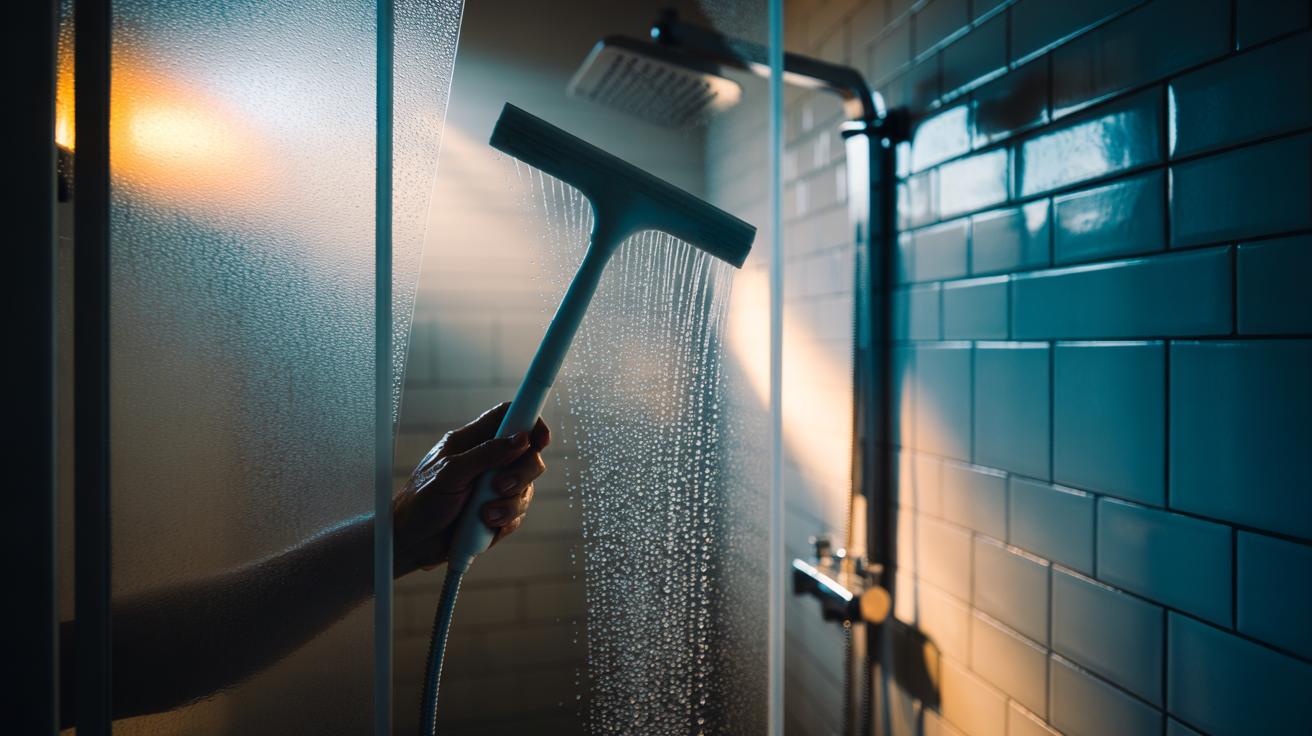
Think of the squeegee as a fast track to dry. Start at the top of the glass, pull long overlapping strokes downward at a slight angle, and flick excess water off the blade between passes. Repeat on tiles, then finish edges and seals with a microfibre cloth. Dry surfaces don’t grow mould. Glass, acrylic, and glazed ceramic respond best; even grout benefits when bulk water is stripped away so residual damp can evaporate in minutes rather than hours.
Below is a simple guide to typical drying differences. Values are indicative and vary with ventilation and temperature, but they illustrate why the habit works: remove the water, reduce the risk.
| Surface | Residual Water Without Squeegee (ml/m²) | Typical Drying Time Without Squeegee | Residual Water With Squeegee (ml/m²) | Typical Drying Time With Squeegee |
|---|---|---|---|---|
| Glass screen | 50–100 | 2–4 hours | 5–10 | 20–40 minutes |
| Glazed tile | 80–150 | 3–6 hours | 10–20 | 30–60 minutes |
| Grout lines | 120–200 | 6–12 hours | 20–40 | 90–120 minutes |
Tools, Technique, and Frequency
A good tool makes the habit effortless. Choose a 25–30 cm silicone blade with a rigid spine for even pressure, a hook for hanging inside the enclosure, and a handle that grips well when wet. Keep the blade clean; a quick rinse prevents grit that can scratch glass. Work top to bottom in overlapping passes, then run a final horizontal sweep along the bottom edge to capture lagging drips. The aim is not perfection but removing most of the water quickly.
Frequency matters. The protective benefit is cumulative only if you squeegee after every shower. Encourage the whole household: a 45–90 second routine is realistic even on rushed mornings. For framed screens, wipe rails and seals with a microfibre cloth to stop water trapping in crevices. Pair the habit with switching on the extractor before you shower and leaving it running afterwards. Consistency turns a chore into a near-automatic motion that pays off in less scrubbing later.
Supporting Habits: Ventilation, Heat, and Cleaning
Even a perfect squeegee pass works better with air movement. Run a proper bathroom extractor fan for 20–30 minutes post-shower or open a window briefly to purge humid air. Aim to keep indoor relative humidity around 40–60% where practical. Warming cold surfaces also helps: a pre-warmed room keeps tiles above dew point so less vapour condenses. Reduce humidity and the squeegee’s gains multiply. If you dry towels elsewhere, you stop them re-wetting the room you’ve just dried.
Cleaning changes the odds too. Once a week, wash walls and glass with a mild detergent to strip biofilm, then rinse and squeegee. Bleach may whiten stains but doesn’t always dissolve the film spores cling to; a surfactant does. Inspect silicone seals and grout; repair cracks early so water cannot seep behind. Consider a hydrophilic or protective coating on glass to make water sheet and squeegee off more cleanly. Small, regular interventions outperform sporadic deep cleans.
The squeegee habit succeeds because it removes the one ingredient mould cannot thrive without: liquid water. Strip away that shiny post-shower film and you cut the time surfaces stay damp, drop humidity faster, curb biofilm build-up, and protect grout and seals. It is cheap, quick, and quietly transformative, especially in small UK bathrooms where ventilation can be limited. Make it the final step of every shower and mould has far less chance to colonise your walls. Will you try a one-week squeegee challenge, track the difference in fogging and odour, and see how much easier cleaning becomes?
Did you like it?4.6/5 (25)