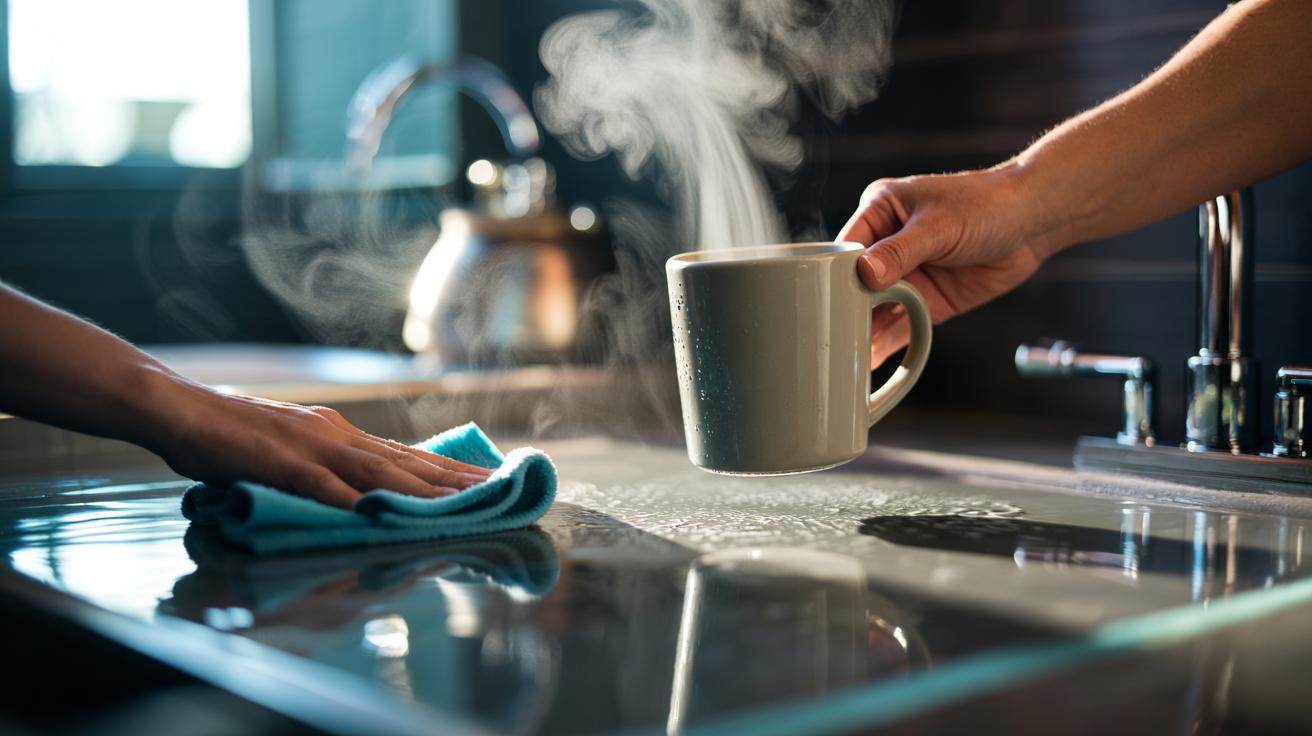
In a nutshell
- 🔥 Steam‑cup method: Hold a ceramic mug of freshly boiled water near the mirror to fog it; the rising vapour loosens soap scum, hairspray polymers, and skin oils for a streak‑free wipe with a microfibre cloth.
- 🧪 Why it works: Condensation hydrates water‑loving particles and softens waxy films; released latent heat reduces adhesion so residue lifts cleanly instead of smearing.
- 🧯 Steps and safety: Work 3–8 cm from the glass, wait 20–30 seconds, wipe in overlapping strokes, flip to a dry side to buff; avoid scalds, keep kids clear, and skip steam on cracked or antique mirrors.
- 🧰 When to use vs. alternatives: Ideal for light daily film; tackle limescale with 50:50 vinegar, sticky polymers with isopropyl alcohol, and mineral specks with bicarbonate paste.
- 🌱 Cost and eco wins: About 0.03 kWh per mug—under a penny at UK tariffs—no aerosols or VOCs, less plastic waste; in hard water areas, finish with a dry buff or use distilled water.
There’s a quietly brilliant trick doing the rounds in British bathrooms: the steam‑cup method that fog‑cleans mirrors with nothing more than hot water and a cloth. Hold a cup of freshly boiled water near the glass, let the vapour bloom across the surface, and wipe. The science is simple, the results striking. In under a minute, a dull, streak‑stippled mirror can bounce back to a bright, makeup‑ready finish. No harsh odours, no frantic scrubbing, and no pricey sprays. It’s a small, sustainable hack that slots neatly into a morning routine, especially in hard‑working, moisture‑rich bathrooms where residue accumulates fast.
How Steam Breaks Down Bathroom Grime
Bathroom mirror film is a cocktail of soap scum (calcium salts of fatty acids), atomised hair spray polymers, toothpaste flecks, skin oils, and occasionally a whisper of limescale from hard water. These residues cling because they’re part waxy, part mineral, and mechanically interlock with microscopic pits in the glass. When warm condensation lands, it hydrates water‑loving particles and softens wax‑like components, reducing their grip. Latent heat is the secret weapon: each droplet releases energy as it condenses, gently warming and loosening the film without chemicals.
As a mug’s plume rises, droplets coalesce into a thin, mobile layer that acts like a temporary micro‑solvent. You’re wiping softened grime, not grinding it in, so fewer streaks form. Gravity helps ferry loosened particles down the pane, and a microfibre cloth traps them. In very hard‑water areas, minerals won’t vanish, but the haze lifts enough for a clean pass. Steam won’t dissolve heavy limescale; it loosens light films so they wipe away effortlessly. That’s why the method shines as a fast refresh between deeper cleans.
The Steam‑Cup Method: Step‑by‑Step and Safety
You’ll need a ceramic mug, recently boiled water from a kettle, and a microfibre cloth. Fill the mug, then hold it 3–8 cm from the mirror, moving slowly to fog the glass from top to bottom. Let the vapour sit for 20–30 seconds as the film relaxes. Wipe in overlapping vertical strokes, flipping the cloth to a dry side for the final buff. A fingertip of washing‑up liquid on one corner helps if hair spray is stubborn. Keep your spare hand off the glass to avoid re‑printing oils as you polish.
Respect heat: scalds are avoidable and mirrors don’t need contact with the mug. Hold the handle, not the body, and keep children well clear. If your mirror is cracked, antique, or has damaged backing, avoid thermal shock and clean cool. Ventilate so lingering humidity doesn’t invite mould on nearby grout. If the glass is compromised or the frame is moisture‑sensitive wood, skip steam and reach for a gentle cold‑clean instead.
When to Use It — And When to Choose Alternatives
The steam‑cup trick excels as a daily clear‑up after showers or styling, before razor‑close shaves, or when guests arrive and you need instant sparkle. It’s ideal for light soap scum, fine dust, and fingertip smears. Heavier hair spray lacquers, nicotine film, or chalky limescale may need targeted help: a little isopropyl alcohol lifts polymers, and a vinegar spritz tackles mineral haze. For stubborn build‑up, pair steam with a focused cleaner rather than scrubbing harder and risking scratches.
| Method | Best For | Tools | Effort | Notes |
|---|---|---|---|---|
| Steam‑cup | Light films, daily refresh | Ceramic mug, hot water, microfibre | Low | Fast; minimal waste; wipe top to bottom |
| Vinegar (50:50) | Limescale haze, water spots | White vinegar, water, spray, cloth | Moderate | Rinse and dry to avoid odour |
| Isopropyl alcohol 70% | Hairspray polymers, sticky residues | IPA, cotton pad | Low | Spot‑treat, then general wipe |
| Bicarbonate paste | Stubborn mineral specks | Bicarb, water, soft cloth | Higher | Gentle motion; rinse thoroughly |
For prevention, squeegee after showers and keep a dry cloth handy. Those in hard‑water postcodes might finish with distilled water or a dry buff to ward off fresh spotting. Little and often beats infrequent, aggressive cleans every time.
Sustainability and Cost Compared With Sprays
The numbers flatter the humble mug. Boiling about 250 ml of water uses roughly 0.03 kWh in a typical kettle—under one penny at current UK tariffs. A reusable microfibre cuts disposable waste, and you sidestep VOCs and propellants in many glass cleaners. A branded spray can cost £2–£4 a bottle and adds plastic packaging to the bin. For pennies and without aerosols, you get a showroom shine and a bathroom that smells like… nothing at all. For renters and small bathrooms, simplicity is a virtue and storage is minimal.
There’s also comfort in fewer ingredients circling sensitive sinuses. Steam is gentle on surfaces, provided you avoid damaged mirrors and keep frames dry. If your area’s water is particularly hard, finish with a clean, dry buff to stop minerals from drying as spots, or switch to boiled then cooled distilled water for the fogging pass. In hard‑water postcodes, a quick dry finish is the difference between glossy and just‑okay. Either way, the carbon and clutter savings stack up impressively.
The steam‑cup trick sits at the sweet spot of household ingenuity: a dash of physics, a minute of effort, and the instant gratification of glass that gleams. It softens films, speeds wipe‑downs, and trims both costs and chemicals from your cleaning kit. Paired with a microfibre and a few targeted alternatives for heavy build‑up, it’s a practical habit that keeps mirrors photo‑ready on busy mornings. If your cleaning arsenal could do with a lighter touch, this may be your new go‑to. Will you try the steam‑cup method this week, or do you have a mirror‑clearing hack that outshines it?
Did you like it?4.3/5 (22)