In a nutshell
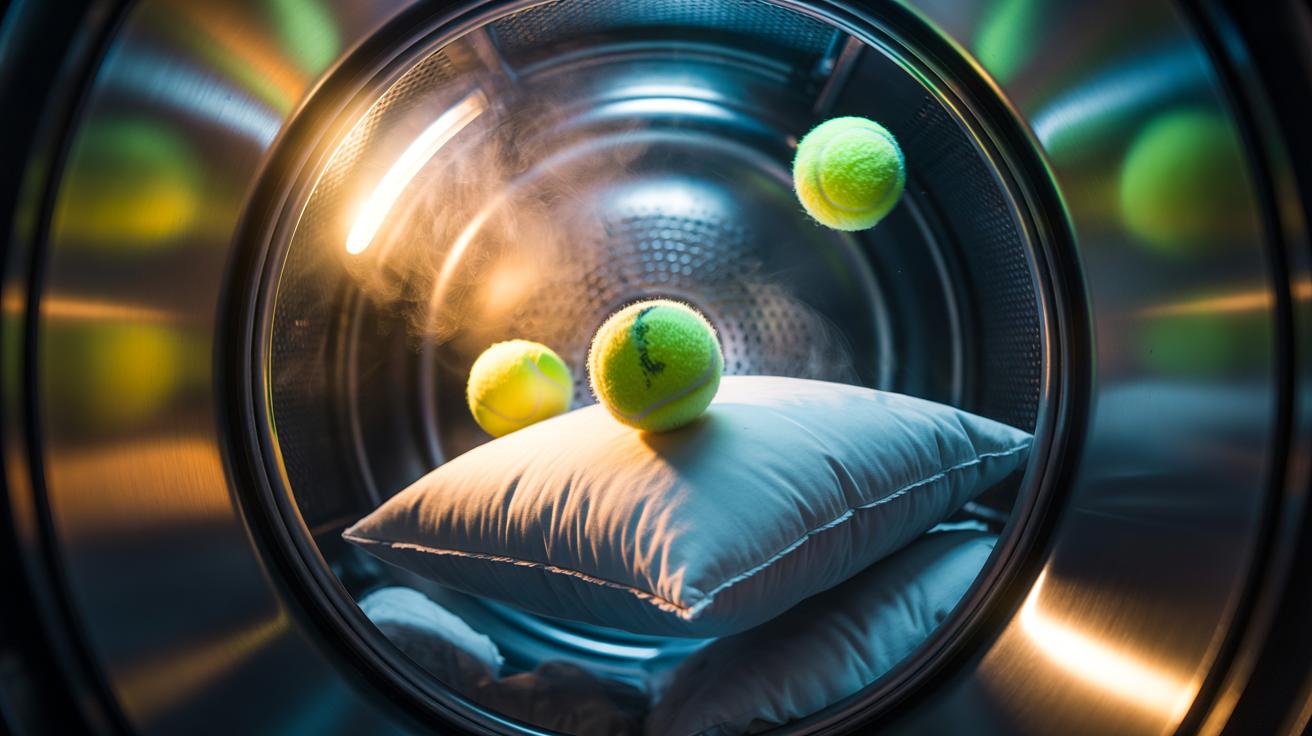
- 🎾 A tennis ball in the dryer breaks hard clumps fast via impulse and point loading, while bouncing boosts airflow to revive loft.
- ⚙️ Method: extra spin, 1–2 pillows, 2–3 balls (wrapped in socks), low heat for down, medium for synthetics, pause to hand-fluff, finish on air only.
- 🧪 Why clumps form: moisture, oils, and repeated pressure create dense knots; targeted bouncing loosens fibers and speeds thorough, core-level drying.
- 🛡️ Safety: always check labels; memory foam and latex should not be tumble-dried; use clean balls, monitor seams and temperature.
- 🧰 Alternatives and extras: wool dryer balls or a clean sneaker can work; add dry towels for down, let pillows rest post-dry, and use protectors to maintain breathability and comfort.
There’s a deceptively simple laundry hack that turns heavy, tired pillows back into cloud-like cushions: toss a tennis ball in the dryer. The trick works because a bouncing sphere strikes pillow filling with concentrated force, breaking compacted clumps and reviving loft in minutes. As the drum spins, repeated impacts and boosted airflow separate fibers, redistribute moisture, and speed up drying. Used correctly, this method restores volume without tearing stitching or scorching delicate fills. Below, we unpack the science, the step-by-step method, and the safety notes that keep your bedding fresher for longer—so you can sleep on pillows that feel practically new.
Why Pillows Clump and Collapse
Pillows lose their bounce when filling binds into dense knots. Humidity, sweat, and skin oils help fibers stick together, then nightly compression squeezes out the air pockets that create loft. Down clusters can mat when damp; synthetic microfibres tangle; even wool can felt slightly under heat and pressure. Once those tangles set, air struggles to pass through, trapping residual moisture and slowing drying after a wash.
Weight from your head presses the same zones repeatedly, creating hard pressure spots. If drying is incomplete, the remaining moisture acts like glue. Stubborn clumps are not just uncomfortable—they also reduce breathability and can lengthen the time it takes a pillow to dry fully. That’s why a targeted mechanical nudge during the drying phase is so effective: it interrupts compaction before it becomes a permanent pancake.
Not all pillows are equal. Down and polyester fills respond well to gentle agitation. Latex and memory foam are different beasts: they’re single pieces of foam that can tear or warp in a hot dryer, so they should be air-dried and never pounded with balls.
How Bouncing Breaks up Hard Clumps
The magic lies in impulse and point loading. A tennis ball concentrates impact into a small area, delivering enough energy to shear apart bonded fibers without flattening the whole pillow. Each strike loosens a small knot; thousands of strikes across a cycle undo widespread matting. The ball’s elastic bounce returns energy efficiently, so it keeps hopping and agitating even at low drum speeds.
There’s an airflow bonus. As the ball caroms, it lifts and drops the pillow, opening channels so hotter air reaches wet cores. That moving air strips moisture, reducing the “glue” effect that makes clumps stubborn. Mechanical agitation plus enhanced ventilation is what revives loft quickly, safely, and consistently. The result is a pillow that dries faster and feels uniformly springy, not just fluffed at the surface. You’re rebuilding the pillow’s internal architecture—restoring voids between fibers that create softness and support.
Step-by-Step Dryer Method with a Tennis Ball
Pre-dry: after washing, run an extra spin to expel as much water as possible. Load one or two pillows to avoid overcrowding. Add two to three clean tennis balls wrapped in socks (to muffle noise and protect fabric), or use dedicated dryer balls. Choose low heat for down/feather and medium for most synthetic pillows.
Cycle in intervals: start with 15–20 minutes, pause to break up any remaining lumps by hand, then continue in 10–15 minute bursts. The goal is thorough drying, not blasting heat. Expect 40–90 minutes depending on fill and humidity. The balls should keep bouncing freely; if they stall, remove a pillow or add another ball for better circulation. Check seams and shell temperature periodically—warm is good, hot is not.
Finish strong: when pillows feel dry, keep tumbling on air only for 10 minutes to cool and settle fibers. Let them rest upright for an hour to release residual warmth. If a pillow still feels heavy or cool at the core, it’s damp—resume short cycles until uniformly dry, then store with room to breathe.
Safety, Materials, and When to Skip the Trick
Always read the care label. Down and feather tolerate low heat with balls; polyester and microfibre handle medium heat; wool prefers low and gentle. Memory foam and latex should not go in a hot dryer: spot clean and air-dry instead. Use new or clean balls to avoid transferring dyes. If noise is a concern, wrap balls in thick socks. When in doubt, choose lower heat and longer time. For allergy-sensitive households, consider hypoallergenic dryer balls to avoid introducing particles from old tennis felt.
If the shell is torn, skip bouncing until you mend it—impacts can push filling out. For pillows with heavy decorative trims or beading, air-dry flat. You can achieve a similar effect with wool dryer balls, rubber laundry balls, or even a clean sneaker (in a bag), though tennis balls remain the classic balance of bounce and weight.
| Pillow Type | Heat Setting | Tennis Balls | Notes |
|---|---|---|---|
| Down/Feather | Low | 2–3 | Add clean, dry towels to speed drying; stop when core is fully dry. |
| Microfibre/Polyester | Medium | 2–3 | Break up mid-cycle; watch for hot spots at seams. |
| Wool | Low | 1–2 | Gentle cycle; avoid over-drying to prevent felting. |
| Latex | Air only | 0 | Air-dry; no bouncing—risk of tearing and warping. |
| Memory Foam | Air only | 0 | Spot clean; never tumble with balls or heat. |
Used thoughtfully, the tennis-ball technique is a fast, low-cost way to resuscitate tired pillows, restoring loft, breathability, and comfort without constant replacement. It’s a win for your neck and your budget. Pair it with periodic sunning, a protective pillow cover, and timely washing to keep fibers springy and fresh. The secret is controlled bouncing plus patient drying that reaches the core. What would transform your own routine—switching heat settings, adding dryer balls, or rethinking how often you wash and dry your pillows to keep them feeling new?
Did you like it?4.6/5 (29)