In a nutshell
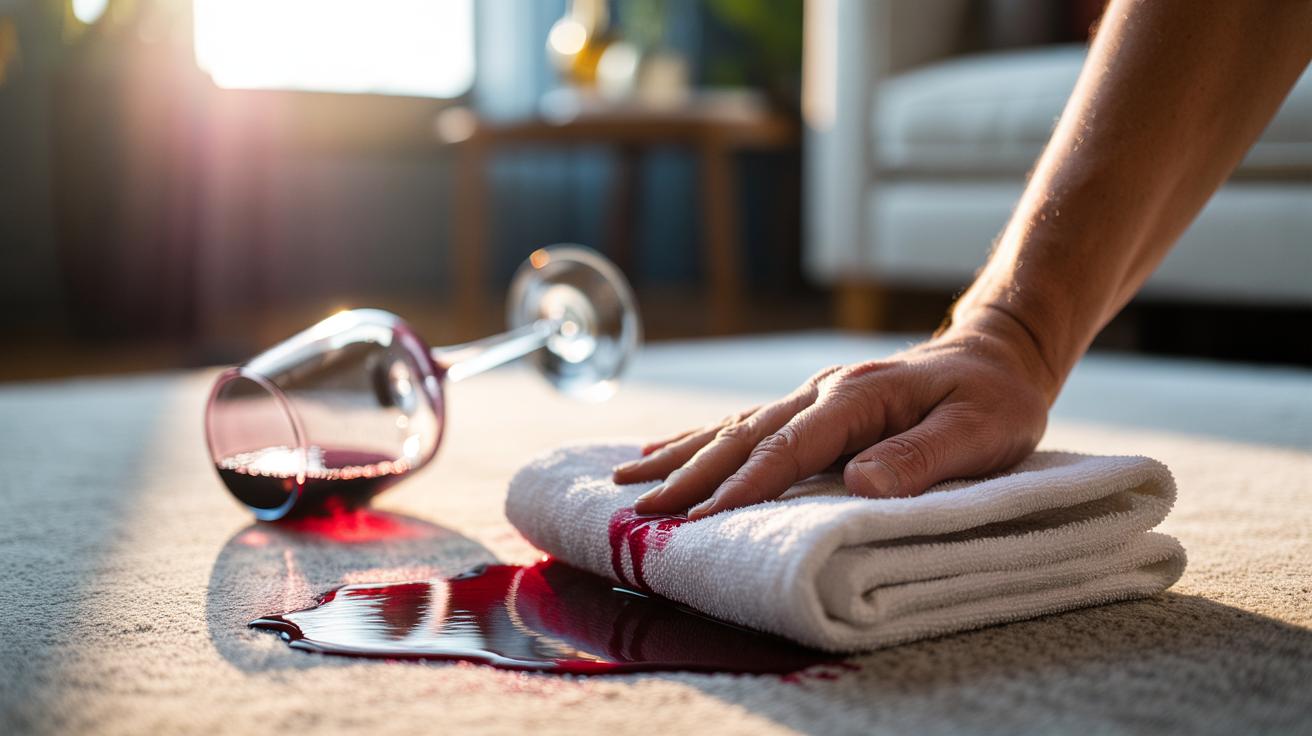
- 🧻 Use the towel-press method to lift fresh spills fast: apply even pressure to draw liquid upward via capillary action, preventing deep stains—act within the first minute.
- 🧺 Choose white, dye-free absorbents: cotton terry for fast wick, microfibre for fine residues, and stacked kitchen roll for small puddles; keep towels thick, clean, and dry.
- ⚡ Follow a precise technique: ring the spill, lift solids, place a folded primary towel, press 10–15 seconds, replace when damp, and blot—don’t rub to avoid fibre damage.
- 🔬 Speed limits bonding: rapid absorption reduces contact time before dyes, tannins, or oils fix; adjust pressure and layers for fabric porosity and liquid viscosity or temperature.
- ✅ Aim for a simple rhythm—press, pause, lift, repeat—then escalate only if a shadow remains; this protects fibres, minimises rings, and cuts reliance on harsh chemicals.
When a drink meets a carpet or sofa, seconds decide whether you’re facing a quick tidy or a lingering eyesore. The towel-press method is a simple, science-backed way to lift fresh spills before they bed into fibres. It uses pressure, layering, and patient blotting to draw liquid upward rather than letting it seep downward. Speed is everything: act within the first minute to prevent penetration. By matching the right towel to the spill and applying calm, even pressure, you harness capillary action and protect the pile. Here’s how to build a fast, effective response that stops stains at the surface—and spares you harsh chemicals and needless scrubbing.
How the Towel-Press Method Works
At its core, the towel-press method relies on capillary action: liquid naturally wicks from wetter areas (your carpet or upholstery) into drier, more porous material (the towel). A folded towel increases thickness and creates multiple capillary pathways, improving lift. Blot—don’t rub—because lateral friction pushes pigments sideways and deeper into the weave. Gentle, even pressure spreads the load across the pile, keeping fibres upright and reducing distortion. The first 60–120 seconds are pivotal as liquids remain mobile; after that, sugars, tannins, and dyes begin binding to fibres.
Think vertically, not horizontally. You’re aiming for an upward transfer of moisture, not a smear. Place a dry towel stack over the spill and press with your palm or a flat tool to ensure broad contact. Replace the towel as soon as it grows damp. Dwell time—brief pauses between presses—lets moisture migrate into the towel rather than rebound into the fabric. Short, repeated presses outperform one long compress because each dry surface presents a fresh absorption gradient.
Materials and Setup: Choosing the Right Towel
Your choice of towel determines how quickly and cleanly liquid lifts. White cotton terry is a workhorse: loops boost surface area, promoting fast wick. Microfibre excels with fine particles and light oils, while quality kitchen roll works in a pinch for small puddles. Always choose white, dye-free materials to avoid transfer, and pre-fold into neat stacks for predictable pressure. A thick, clean, dry towel outperforms a thin, damp one every time. For large spills, stage several folded towels so you can rotate quickly and maintain a strong absorption gradient.
Layering matters. A double or triple fold creates channels that pull liquid upward and away from the surface. For delicate upholstery, add a sacrificial layer—such as baking paper—beneath the towel to limit tuft disturbance while still enabling capillary lift. Keep a small, flat tool (the back of a spoon or a clean tamper) to apply uniform pressure without grinding.
| Material | Best For | Absorption Speed | Notes |
|---|---|---|---|
| Cotton terry towel | Juice, tea, wine | Fast | Looped pile boosts wicking; choose white, lint-controlled |
| Microfibre cloth | Fine particles, light oils | Medium–fast | Excellent on upholstery; avoid fabric softener residues |
| Kitchen roll | Small puddles, hard floors | Medium | Stack multiple sheets; replace frequently |
Step-by-Step Technique for Rapid Absorption
First, contain the spread. Ring the spill with folded towel edges to stop migration along the pile. Lift solids with a spoon; don’t push them into the weave. Place a folded, dry primary towel over the centre. Press with your palm or a flat tool for 10–15 seconds, then lift straight up. Inspect the towel: visible transfer means you’re pulling the liquid. Replace any towel the moment it becomes damp—saturated fabric will simply push moisture back down.
Repeat in short cycles: press, pause, lift. Work from the edge toward the centre to avoid enlarging the wet area. For viscous spills (syrup, cream), add an intermediate blot with microfibre to grab fine residues. For carpets, stand on the towel briefly to apply body weight without scuffing; for upholstery, use hand pressure to avoid compressing foam. If a hint of colour remains, mist the area with cool water and resume pressing to dilute and lift. Never scrub; controlled pressure preserves fibres and prevents shadowing.
Science and Timing: Why Speed Matters
Fresh spills are dominated by fluid mobility, not fixation. In the first minutes, liquid sits mostly between fibres, ready to be pulled upward. As time passes, dyes and tannins begin bonding; proteins coagulate; oils spread along hydrophobic channels. Rapid absorption wins because it reduces contact time, cutting the chance of chemical binding and deep penetration. Temperature and viscosity also play a role: warm, thin liquids travel faster, so respond instantly; cooler, thicker fluids need more cycles but still yield to persistent, dry pressure.
Substrate porosity matters. Low, tight weaves and sealed floors keep liquid near the surface; shag piles and open knits invite depth. Adjust by adding layers and longer dwell between presses on plush textiles. When dealing with oily spills, follow pressing with a dry adsorbent such as bicarbonate of soda to capture residues before any cleaning agent. The aim is always the same: stabilise, absorb at the surface, then reassess before introducing chemistry. This sequence limits ring marks and retains the fabric’s hand.
Handled well, the towel-press method turns panic into procedure. It respects fibres, uses household materials, and leans on physics rather than brute force. The keys are simple: respond fast, keep your towels dry and white, and build steady pressure without rubbing. If a faint shadow persists, you can escalate to targeted spot treatments knowing you’ve already limited penetration and dye binding. Press, pause, lift, and repeat—this rhythm rescues most fresh spills with minimal fuss. What tweaks, tools, or timing tricks have helped you perfect your own rapid-response routine at home?
Did you like it?4.5/5 (29)