In a nutshell
- 🧪 Vinegar’s acetic acid (~5%) lowers pH to dissolve soap scum, oils, and mineral film, evaporating cleanly; use distilled water to avoid spotting in hard-water areas.
- 📰 Newspaper’s dense cellulose fibres grip and absorb moisture and grime with minimal lint, preventing smears; avoid glossy inserts and refold frequently for a crisp edge.
- 🧭 Method: mix 1:1 vinegar:water, apply a light mist, wipe top-to-bottom with folded newsprint, then buff dry; use 2:1 briefly for stubborn mineral marks.
- ⚠️ Safety: keep acid off marble/limestone/travertine, don’t flood mirror edges to prevent desilvering, and use microfiber on coated or antique glass.
- 🔧 Results and fixes: reduce liquid to curb streaks, swap saturated paper, de-wax with a stronger first pass; the approach is low-cost, low-tox, and eco-friendly.
For a gleaming mirror without chemical fog or lint, the traditional pairing of household vinegar and yesterday’s newspaper still wins. This thrifty duo cuts through toothpaste spatter, hairspray film, and greasy fingerprints with a clarity that rivals specialist sprays. The difference lies in how a mild acid loosens grime while paper fibres lift and lock away moisture. Used correctly, the result is a crisp, streak-free reflection with minimal effort. Whether you’re preparing a flat for viewings or sprucing up a bathroom between guests, the method is quick, inexpensive, and kind to indoor air. Here is how and why it works—and when to choose alternatives.
Why Vinegar Cuts Through Mirror Grime
The active ingredient in household vinegar is acetic acid, typically around 5%. This gentle acid disrupts the bond between alkaline residues—think soap scum, hard-water marks, and makeup pigments—and the glass surface. It softens mineral deposits while helping break down oily films from skin and hair products. Because vinegar has a low pH, it loosens grime without the heavy surfactants found in many commercial sprays, and it evaporates cleanly. This is why a simple 1:1 mix of vinegar and water so often outperforms pricier cleaners, especially on mirrors that show every trace of smearing under bathroom lights.
There is also a mechanical element. A fine mist of the vinegar solution wets contaminants evenly, avoiding the heavy drips that cause streaks. As the liquid flashes off, it leaves fewer residues behind. When paired with an absorbent, lint-minimising wiper—such as newspaper—the solution can be lifted before it dries in uneven patches. The outcome is a bright, even sheen that plays nicely with vanity lighting and daylight alike. Always use distilled or filtered water if you live in a hard-water area to reduce mineral spotting.
Why Newspaper Prevents Streaks
Old-fashioned newspaper excels because its cellulose fibres are densely packed, slightly textured, and relatively lint-free. That texture creates microscopic grip, enabling the paper to gather moisture and suspended dirt rather than smear it. Unlike many paper towels—which shed lint and can leave softeners or lotions on glass—newsprint is typically free from additives that transfer to the mirror. Modern inks, often soy-based, dry quickly and rarely mark glass when the sheet is folded and kept moving. The real secret is absorption: the paper lifts the diluted grime before it can dry into a film, then the final buff leaves a crisp finish.
Choose plain newsprint, not glossy inserts or magazine pages, which are clay-coated and prone to slippage. Fold a fresh, clean square for each pane to increase firmness and reduce crumpling. If ink transfer worries you, do a quick patch test on a corner and switch sheets frequently. For those sensitive to inks, a tightly woven, lint-free microfiber cloth provides similar capillary action with virtually no shedding.
| Wiper | Lint Risk | Absorption | Best Use |
|---|---|---|---|
| Newspaper | Low | High | General mirror cleaning, budget-friendly |
| Paper towel | Medium–High | Medium | Quick wipes, not ideal for streak-free finishes |
| Microfiber cloth | Very Low | High | Premium finish, sensitive surfaces |
Step-by-Step: The Vinegar-and-Newspaper Method
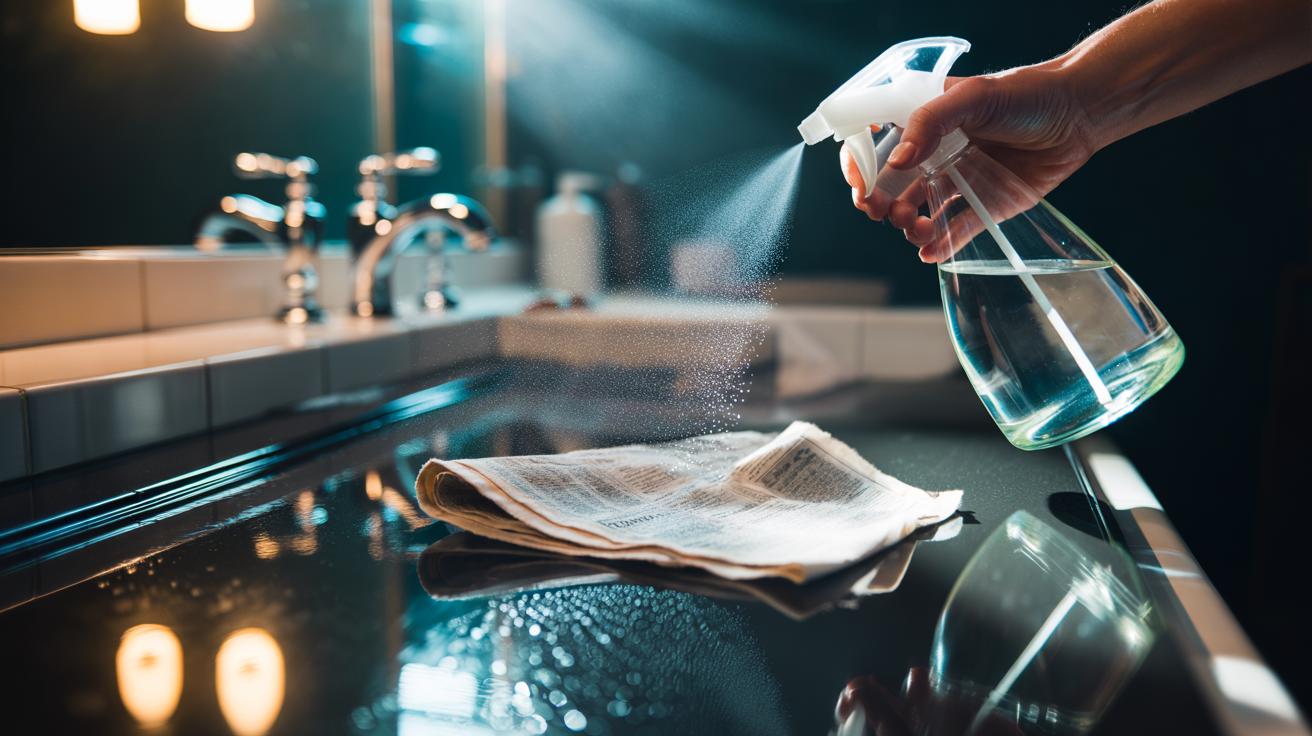
Mix your cleaner: combine 1 part white vinegar with 1 part water in a spray bottle. For heavy mineral marks, upgrade to a 2:1 ratio for a single pass, then revert to 1:1. Lightly mist the mirror—avoid soaking, which encourages runs at the edges where silvering can be vulnerable. Less liquid means fewer streaks and faster clarity. Fold a clean sheet of newspaper into a padded square to create structure, then begin with broad, overlapping strokes from top to bottom to catch drips as you go.
Switch to tight, horizontal passes for the central area. For corners and edges, refold to expose a crisp, dry section. Finish with a clean, dry portion of the paper to buff the glass; this final polish removes micro-beads of moisture and any faint residue. If you spot a persistent haze, lightly re-mist that patch and buff again with a fresh square. Keep bathroom fans running or a window open to speed evaporation and keep indoor air fresh.
| Step | Detail | Tip |
|---|---|---|
| Mix | 1:1 vinegar to water | Use distilled water in hard-water areas |
| Spray | Light, even mist | Avoid oversaturating edges |
| Wipe | Top-to-bottom, overlapping | Refold paper often |
| Buff | Dry section for shine | Spot-treat hazy patches |
Troubleshooting, Safety, and When Not to Use Paper
If you see streaks, you may be using too much liquid, moving too slowly, or reusing a damp, saturated sheet. Shorten the spray, increase paper changes, and buff dry. Water spots at the bottom edge suggest pooling; reduce misting and wipe edges first. Ink concerns? Choose sections with minimal heavy print, or switch to microfiber. Persistent cloudy patches typically indicate wax or silicone from previous cleaners—use a stronger vinegar mix for the first pass, then return to standard strength. For fragrance, add a drop of lemon essential oil to the bottle, but avoid oil-heavy blends that can smear.
Do not use vinegar on adjacent marble, limestone, or travertine surfaces—acid etches stone. Shield frames with a cloth and never flood the backing, as moisture can creep under the silvering and cause blackened “desilvered” edges. Avoid newsprint on specialty anti-reflective coatings or delicate antique glass; opt for distilled water and microfiber. Keep rooms ventilated, store vinegar away from bleach, and label your spray clearly. For households with pets and children, the diluted solution is a low-tox option when used sensibly and wiped dry.
The humble combination of vinegar and newspaper achieves that coveted, streak-free sparkle by pairing mild chemistry with smart absorption. It’s low-cost, quick, and reliable once you master light spraying and a confident buff. Used routinely, it keeps mirrors brilliant without the chemical fog or plastic waste of single-use wipes. If your bathroom lighting still highlights a faint film, a final pass with a dry microfiber cloth seals the job. Ready to try it on your hallway mirror or vanity? What tweaks—water type, paper choice, or wiping pattern—will you experiment with to tailor the method to your home?
Did you like it?4.5/5 (26)