In a nutshell
- 🧪 Alcohol kills microbes by denaturing proteins; the sweet spot is ~70% ethanol or isopropyl, while standard vodka (~40% ABV) is weaker, and effective contact time is still needed (about 30–120 seconds).
- ⚠️ Prioritise safety: alcohol is highly flammable, ventilate well, keep away from flames and children, patch test textiles, and never mix with bleach, ammonia, or essential oils.
- 💨 Fast drying comes from alcohol’s volatility; a fine mist evaporates quickly, but action is surface-only, meaning deeper contamination remains untouched—great for quick refreshes, not full decontamination.
- 🛠️ Method matters: strip and vacuum, mist lightly from 20–30 cm with 70% alcohol, avoid soaking foams, allow proper dwell time, and re-make the bed once odour dissipates.
- 🧼 Know when to escalate: use enzymes or extraction for biological spills, rely on HEPA vacuuming and a washable mattress protector for allergens, seek professional pest control for bed bugs, and consider replacement for persistent mouldy odours.
The idea of a quick spritz to refresh a mattress has long appealed to anyone short on time and long on laundry. Enter the “vodka spray” hack: a fine mist of alcohol said to neutralise odours, zap microbes, and vanish without a trace. The science behind it is compelling—alcohol disrupts microbial structures and evaporates rapidly—but the devil is in the details. Not all alcohol strengths are equal, and “instant” disinfection is rarely literal. Used properly, a high-alcohol spray can help with hygiene between sheet changes, yet it’s no panacea. Understanding concentration, contact time, material safety, and flammability is essential before you aim the nozzle at your bed.
What Happens When Alcohol Meets Germs
Alcohols such as ethanol and isopropyl alcohol kill many microbes by denaturing proteins and disrupting lipid membranes. That’s why they’re potent against numerous bacteria and enveloped viruses. Paradoxically, “absolute” alcohol (near 100%) isn’t the most effective: water helps the denaturation process, slowing evaporation enough for proteins to unravel. The sweet spot for disinfection is typically 60–90% v/v, with around 70% widely recommended. Vodka at ~40% ABV sits below that threshold, so it may refresh and reduce bioburden but won’t perform like a medical-grade sanitiser. High strength aids speed, but microbes still need contact time.
Another nuance: alcohols act on the surface they touch. On a mattress, that means the upper fibres get the benefit, while deeper layers are largely unaffected. For routine freshness between washes, that can be sufficient. For spills or biological contamination, a top-only approach is inadequate. Instant evaporation is great for drying, but it also limits penetration. Understanding this surface action helps set realistic expectations: alcohol spray is a quick hygiene boost, not a full decontamination of the mattress core.
Vodka vs. Proper Disinfectants: Does It Actually Work?
As a household hack, vodka earns points for convenience and odour control, but it’s not a match for purpose-made disinfectants. Public health guidance typically points to ~70% alcohol for reliable antimicrobial action on hard, non-porous surfaces. On soft, porous materials like mattresses, results vary more, and dwell time still matters. If you’re seeking true disinfection rather than a cosmetic refresh, concentration and contact time are non-negotiable. A fine mist of 70% ethanol or isopropyl achieves better kill rates than 40% vodka, while still drying rapidly and leaving minimal residue.
| Solution | Alcohol content | Typical contact time | Pros | Caveats |
|---|---|---|---|---|
| Vodka (standard) | ~40% ABV | 30–60 seconds+ | Reduces odours; quick-drying; accessible | Below optimal for disinfection; variable results on textiles |
| Ethanol spray | ~70% v/v | 30 seconds–2 minutes | Strong antimicrobial action; fast evaporation | Flammable; may lighten dyes or dry fibres |
| Isopropyl alcohol | 70% v/v | 30 seconds–2 minutes | Effective; minimal residue | Odour; material compatibility varies |
Never mix alcohol with bleach or other cleaners. If reliability is crucial—say, after illness—use a product compliant with textile-safe standards and follow its label. For everyday freshness, a higher-strength alcohol spray used judiciously provides a pragmatic middle ground.
How to Use Alcohol Spray on Mattresses Safely
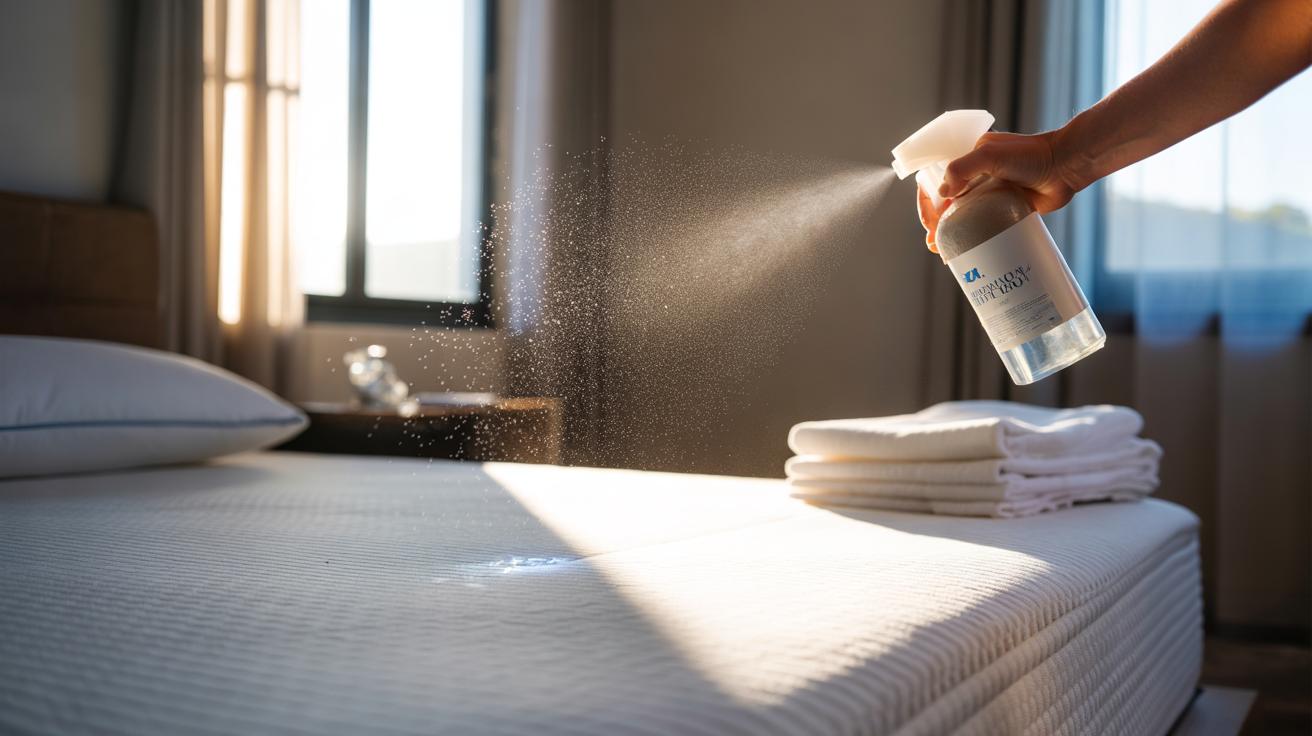
Start with preparation: strip the bed, vacuum thoroughly, and open windows. Decant 70% ethanol or isopropyl into a clean, fine-mist sprayer. Patch test on an inconspicuous seam to check for colour change or fibre brittleness. Hold the bottle 20–30 cm away and apply a light, even mist—do not soak. Aim for a uniform sheen rather than wetness; saturation slows drying and may affect foams or adhesives. Leave the surface undisturbed for at least 60 seconds to allow contact time. For odour-prone zones, a second light pass is better than one heavy drench.
Safety first: keep alcohol away from flames, sparks, and hot appliances. Remove pets and children from the room. Allow full ventilation until odour dissipates, then remake the bed with clean linens. Avoid daily use; periodic application is ample. For memory foam and latex, use lighter mists and longer drying windows to prevent degradation. Never use alcohol on fresh blood or protein stains—cold water enzymatic treatments are better first steps. Do not mix with bleach, ammonia, or essential oils, which can create risks or residues.
Speed and Drying: Why Mattresses Don’t Stay Damp
Alcohol’s magic trick is volatility. With a lower heat of vaporisation and higher vapour pressure than water, ethanol and isopropyl evaporate quickly, pulling heat from the surface as they go. That’s why the fabric feels cool for a moment, then dry. A fine mist increases surface area, accelerating the process. On a mattress, the top fibres catch the droplets and release them to moving air, which is why ventilation is your friend. In a well-aired room, drying typically finishes within minutes, leaving no sticky residue.
There are limits. Rapid evaporation means less penetration, so contamination below the cover won’t be reached. High humidity or poor airflow slows drying, raises odour persistence, and can trap cool moisture against the textile. Repeated heavy use may dry out fibres or affect adhesives around quilted panels. Use sparingly, rotate the mattress seasonally, and pair with a washable, waterproof mattress protector to prevent spills from sinking beyond reach. If it still smells or shows staining, surface alcohol alone won’t fix the underlying issue.
Beyond Alcohol: When Deep Cleaning or Replacement Is Wiser
Alcohol misting is a useful maintenance tool, but some scenarios call for more. Large spills, incontinence, or vomit require targeted extraction, enzyme cleaners for proteins, and extended drying. For allergens like dust mite debris, regular HEPA vacuuming, hot washing of bedding, and protective encasements outperform any quick spray. If bed bugs are suspected, seek professional pest control; DIY alcohol is unreliable and hazardous at the volumes required. Persistent mouldy odours indicate moisture problems that need ventilation fixes or dehumidification, not just odour masking.
Professional hot-water extraction and low-moisture steam methods can refresh certain mattresses when done by specialists who understand foam temperature limits. Still, manufacturers often discourage wet cleaning, and deep soiling inside the core can be impossible to reach safely. In those cases, a hygienic cover may buy time, but replacement can be the healthier long-term choice. Think of alcohol spray as a quick hygiene tune-up, not a cure-all for structural contamination.
Used intelligently, a high-strength alcohol spray delivers a fast, surface-level hygiene boost for mattresses: it kills many microbes by denaturing proteins, dries rapidly, and leaves little trace. Yet concentration, contact time, fabric compatibility, and fire safety dictate whether it truly disinfects or simply freshens. Between proper laundering and vacuuming, it’s a smart extra step; for deep contamination, it won’t replace professional cleaning or replacement. How will you balance convenience and caution the next time you reach for a spray bottle over the bed?
Did you like it?4.4/5 (25)