In a nutshell
- 🧪 The science: acetic acid in vinegar reacts with calcium carbonate to form soluble calcium acetate and CO₂, dissolving limescale gently and restoring flow without abrasion.
- 🛠️ Method: Secure a bag of distilled white vinegar around the spout for 6–12 hours, wipe, rinse, and optionally neutralise with bicarbonate; remove and soak the aerator separately and repeat short treatments for stubborn patches.
- 🧴 Product picks: Choose distilled white vinegar (5–8%); use stronger “cleaning vinegar” for shorter soaks; try citric acid if you dislike odour; avoid malt vinegar staining and always spot-test specialty finishes.
- 🛡️ Safety and finishes: Chrome and stainless steel tolerate mild acids; limit contact on nickel, brass, and coated surfaces; keep acids off natural stone and never mix vinegar with bleach; ventilate and wear gloves.
- 💷 Value and prevention: The wrap costs pennies compared with branded descalers; combine with periodic aerator cleaning and consider a limescale inhibitor to slow future build-up.
Hard water leaves crusty deposits on taps that dull shine and throttle flow, a daily gripe across the UK’s chalk and limestone belts. A simple fix—an overnight vinegar wrap—uses kitchen chemistry to dissolve this stubborn limescale while you sleep. Distilled white vinegar contains acetic acid, which reacts with the mineral build-up without scratching metal. The method is cheap, quiet, and fits around busy routines. With a bag, a cloth, and a rubber band, you can coax water back to a clean, steady stream by morning. Because vinegar is mildly acidic, it targets scale but spares most tap finishes when used properly, turning a grimy spout into a bright focal point.
How Limescale Forms and Why Vinegar Works
In hard-water areas, calcium and magnesium bicarbonates travel harmlessly in solution until heated or left to evaporate on surfaces. They then crystallise as calcium carbonate, the chalky crust that grips aerators, spouts, and shower heads. That crust isn’t just cosmetic: it narrows water pathways, adds turbulence and noise, and harbours biofilm that can trap odours. Limescale’s crystalline structure is resilient, so scrubbing alone often smears rather than removes it. To dislodge it effectively, you need a chemical nudge that breaks its mineral bonds without gouging the finish.
Enter acetic acid, the active component in vinegar. At around pH 2–3, it reacts with calcium carbonate in a textbook acid–carbonate reaction: the acid forms soluble calcium acetate, releasing carbon dioxide bubbles and water. Those fizzing pinpricks around an aerator mean the reaction is underway. The acid does the heavy lifting, so mechanical force becomes minimal. Because calcium acetate rinses away easily, the wrap method clears internal passages that brushes can’t reach, restoring smooth flow and the tap’s original lustre.
Step-by-Step: The Overnight Vinegar Wrap
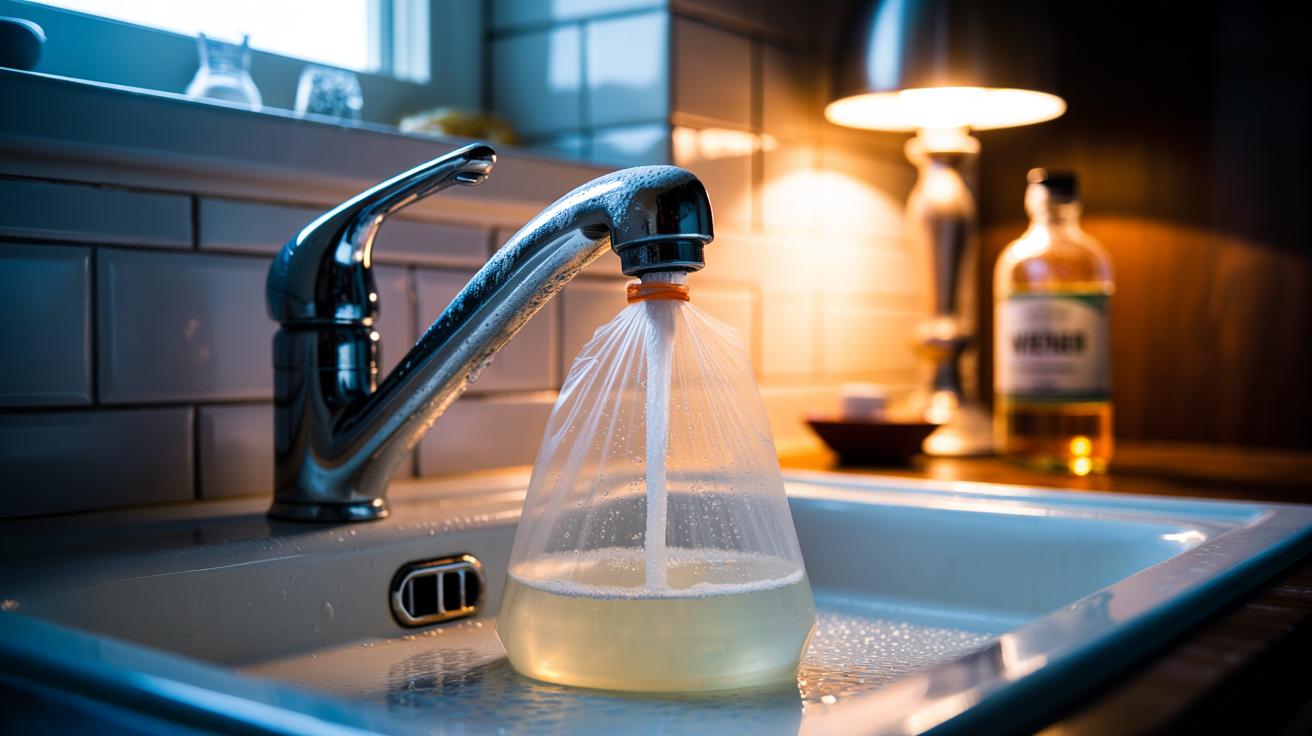
Gather a zip-top bag or small container, distilled white vinegar (5–8% acetic acid), a soft cloth, and a rubber band or string. If the aerator unscrews, remove it and soak separately. Fill the bag with enough vinegar to submerge the spout tip and any scale-heavy areas. Fix the bag around the tap so the vinegar sits snugly against deposits; a cloth beneath the band improves grip. For heavy scale, add a strip of paper towel soaked in vinegar along the neck of the spout to increase coverage.
Leave the wrap for 6–12 hours. In the morning, remove the bag and gently wipe with a microfibre cloth or a soft brush. Rinse thoroughly with warm water. For stubborn patches, repeat once rather than extending a single long soak. Optional: neutralise lingering acid with a quick wipe of bicarbonate of soda solution, then rinse again. Avoid abrasive pads and harsh scrapers—they can breach plating and invite corrosion. Finish by refitting the aerator and running the tap to flush out loosened debris.
Choosing Vinegar and Smart Alternatives
For most jobs, distilled white vinegar is best: it’s colourless, cheap, and leaves minimal residue. “Cleaning vinegar” (6–10% acetic acid) works faster but demands shorter contact times. Malt vinegar can stain and leave odours; reserve it for kettles you can rinse thoroughly. Citric acid (a food-safe powder) dissolved at 5–10% is a strong alternative if you dislike vinegar’s smell. Do not use acids on natural stone splashbacks or countertops, and keep solutions off unsealed grout. Always check your tap maker’s care guide for finish-specific advice.
| Product | Acetic/Citric % | Notes | Suitable For | Typical Soak |
|---|---|---|---|---|
| White Distilled Vinegar | 5–8% acetic | Neutral smell; no dye | Chrome, stainless steel | 6–12 hours |
| Cleaning Vinegar | 6–10% acetic | Stronger; shorten times | Chrome, stainless (spot-test) | 1–6 hours |
| Citric Acid Solution | 5–10% citric | Low odour; food-safe | Most metals; avoid stone | 2–8 hours |
| Malt Vinegar | 4–6% acetic | Colour/odour residues | Rinse-heavy applications | 6–12 hours |
In cost terms, a wrap uses pennies of vinegar compared with a branded descaler. Test on an inconspicuous spot before a long soak, especially on nickel or specialty finishes. If your water is extremely hard, a second short treatment often beats one marathon session.
Protecting Finishes and Staying Safe
Most modern taps are chrome-plated brass or stainless steel, both tolerant of mild acids with sensible timing. Brushed nickel, living brass, and oil-rubbed bronze need extra care: keep contact shorter and wipe dry promptly. Avoid soaking where lacquer or clear coats are damaged, as acids can creep under edges. Sealants, O-rings, and gaskets generally shrug off brief exposure, but prolonged submersion can soften some rubbers. Keep vinegar off marble, limestone, and travertine—acids etch calcium-rich stone.
Never mix vinegar with bleach; chlorine gas is dangerous even at low concentrations. Ventilate the room, wear gloves if you have sensitive skin, and label any decanted solutions. If scale builds rapidly, fit an inexpensive aerator with a filter or consider a limescale inhibitor at the stopcock. The wrap method remains your low-tech ally: predictable, reversible, and kind to finishes when timed thoughtfully, with chemistry doing the quiet work while you sleep.
From a chemistry standpoint, the overnight vinegar wrap is elegant: acetic acid dismantles calcium carbonate into rinsable salts, bubbling away the barrier that spoils flow and shine. Done carefully, it’s frugal, low-risk, and repeatable across most taps in British hard-water homes. If you’re contending with heavy deposits, pair it with periodic aerator cleaning and a mixer cartridge check to keep valves moving freely. As habits go, it’s an easy win that pays off every time you turn the handle. What tap, shower head, or household fixture will you rescue first with a simple soak and a cloth?
Did you like it?4.6/5 (22)