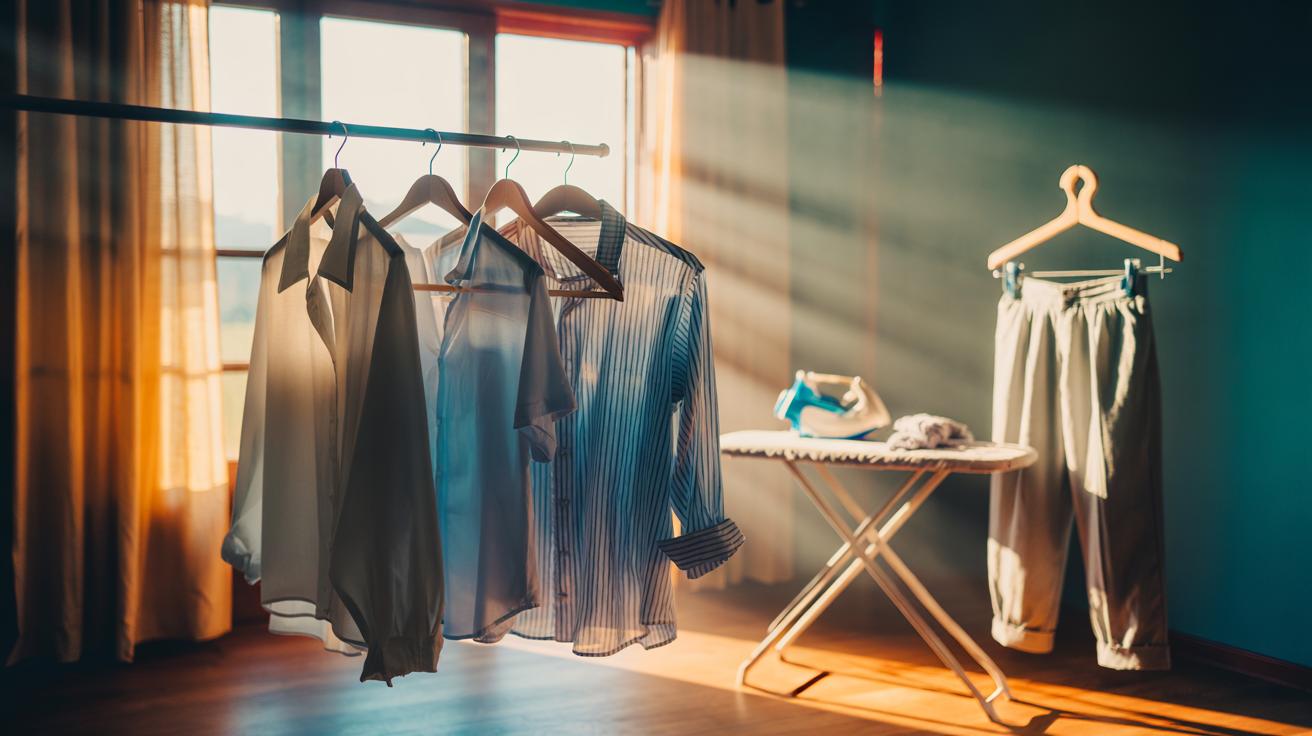
In a nutshell
- 🧲 Hanging leverages gravity and gentle tension to counter hydrogen-bond “crease memory,” letting fibres settle flat as they dry for smoother shirts and trousers.
- 🌬️ Achieve even, controlled drying with airflow and mild warmth—cracked windows, extractor fans, and hand’s-width spacing create an “invisible steam press.” A fine-mist spritz resets stubborn wrinkles.
- 🧥 Choose smart kit: contoured wooden hangers for shirts, flocked slimline for slippery fabrics, and clip hangers for skirts/trousers; avoid wire for heavy items to prevent distortion.
- ⏱️⚡ Expect 40–60% less ironing and lower energy use—when garments dry in-shape, you switch from rescue pressing to quick touch-ups, saving minutes per piece and cutting kWh.
- 🧼 Follow a simple routine: shake, shape, space, button key points, smooth collars/cuffs, and rotate mid-dry; use doorway bars or a bath rod to build a compact finishing line.
There’s a quiet domestic trick hiding in plain sight: hang laundry straight from the washer. Done well, it can leave shirts sharp, dresses draped, and trousers nearly press-perfect. The science is simple, the payoff striking. Let gravity, heat, and moisture do the heavy lifting while you put the iron back in its holster. By suspending garments on hangers, fibres relax into their intended shape as they dry, preventing creases from setting and smoothing out existing ones. The result? Less ironing, less energy, less hassle. It feels like cheating, but it’s not. It’s method. And once you see the difference, it’s hard to go back.
How Gravity Shapes Fabric While It Dries
Creases are chemistry. When clothes crumple, hydrogen bonds form between fibres as moisture evaporates, locking in unwanted ridges. Hanging interrupts this. Suspended from the shoulders or waistband, fabric is kept under gentle tension, guiding fibres to settle flat rather than fold. Hangers act like lightweight frames that “iron” as they dry. The weight of the damp cloth stretches micro-wrinkles downward; air finishes the job. Cotton and viscose respond beautifully, though polyester blends also behave. The key is correct support so gravity works with the cloth, not against it.
Pitching a shirt over a chair creates fresh pressure points. A hanger eliminates them. Sleeves fall into line, plackets stay straight, hems settle even. Equally vital is timing. Move garments from washer to hanger promptly, shake once, align seams, smooth collars. That 30 seconds of attention prevents crease memory from setting in. The payoff shows later when the iron glides instead of grinds.
Moisture, Heat, and the Sweet Spot for Hang-Drying
Moisture is not the enemy; unmanaged moisture is. The goal is an even, controlled release of water so fibres can rearrange before drying locks them. A warm, well-ventilated space speeds evaporation without scorching fabric. A touch of residual heat plus movement of air equals free, invisible steam pressing. Crack a window or run an extractor fan. Separate garments by a hand’s width to prevent damp zones. Thick items—denim, heavy cotton—prefer an airing cupboard or near a radiator, but never draped onto it, which can warp shapes.
For shirts, button the top button and one mid-torso, then tug the hem to tension the front. Trousers? Clip from the waistband or hang from hems with weight downward; stacks of fabric at the knee invite wrinkles. For knits, a broad hanger prevents shoulder “peaks.” A quick spritz from a fine-mist bottle helps reset stubborn creases. Think of it as micro-steaming without the kit. The trick is consistent airflow, gentle warmth, and smart spacing.
Choosing the Right Hanger and Setup
Not all hangers are equal. For tailored shirts, use contoured wooden hangers that mimic shoulder slope, keeping yokes flat. Slimline flocked hangers save space and hold silkier fabrics in place, ideal for blouses and dresses. Clip hangers are brilliant for skirts and trousers; hang by the waistband to maintain drape, or by hems to exploit weight. Avoid wire hangers for heavy fabrics; they indent and distort. The right hanger is a shaping tool, not just a hook. It keeps stress off seams and distributes weight so creases never get a foothold.
Set up matters too. A tension rod across a bath, a folding rack by a window, a doorway bar for quick turnaround—these create a mini “finishing line.” Before hanging, give each garment a sharp shake, roll seams between fingers, flatten cuffs and collars. Deploy clothespins sparingly and only at strong points to avoid pinch marks. Leave a palm-width gap between hangers, and rotate once halfway through drying for even results. Simple habits. Big gains.
Measured Time Savings and Reduced Energy Use
Ironing eats time. Hanging slashes it. When fabrics dry in their intended shape, the iron shifts from rescue work to light touch-up—collars, plackets, sleeve heads, sometimes nothing at all. Households that hang strategically often report cutting pressing time by 40–60 percent. The energy picture is just as compelling. Fewer hours on a hot iron and less temptation to use a tumble dryer translate into lower bills and a smaller footprint. Heat plus gravity replaces half your ironing, without sacrificing polish.
Here’s a simple snapshot of what that looks like in practice on a busy weeknight.
| Garment | Ironing After Tumble (min) | Ironing After Hanger Dry (min) | Minutes Saved |
|---|---|---|---|
| Cotton shirt | 8–10 | 3–5 | 4–6 |
| Blouse (viscose) | 6–8 | 2–4 | 3–5 |
| Trousers (wool blend) | 7–9 | 2–3 | 5–6 |
| T-shirt (cotton) | 3–4 | 0–1 | 2–4 |
Across a five-garment load, that’s easily 15–20 minutes back. Week after week, it’s hours. Add the avoided kilowatt-hours and the case strengthens.
Drying on hangers isn’t perfectionism; it’s pragmatism. You trade a few seconds of setup for minutes saved at the board, and your clothes last longer because you’re not crushing fibres under heat and pressure. Shirts look crisper, trousers hold their line, knits keep their shape. Less work, better finish. The habit rewards anyone short on time, space, or patience. Try it with your next wash—shake, shape, space, and let gravity earn its keep. What garment in your wardrobe do you think will benefit most when you swap the tumble for a well-chosen hanger?
Did you like it?4.5/5 (28)