In a nutshell
- 🧹 Adopt dust first, mop later to prevent smears and rework; follow a dry-to-wet, high-to-low flow for efficiency and hygiene.
- 🧽 Use the expert sequence: declutter, high-to-low microfibre dusting, vacuum, spot-treat, damp-wipe, then mop last with the two-bucket method.
- 🧰 Equip smartly: tight-weave microfibre cloths, extendable duster, HEPA vacuum, flat mop with swivel head, and neutral pH cleaners; keep mops just damp.
- 🏠 Room-by-room wins: degrease-prone kitchens, hair-heavy bathrooms, dusted living/bedrooms, and safe stairs/hallways using figure-eight mopping and quick drying.
- ⏱️ Real benefits: halves workload, reduces soil transfer and cross-contamination, speeds drying, improves finish, and cuts detergent use.
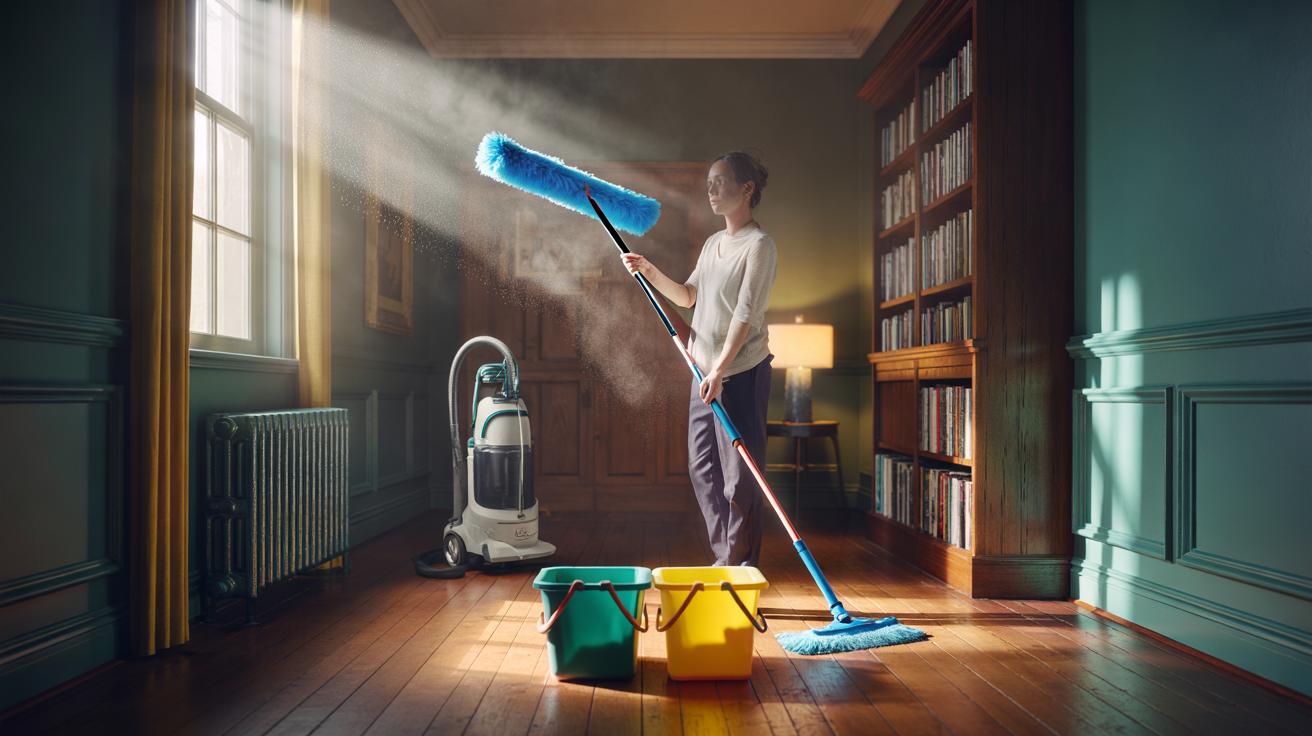
In homes across the UK, a deceptively simple switch can change cleaning from a slog into a swift, almost satisfying routine. The principle is blunt yet brilliant: dust first, mop later. When you understand how particles move and settle, the logic is irresistible. Dusting dislodges debris from shelves, skirting boards and radiators; gravity then drops it onto the floor. If you’ve already mopped, you’ve created a sticky landing pad for grime, guaranteeing smears and repeats. Order equals efficiency, and the right sequence can cut both time and detergent use. Follow a dry-to-wet flow, and you’ll halve the rework that silently steals your weekends.
Why Order Matters
Cleaning isn’t just elbow grease; it’s physics and hygiene. Dust is a cocktail of fibres, skin flakes, pollen and soot. Agitate it with a feather duster and it doesn’t disappear; it relocates. When floors are damp, those particles adhere, forming a film you must scrub twice. Start dry. A microfibre cloth traps particles electrostatically, and an extendable duster pulls fluff from cornices, light fittings and the top lip of skirting boards.
Floors are the final catcher’s mitt. If you vacuum after dusting, you capture what’s fallen; if you mop first, you smear it. There’s also hygiene: kitchens carry grease aerosols that bond to moisture, while bathrooms harbour hair that clings to damp tiles. Dry to wet reduces what pros call “soil transfer”, where you move muck from one surface to another. It also limits cross-contamination between rooms, because you’re not dragging a wet, dirty mop across fresh dust.
For common UK fixtures like radiators, blinds and skirting boards, the principle is even more pronounced. Heat currents lift dust, then drop it along edges. Deal with high and dry areas first, then vacuum, then bring in liquids. This sequence aligns with professional standards used by facilities teams and hotel housekeeping: top-to-bottom, clean-to-dirty, dry-to-wet.
The Expert-Approved Sequence
Begin with decluttering, not detergent. Clear floors, lift chairs, and pocket small items. Open a window a crack to vent fine particles. Work clockwise around each room to avoid missed patches. Then go high: ceiling corners, pendants, frames, shelves. Progress to mid-height touch points like switches and door handles, finishing with skirting boards. Only when dusting is complete should you vacuum, using the brush for hard floors and crevice tool for edges.
Next come liquids. Spot-treat sticky marks, then damp-wipe horizontal surfaces with a lightly moistened microfibre. Floors are last. Use the two-bucket method—one for solution, one for rinse—to stop redistributing grime. Keep mops just damp, not sopping; excess water risks swelling wood and leaves streaks on tiles. On high-traffic areas, two quick passes beat one heavy, wet drag.
| Step | Task Type | Key Actions | Time Saver |
|---|---|---|---|
| 1 | Dry | Declutter, crack a window | Clears pathways |
| 2 | Dry | High-to-low dusting with microfibre | Catches gravity fall |
| 3 | Dry | Vacuum floors, edges, under furniture | Removes loose debris |
| 4 | Wet | Spot-treat stains and sticky patches | Prevents smearing |
| 5 | Wet | Damp-wipe surfaces | Minimal solution, faster drying |
| 6 | Wet | Mop floors last (two-bucket) | No rework |
Dust first, mop later is not a slogan; it’s a workflow that eliminates backtracking. Once you adopt it, your home dries faster, looks cleaner, and the job ends sooner.
Tools and Tricks That Prevent Rework
A small toolkit amplifies the method. Choose microfibre cloths with tight weave for dusting and looser knit for wiping. An extendable, bendable duster reaches lampshades and the top of wardrobes. Invest in a vacuum with a HEPA filter to trap fine particulates—especially vital in city homes where brake dust and soot drift in. Fit the soft brush for hard floors; the crevice tool shines along skirting boards and radiator fins.
For wet work, a flat mop with a swivel head navigates around table legs. Use neutral pH cleaner on sealed wood and most tiles to avoid dulling finishes; a splash of degreaser handles kitchen films. Adopt the two-bucket method—solution in one, rinse in the other—to stop washing floors with dirty water. Wring until just damp to shorten drying times and prevent streaks.
Smart habits matter. Place door mats inside and out to trap grit. Wash mop pads and cloths separately at 60°C to purge oils. Label bottles clearly to avoid overuse; concentration, not volume, does the work. Build a rhythm: daily crumbs and spills, weekly dust-and-vacuum, monthly deep touches like blinds. The less you re-wet dirt, the less you clean twice.
Room-by-Room Strategy for UK Homes
Kitchen: start with cupboard tops, extractor hoods and pendant lights—grease-laden dust loves height. Dust fronts and handles, then vacuum crumbs from kickboards and under appliances using a slim nozzle. Spot-treat splatters, then damp-wipe worktops and tiles. Mop last with a light degreasing solution, paying attention to grout lines near the cooker. Keep water minimal on wooden or laminate floors to prevent swelling at joins.
Bathroom: dust mirror tops, vents and the rim behind the loo. Vacuum hair from corners—it clogs mops. Apply limescale remover to taps and glass while you wipe other surfaces with a neutral cleaner. Rinse, then mop tiles with hot, lightly dosed solution. Dry the floor quickly—open the window or run the fan—to stop water spots returning as “ghost” marks.
Living areas and bedrooms: reach for corners, ceiling roses and lampshades first. Dust media units and radiators, then vacuum under sofas and beds. Spot-clean sticky fingerprints on switches, then damp-wipe side tables. Mop hard floors last with overlapping figure-eights. Hallways and stairs: dust bannisters and skirting, vacuum treads from top to bottom, then mop landings. High-traffic zones benefit from a second quick vacuum pass rather than a wetter mop.
The pay-off is visible and measurable. Floors dry faster, glass keeps its shine, and you stop chasing the same specks around the house. By keeping to a dry-to-wet, high-to-low sequence, you compress the job and expand the results. In a cost-of-living era, efficiency is a household skill as valuable as any tool in your caddy. Ready to try it for a week and note the difference in time, effort and finish—what will your own before-and-after look like?
Did you like it?4.6/5 (22)